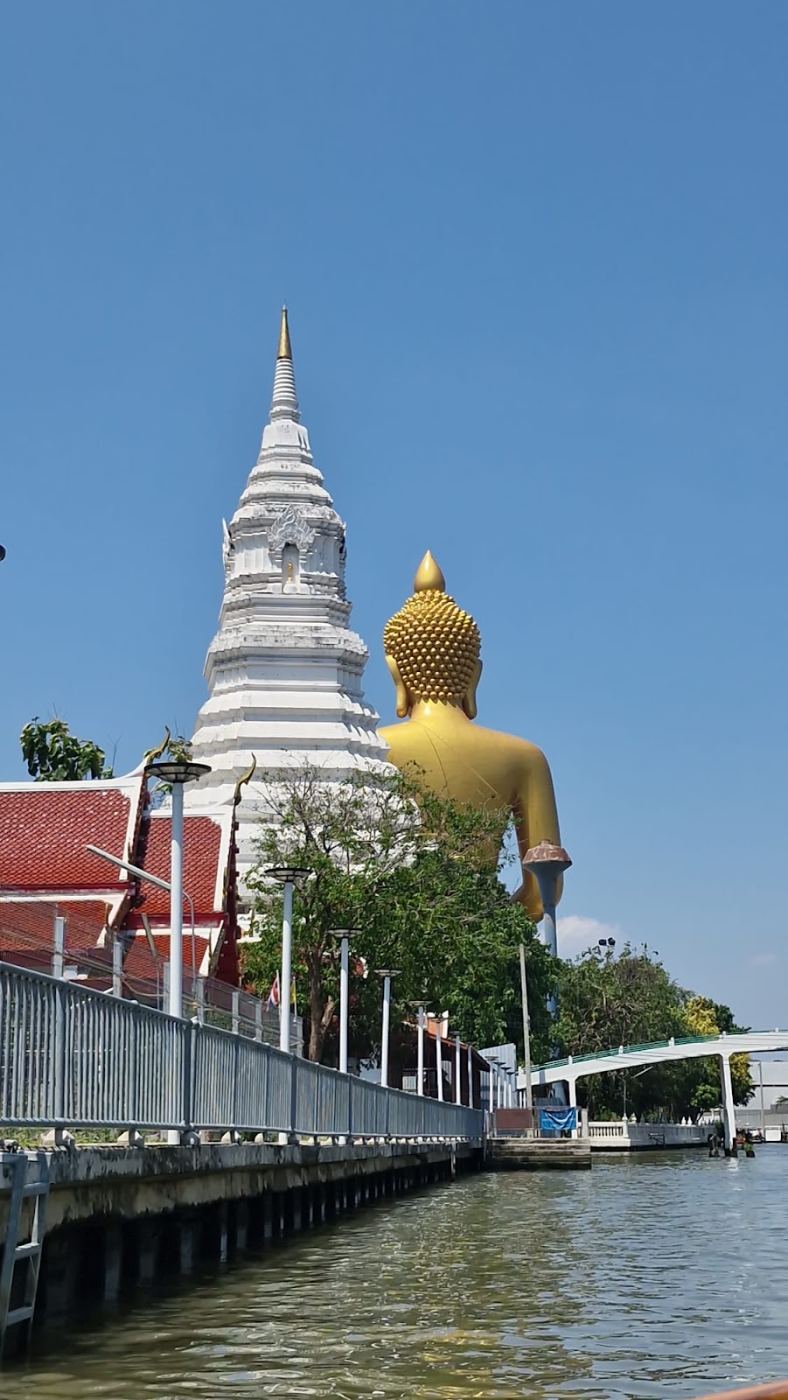
Two or three weeks is enough to see Bangkok, the temples of the north and an island, as long as you don’t try to do everything. Here is the Thailand itinerary Mr Schaka recommends: a 2-week route, a 3-week variant, how to travel between stops with journey times and prices checked in 2026, and which coast to choose for the season.
Thailand itinerary for 2 weeks: the core route
A simple loop: Bangkok, the north, then the sea, by night train and domestic flight.
- Days 1–3: Bangkok. The Grand Palace, Wat Pho, Wat Arun, Chinatown and the boats on the Chao Phraya. To plan these days, see our Bangkok 3-day itinerary.
- Day 4: Ayutthaya. The former royal capital and its temple ruins, about 80 km north. In the evening, catch a night train to Chiang Mai: northbound trains stop at Ayutthaya (check the exact time).
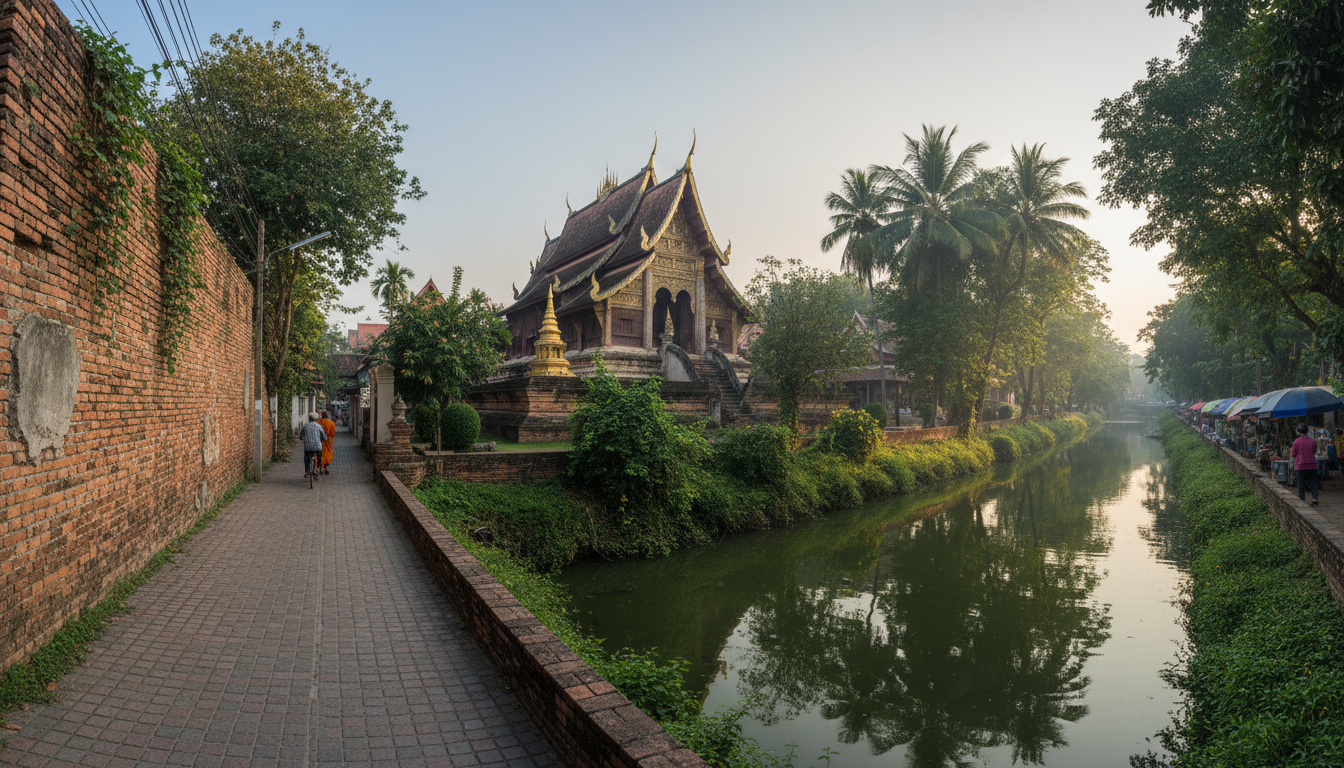
- Days 5–8: Chiang Mai. Old City temples, Doi Suthep, night markets, a cooking class. Add a day in nature: Doi Inthanon National Park or an elephant sanctuary with no riding and no shows.
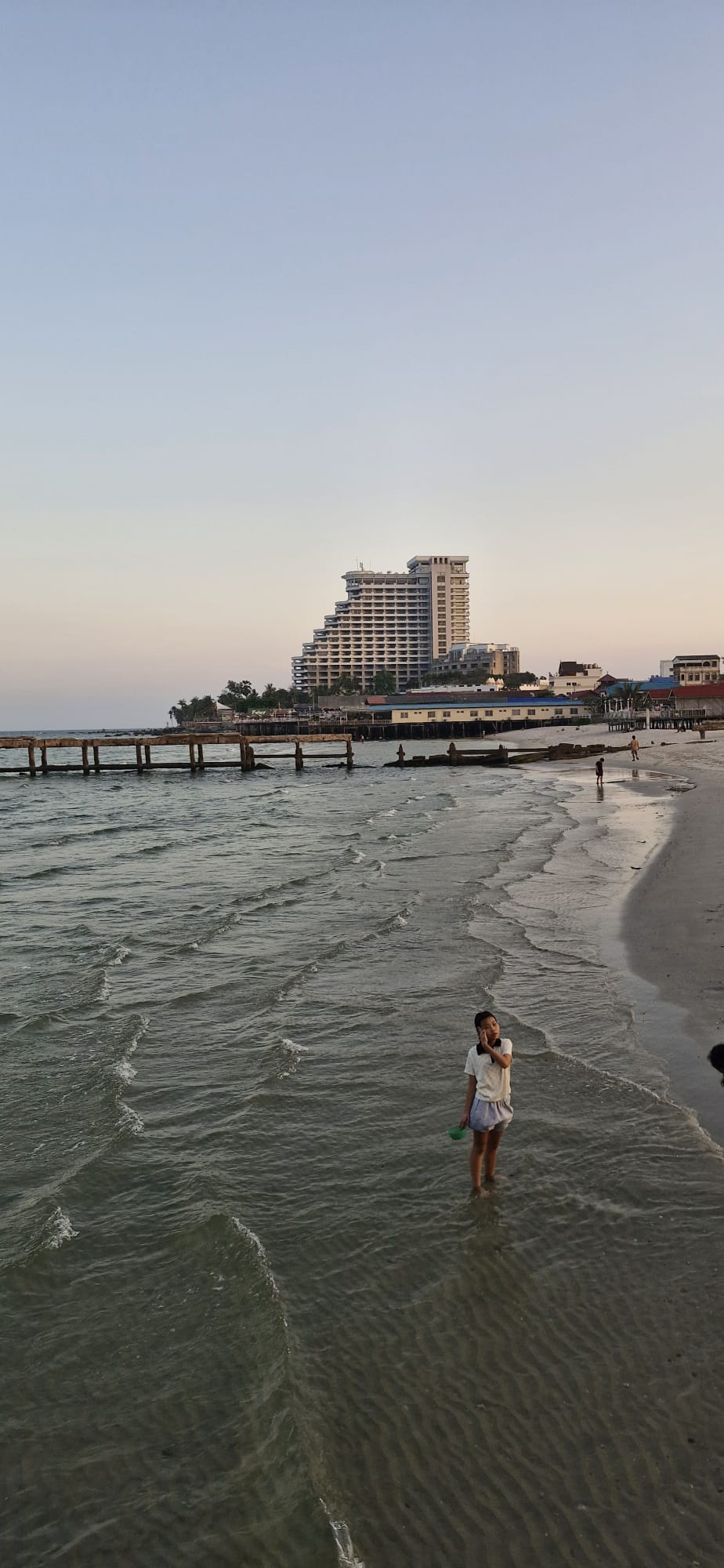
- Days 9–13: the sea. Fly to an island or beach base, depending on the season: Koh Samui or Koh Phangan on the Gulf side; Krabi, Koh Lanta or Phi Phi on the Andaman side.
- Day 14: back to Bangkok by plane (about 1 h 10 to 1 h 25 in the air) for your international flight.
The 3-week variant: more north, more sea
With an extra week, slow down and add two stops.
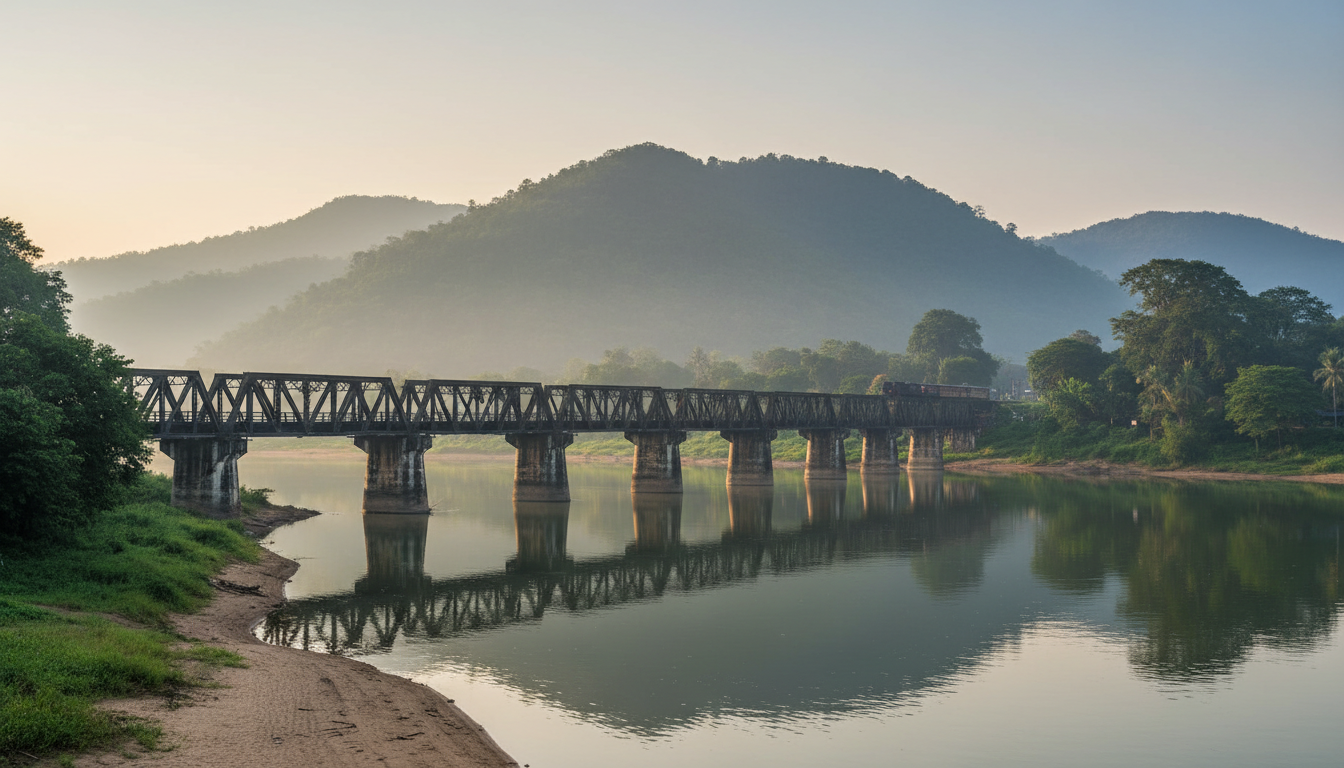
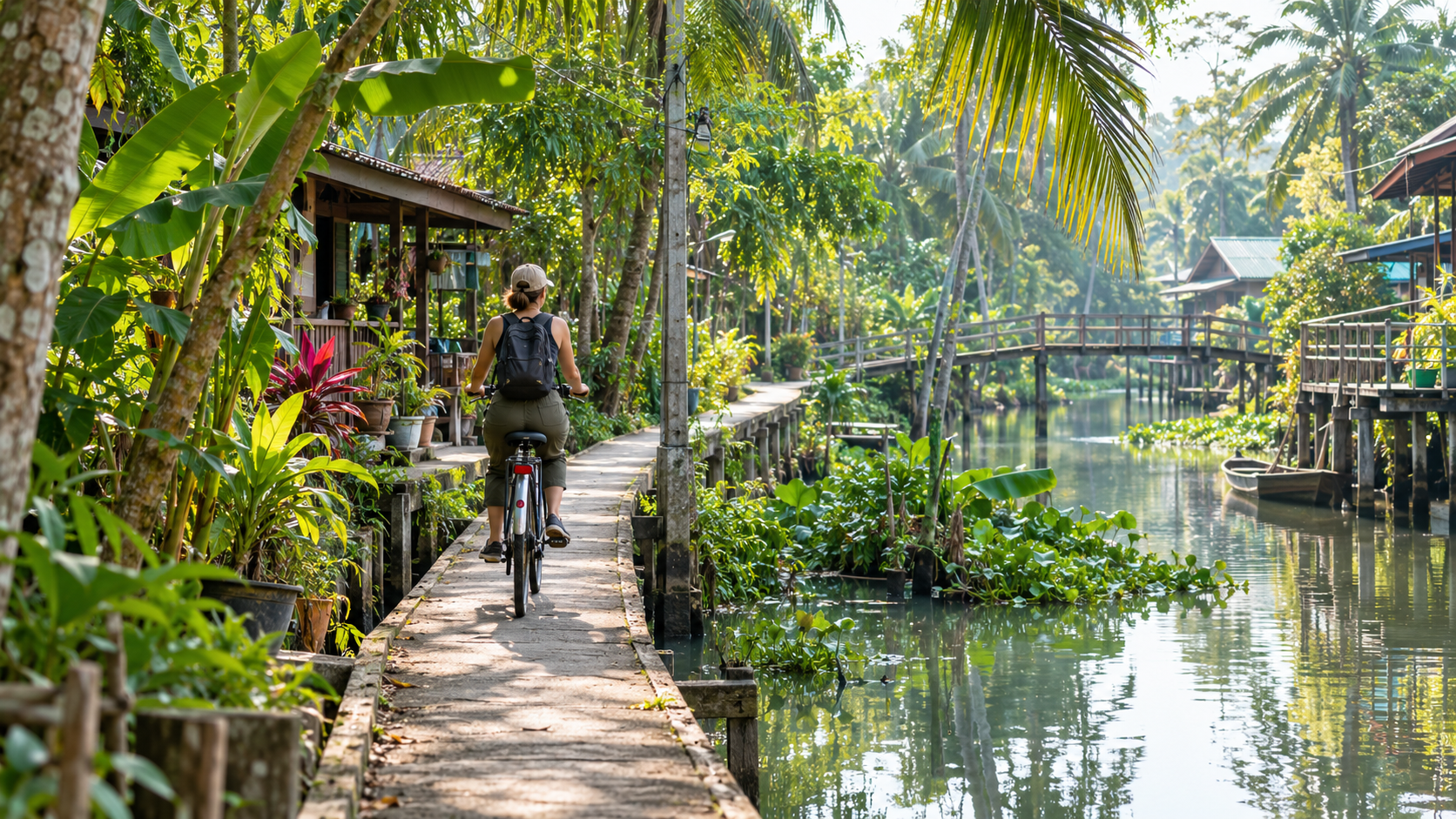
- Sukhothai (2 nights): the first capital of Siam, a vast historical park best explored by bicycle. It fits neatly between Ayutthaya and Chiang Mai.
- Chiang Rai (2 nights): the White Temple (Wat Rong Khun), the Blue Temple and the Black House (Baan Dam). Skip the day trip from Chiang Mai: it is over three hours by road each way. Chiang Rai’s airport lets you fly back to Bangkok.
- Two islands instead of one: Samui then Koh Phangan or Koh Tao in the Gulf, or Krabi then Koh Lanta or Phi Phi on the Andaman side.
Sample split: Bangkok (3 nights), Ayutthaya (1), Sukhothai (2), Chiang Mai (4), Chiang Rai (2), then 8 nights by the sea on two islands and a last night in Bangkok.
Gulf or Andaman: which coast for which season
The two coasts don’t share the same monsoon.
- Andaman coast (Phuket, Krabi, Phi Phi, Koh Lanta): best from November to April. From May to October the southwest monsoon brings showers and rougher seas; some boats are cancelled on bad days.
- Gulf of Thailand (Koh Samui, Koh Phangan, Koh Tao): good from January to September, and very dry from February to April. The heavy rain falls from October to December, with November the wettest month.
- From January to April both coasts work well. In October both are often wet.
In short: June to September, head for the Gulf; November and December, head for the Andaman. For a month-by-month breakdown, including the north, see the best time to visit Thailand.
Good to know: in the north, the cool season (November to February) is the most pleasant. In March and April it is very hot and the air is often hazy with smoke from agricultural burning. If you have breathing problems, ask your doctor before choosing your dates.
Getting between stops: journey times and prices
One-way price ranges, checked in 2026 across several sources. They vary with the season, so check before you go.
- Bangkok → Ayutthaya: train from Krung Thep Aphiwat or Hua Lamphong station, 1 to 2 hours depending on the train, about 15–20 THB in 3rd class. Minivan from Mo Chit bus terminal: 1 h 30 to 2 h 30, about 150–220 THB.
- Night train to Chiang Mai: 12 to 14 hours. Air-conditioned 2nd-class berth: about 700–1,050 THB depending on the train (lower berths cost a little more). 1st class: about 1,250–1,650 THB per berth. In high season, book several days ahead.
- Bangkok → Chiang Mai by air: about 1 h 10 to 1 h 20 in the air, usually 1,000–2,500 THB on a low-cost airline, checked bags extra.
- Sukhothai: from Bangkok, a 6- to 9-hour bus (Mo Chit terminal), or train to Phitsanulok then a bus of about 1 h 30. To Chiang Mai: 5 to 6 hours by bus, about 300–450 THB.
- Chiang Mai → Chiang Rai: Greenbus, about 3 h 20 on VIP and 3 h 45 on Express, roughly 260–420 THB depending on class.
- To the Gulf islands: direct Bangkok–Samui flight (Bangkok Airways), about 1 h 10, but pricey (about 2,800–6,800 THB). Cheaper: a low-cost flight to Surat Thani then bus and ferry (5 to 7 hours door to door, 1,500–3,000 THB in total), or a combined bus + boat ticket (11 to 14 hours, about 1,250–1,750 THB).
- Between the Gulf islands: Samui–Koh Phangan in 20 to 60 minutes (about 200–500 THB), Samui–Koh Tao in 1 h 30 to 3 h 15 (about 450–800 THB).
- To the Andaman coast: Bangkok–Krabi flight of about 1 h 25 (about 900–2,000 THB) or Bangkok–Phuket (1 h 20 to 1 h 35). From Chiang Mai, direct flights reach Krabi in about 2 hours.
- Andaman ferries: Phuket–Phi Phi in 2 hours by ferry (about 500–700 THB) or 1 hour by speedboat (750–850 THB); Krabi–Phi Phi in about 2 hours (490–750 THB). A small fee of about 20 THB is paid in cash on arrival at Phi Phi.
Train tickets are sold at stations or on the official State Railway of Thailand (SRT) website; booking platforms add fees.
Tips for a realistic itinerary
- Expect to lose half a day every time you change base: four stops done well beat eight rushed ones.
- A night train replaces a hotel night and saves you a day of travel.
- Keep at least one spare night in Bangkok before your flight home: rough seas can delay a boat.
- Check entry requirements before booking: see our Thailand visa 2026 guide.
Good to know: for your days in Bangkok, Mr Schaka’s free app Thaïlande en poche brings together the maps and addresses from the guide. It installs straight from the website.
Frequently asked questions
Is two weeks enough for Thailand?
Yes, for Bangkok, Ayutthaya, Chiang Mai and one island. Any more and you spend your time in transit.
Night train or flight to Chiang Mai?
Flying is faster. The night train takes 12 to 14 hours, but you sleep on board and save a hotel night.
Which island in November or December?
Go for the Andaman coast: Krabi, Koh Lanta, Phi Phi or Phuket. The Gulf (Samui, Phangan, Tao) gets its heaviest rain then.
Should I book transport in advance?
Yes for night trains and flights in high season (December to February) and at Songkran (April). For buses and ferries, a few days ahead is usually enough.

Want to dig deeper?
Every Thailand itinerary starts and ends in Bangkok. Mr Schaka’s practical guide helps you make the most of your first and last days there: neighbourhoods, transport and addresses. The English edition is out now as a PDF ebook: buy it here →