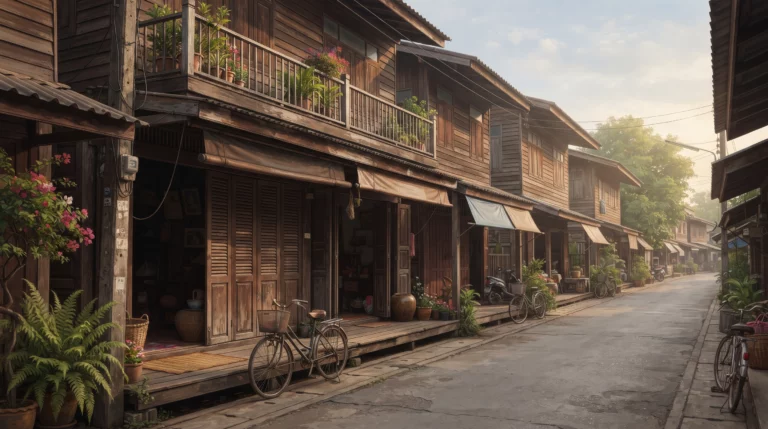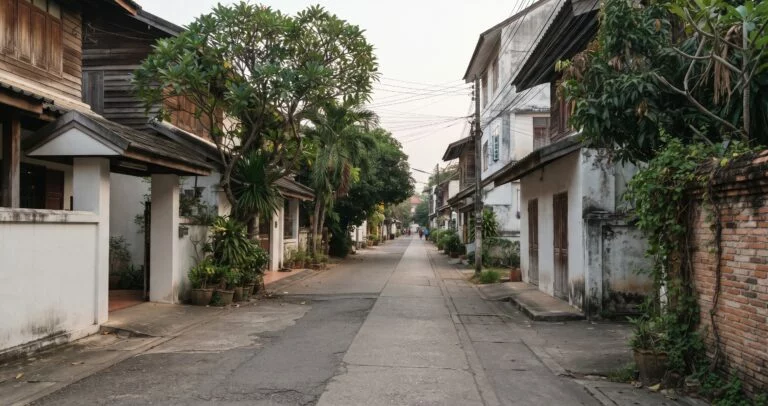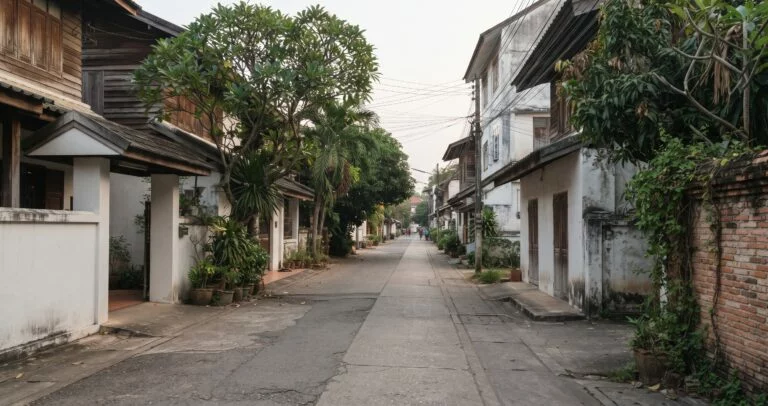

Chanthaboon’s riverside quarter is best understood on foot and without rushing. Historic façades, small shops and passages reflect ties to the river, trade and family life. This is not a frozen backdrop: residents work and live here. Walking slowly lets you notice materials, signs and architectural details while leaving room for people to go about their day.
Plan your visit
Stay on public routes and leave space near shops and river access. Give way to deliveries and residents moving through the area. Groups can walk in a line and keep voices low. Paths near the water may be slippery after rain, so wear comfortable shoes. If you want to enter a building, choose a place that welcomes visitors and ask about its rules.
Tips and itinerary
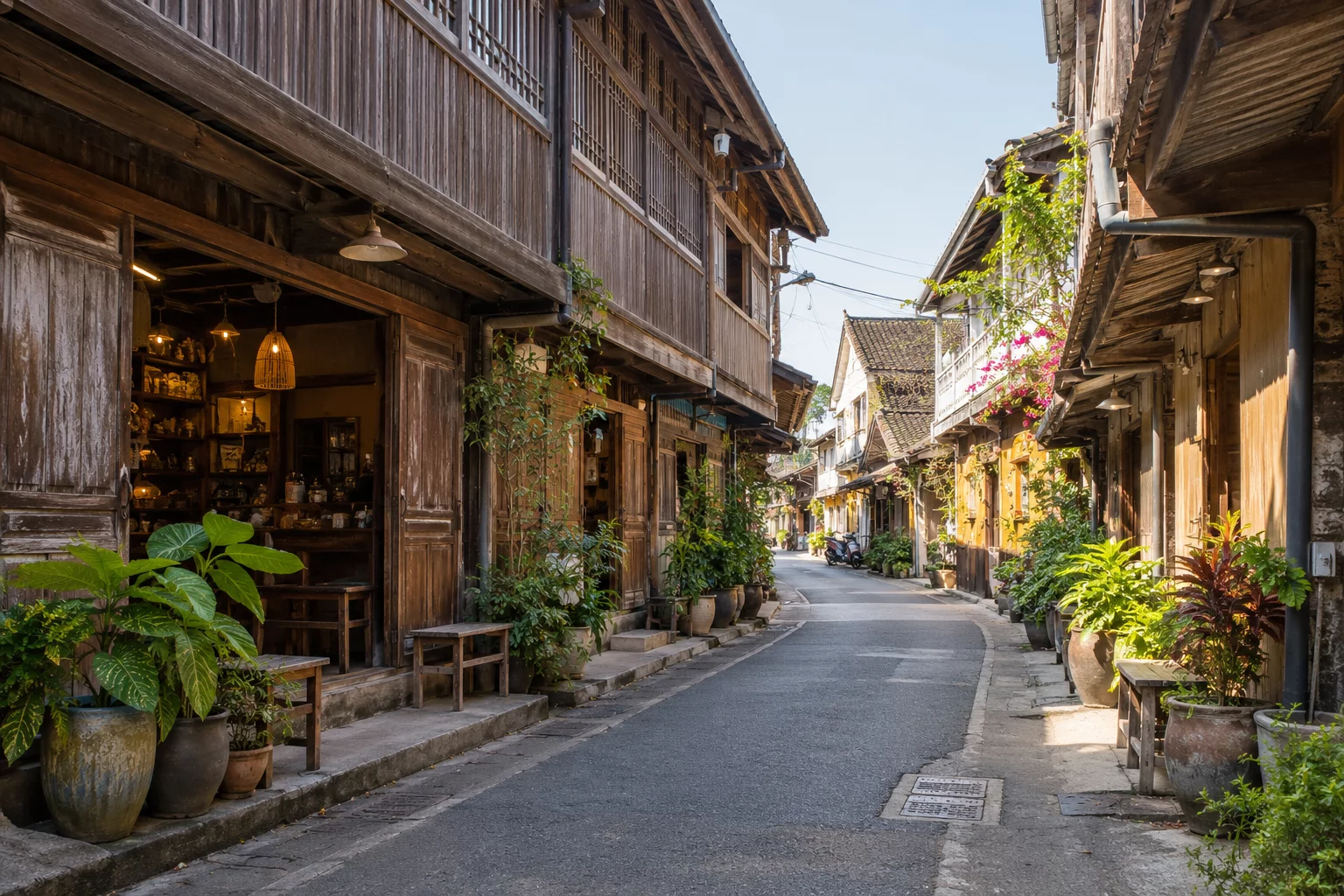
Family businesses are a direct way to support the neighborhood. Stop at an open café or shop, check prices and respect waiting times. Ask before photographing someone at work. An open door does not mean every room is accessible. A local guide can add historical context and explain where visitors should avoid lingering. Do not publish private interiors or personal information.
A balanced day
Chanthaboon’s waterfront is best approached as a living neighbourhood, not an open-air museum. Shops, homes, places of worship and riverside passages belong to a community that is still active. Thailand.go.th describes the historic area as roughly a kilometre along Sukhaphiban Road, including the communities of Tha Luang, Talat Klang and Talat Lang. That gives you a useful scale for a walk, but it does not mean every building is open to enter.
Notice the buildings and their details
As you walk, look at doors, windows, materials and signs of repair. Thailand’s Digital Tourism Center describes old houses and shops, carved wooden details and architectural influences shaped by cultural contact. The area cannot be reduced to one style; its interest lies in variety and in how residents have adapted their surroundings. Stay on public routes, move slowly and do not lean on façades or enter a courtyard unless invited.
A good photograph does not require standing at someone’s doorstep. Frame from public space, keep entrances clear and ask before photographing a person or a business at work. If someone declines, thank them and continue. Places of worship have their own expectations: read posted signs, dress respectfully and keep your behaviour quiet.
Follow the river and understand the past
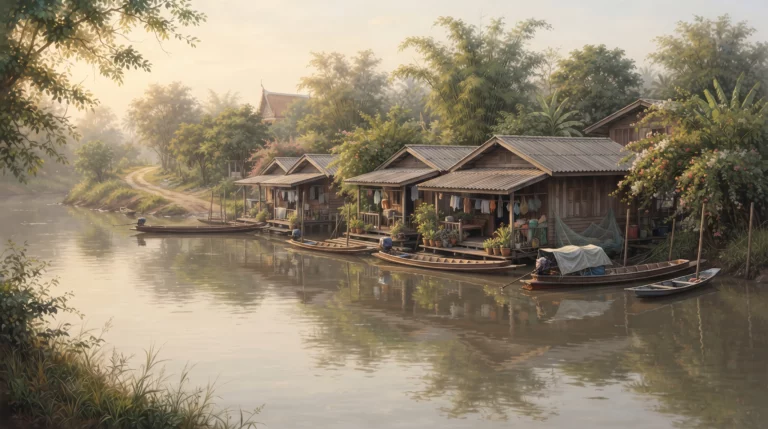
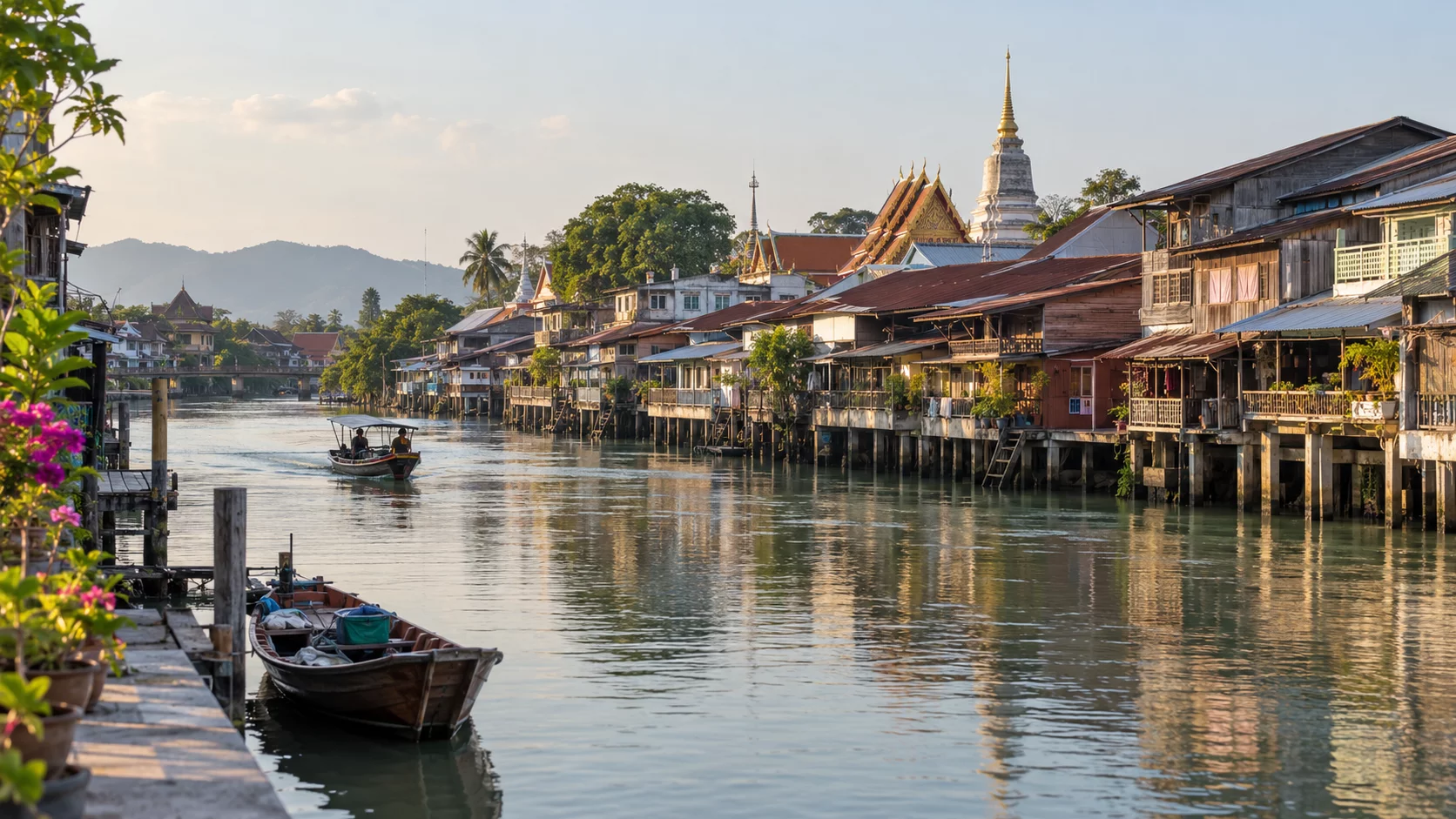
The river helps explain how the neighbourhood developed and traded. Thailand.go.th presents Chanthaboon as an old commercial centre and a multicultural area whose temples, shrines and houses reflect exchanges among communities. Historical context is useful, but it cannot replace residents’ own stories. If a local guide is available, a guided walk may help you hear situated accounts and notice details that are easy to miss.
Plan a route that alternates lanes with pauses near the water, while respecting access and safety signs. Bankside surfaces can be narrow or slippery; do not approach an unstable edge for a photograph. Shops and services may keep changing hours. If you have a particular place in mind, confirm it is open instead of assuming every historic house welcomes visitors.
Pause without getting in the way
The neighbourhood encourages a slower pace, but its streets are also used for everyday errands. Avoid stopping in a group in the middle of a lane, let customers leave shops and keep entrances to homes clear. A stop at a local business is a simple way to support the area; order patiently and ask before photographing food or staff. Carry a refillable bottle and take your rubbish with you.
Families can choose a short loop and an easy meeting point. Travellers who walk slowly can reduce the distance and plan seated breaks. Check the weather and wear shoes suited to uneven surfaces. If you need step-free access or particular facilities, contact places in advance: older streets can be difficult for some mobility needs.
A flexible, considerate walk
Begin near a familiar entrance, follow the main street and explore only lanes clearly open to the public. Pause to read signs or talk when residents have time. Keep an offline map and ask for directions without assuming every small passage is a public shortcut. If you have little time, choose one section instead of rushing through the whole area.
Chanthaboon reveals more to visitors who observe without taking over. A useful question is not how many old houses you can photograph, but how the neighbourhood continues to work today. Respecting shop routines, quiet places of worship and residents’ privacy is part of the visit. You may leave remembering a façade, a reflection on the water or a conversation. Such details, more than a checklist of landmarks, are often what make a return worthwhile.
FAQ
How much time should I allow?
One day is enough for a few stops at an easy pace. Check opening times.
How can I visit respectfully?
Stay in public areas, follow site rules and ask before taking photographs.
Should I book ahead?
Check access, transport and opening times for your chosen stops.
#Chanthaburi #Chanthaboon #Thailand #HeritageTravel #MrSchaka

To go further
Mr Schaka’s guidebook, Secret Thailand – Where Nobody Goes – The Practical Guide, covers the essentials: transport, neighbourhoods, addresses, food, etiquette and safety, updated for 2026–2027.