
An urban staircase with a story
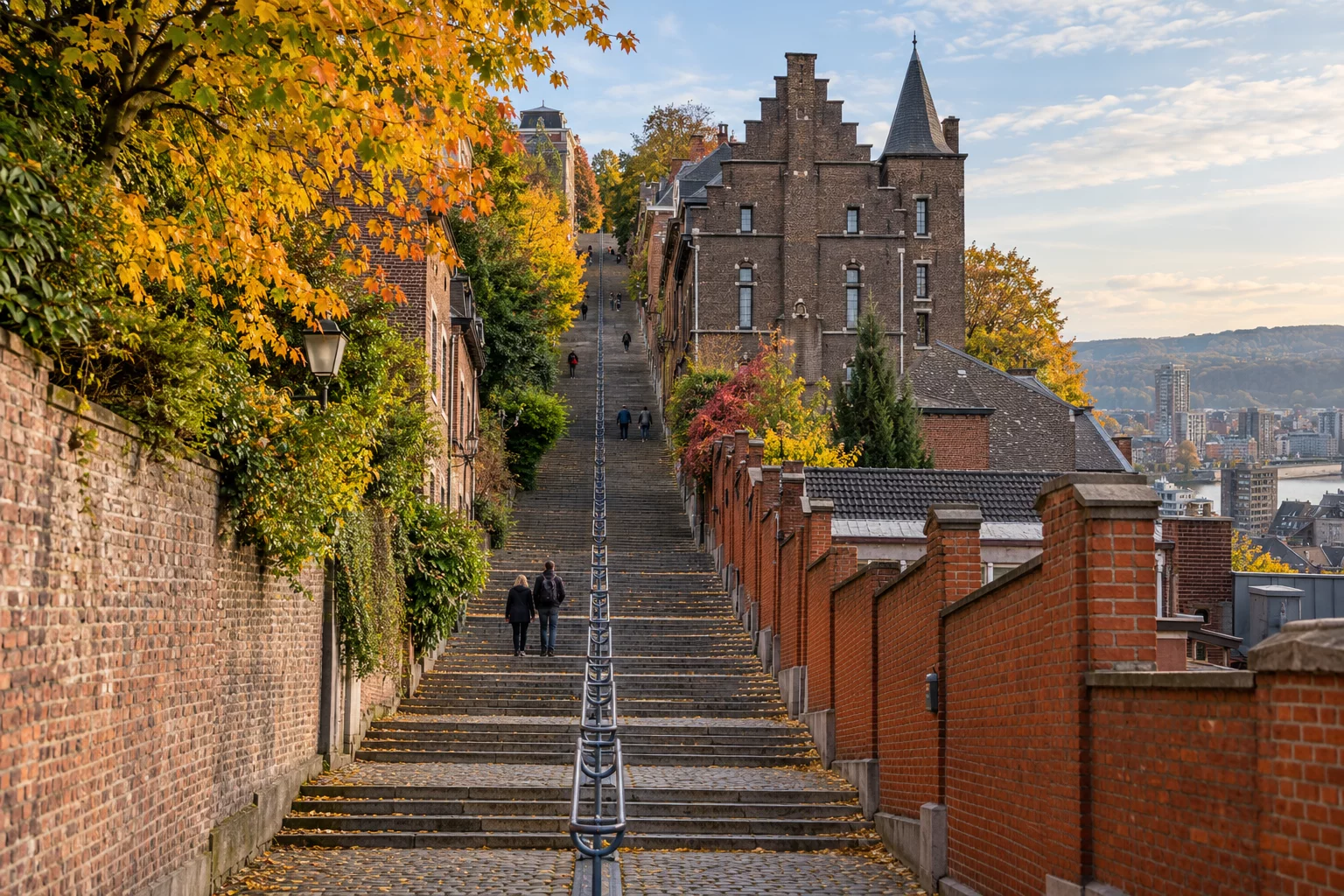
Montagne de Bueren is a long flight of 374 steps and one of Liège’s best-known landmarks. Its importance goes beyond the physical challenge: built in the nineteenth century, it connected the citadel barracks directly with the city centre. Climbing it makes the city’s relief tangible and shows the effort once required to link lower neighbourhoods with the heights. The visit is more than counting steps. Notice the walls, façades and small pauses between flights, while allowing residents to move through the area.
Separate history from legend
The staircase’s name recalls the 600 Franchimontois, led by Vincent de Bueren and Gossuin de Streel, who tried in 1468 to capture Charles the Bold and Louis XI. A popular misconception says they used this route; Liège’s tourism office states that they never passed through this spot. It is a useful reminder that a frequently repeated story is not always accurate. Read the context and distinguish the medieval event from the nineteenth-century construction. That gives the walk a richer and more nuanced history.
Climb without turning it into a contest
The steps are steep and the climb can be demanding. Wear shoes with good grip, move at your own pace and stop when needed. Keep one hand free and avoid leaning on walls or railings that are not intended for that purpose. Visitors with limited mobility can enjoy other walks and viewpoints without climbing the full staircase. Check access to the slopes before setting out, especially in rain or during works. The goal is to discover the neighbourhood, not to set a record.
Explore the slopes around the citadel
At the top, extend the outing along paths, side stairways and small passages on the slopes. The tourism office describes this area as a meeting of heritage and nature in the city, with old walls, monuments and views over the Meuse valley. Paths can be uneven and signs require attention; consult a route map and stay on authorised trails. Some sections are close to homes, so quiet matters. Respect gardens and leave the place as peaceful as you would like to find it.
Pause to look across Liège
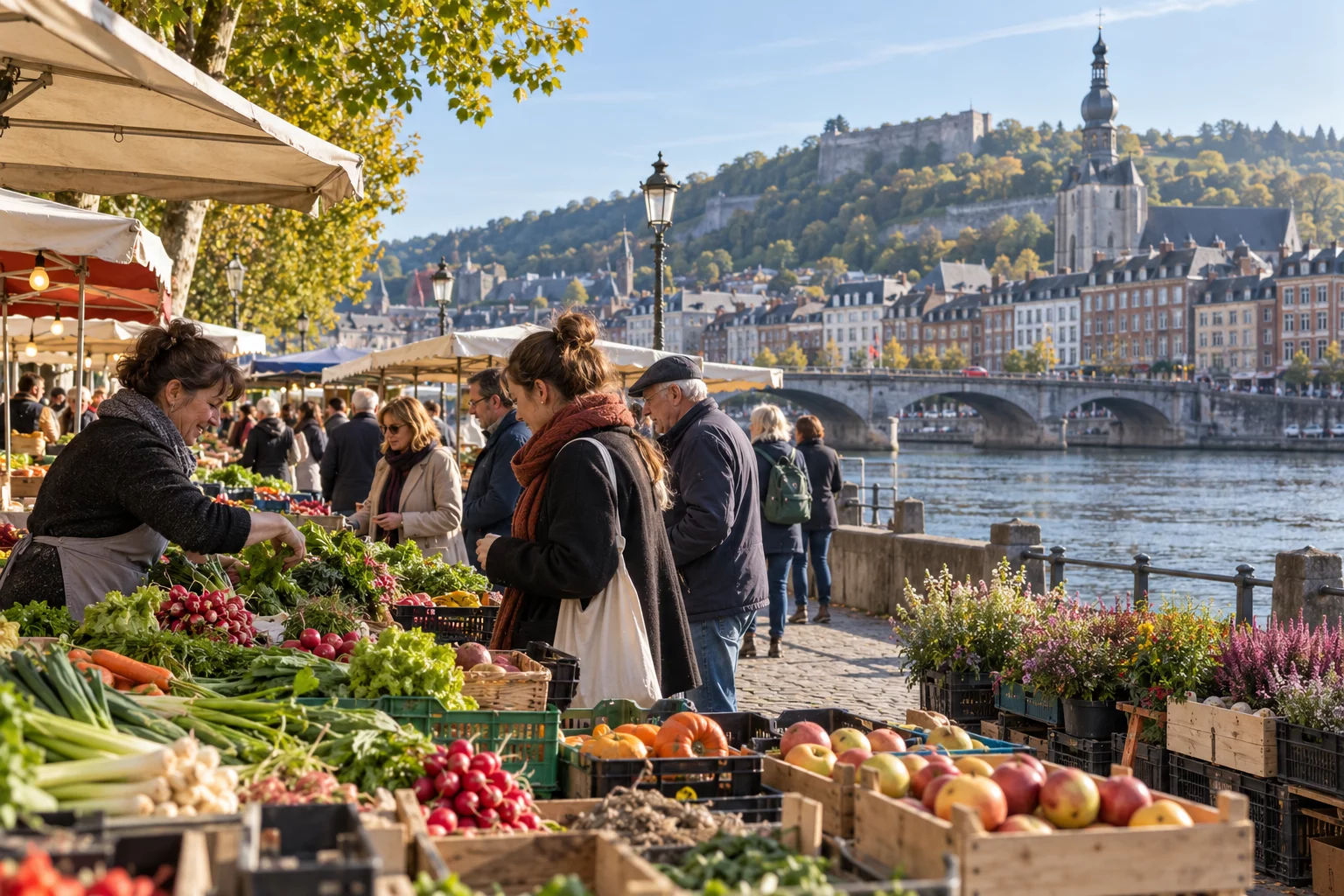
The heights offer changing views of rooftops and the valley. Instead of taking one photograph after another, choose a place where you will not obstruct anyone and study the city’s lines: streets climbing uphill, dense neighbourhoods and the opening towards the Meuse. Light changes the contrast between stone, trees and façades. A short pause also helps you recover after the climb. The slopes are shared public space, not a private viewing platform. Keep paths clear and take your rubbish with you.
Return through Hors-Château
Hors-Château is a natural continuation of the walk: its lanes, historic dead ends and older houses offer a different pace after the climb. You can connect heritage, museums and squares without entering every building. Saint-Barthélemy Collegiate Church and Place du Marché with its Perron are useful reference points for reading the city’s history. Check museum and church hours before planning, since access differs from that of a public staircase. Notice how the scale of the streets changes as you move through the district.
Plan for different abilities
For a family or a group with different mobility needs, choose a meeting point and an alternative route. Some people can climb Bueren while others explore the lower quarter, then meet again at an accessible place. Carry water and plan a break, especially in warm weather. The figure of 374 steps sounds dramatic, but fitness and weather matter more than the challenge. With limited time, choose a relaxed climb and a short loop rather than an overambitious route across the slopes.
Leave with a new view of Liège
After the walk, the centre feels different: you have experienced its incline, seen its walls and understood that the slopes are both green space and urban history. Write down one detail that surprised you—a courtyard, wall, viewpoint or inscription—and use it to begin another walk. Liège can be explored through its stairways and transitions, not only through isolated monuments. Which path on the slopes would make you want to keep walking?
Plan the climb around your own pace
The Montagne de Bueren looks straightforward on a map, but its 374 steps create a sustained effort. The best approach is not to treat it as a race. Wear shoes that fit securely and have a good grip, especially after rain. Carry water in warm weather and keep your hands free so you can maintain your balance. If you want to spare your knees, pause on the landings, catch your breath and look at the façades instead of focusing only on the next flight. That slower rhythm turns the climb into part of the visit. Plan for the descent too: it uses the legs differently and can feel harder than going up. If you have limited mobility, a stroller or young children, look for an alternative route to the upper neighbourhood rather than feeling obliged to tackle the staircase. Liège can also be explored from other streets and viewpoints. Wet stone can be slippery, so postponing the climb is wiser than risking a fall to keep to a schedule. Before stopping for a photograph, check that other people can pass. Residents use the staircase as well, and a brief pause on a landing is considerate. In summer, direct sun can make the climb tiring; an early or later visit may feel more comfortable, subject to the day’s conditions. There is no prize for reaching the top quickly. The point is to enjoy the changing view, arrive safely and leave enough energy for the rest of the old town.
Read the staircase as part of the city
Bueren is more than a number of steps. It connects the lower urban fabric with a higher neighbourhood and makes one feature of Liège immediately visible: the city rises over steep ground. As you climb, notice how houses adapt to the slope, how walls hold gardens in place and how narrow streets fit between buildings. Give yourself time to see the changing perspective. From below, the staircase seems almost vertical; halfway up, rooflines begin to align and the city opens out; at the top, the wider landscape becomes easier to read. This gradual shift offers a practical way to understand the relationship between the Meuse, the historic districts and the heights. It also shows that the city is not a uniform backdrop: streets respond to terrain, use and different periods of construction. For a more thoughtful visit, make the first ascent without trying to photograph everything. Pause at a distance afterwards and look for the staircase within its surroundings. Be mindful of doors, windows and private gardens: these are part of people’s daily lives. Photographing architecture from public space is one thing; entering private property or lingering on residents is another. A respectful visit gives a more accurate impression of Liège. Take note of the details that are easy to miss when concentrating on the steps: the texture of stone, the rhythm of landings and the way the buildings frame the view.
Make an unhurried walking loop
The Montagne de Bueren works well as part of a longer walk through the old districts. Rather than climbing, taking one photograph and leaving, plan a loop that includes nearby streets and time for a break. Check your starting point and return route first: steep streets and stairways can make navigation less obvious than it appears. At the top, continue on foot for a few minutes to explore the neighbourhood and find a viewpoint that is not limited to the staircase itself. Choose a descent that suits how you feel that day. This avoids repeating exactly the same path and reveals another side of the city. If you want to see other central sights, group them by proximity instead of packing distant landmarks into a rushed day. Leave time to stop, consult a map and choose a café or meal according to your interests. Opening hours and access can change, so check official information before setting out. During an event, construction or a busy period, a flexible loop is more enjoyable than a tightly timed itinerary. Public transport can help you reach the centre or avoid a long uphill walk, but confirm current stops and schedules. This approach is useful for first-time visitors: it lets Liège unfold at a human pace without turning every stop into a physical challenge. Keep a simple backup route in mind in case the weather changes or the staircase is temporarily closed.
Share the space with residents
A staircase photographed by thousands of visitors is still an everyday urban passage. Help keep it that way by avoiding litter, loud music and long stops in the middle of the steps. When taking a picture, move to a landing and make sure people going up or down can pass. A tripod, a group or bulky equipment takes up more room, so use extra care. Follow temporary signs: works, an event or a closure may change access. Keep pets under control and supervise children, especially on the steps. Weather affects comfort and safety; direct sun, rain and ice can all make the climb more demanding. A considerate visit also looks beyond the familiar image. Supporting a local business, sitting at a terrace without blocking the way and speaking calmly with residents when the moment is right can make the experience more balanced. Do not assume that a public place is available for a private photo shoot. When recommending the staircase, give useful context: the step count alone does not describe the effort, and conditions vary. Mentioning suitable shoes and an alternative for some visitors helps people make an informed choice. The most memorable visit is often the one in which you notice how the neighbourhood works, not simply how quickly you reached the top. Leave the landing as clear as you found it and let residents continue their day.
A few practical checks before setting out
Before visiting Bueren, check local information about access and any works. It is a public staircase, but conditions can change. Wear suitable shoes, take a break when needed and allow time to explore the surrounding streets. The 374 steps are a useful reference, though the effort depends on pace, weather and fitness. Visitors who do not want to climb can enjoy other views over Liège’s higher districts. Keep your phone and belongings secure while walking, especially when stopping for photographs. A good visit depends as much on preparation as on reaching the top.
Use the climb as a pause in the day
A visit to the staircase can be a useful break between other sights rather than a challenge to finish. Give yourself time to look back as the city changes below you, and leave room at the top to explore the streets before choosing a route down. This is especially helpful if you are visiting with friends who have different walking speeds. Agree on a meeting point and let everyone take the climb at a comfortable pace. If one person decides not to climb, the group can plan a nearby alternative and meet again afterwards. Avoid scheduling a timed reservation immediately after the walk; weather, pauses and the effort involved can all affect how long it takes. Carry a small amount of water and keep your hands free. If the staircase is crowded, wait for a clear moment before taking photographs and give residents space to pass. A slower visit creates a better sense of the neighbourhood and makes the landmark part of a broader walk through Liège.
FAQ
How many steps are on Montagne de Bueren?
Liège’s tourism office lists 374 steps. The climb is steep and suitable footwear is important.
Did the 600 Franchimontois use this staircase?
No. Despite a common belief, the tourism office says they did not pass through Montagne de Bueren.
Is access charged?
The staircase is a public outdoor site with free access. Nearby museums and guided visits have their own terms.
Can I visit the slopes with children?
Yes, if you choose a suitable route and keep an eye on steps, slopes and narrow passages.

The book
The Empty Wall is the second book of Oscar’s Notebook, a series of crime novels set in Liège.