Nonthaburi deserves a day with its own purpose
From Bangkok, Nonthaburi can look like another name on a map of the Chao Phraya. It is also a useful place to change the way you look at the city region: step away from a sequence of major monuments, watch how the river is used and spend time in an ordinary neighbourhood. Water remains a transport route, yet it also helps explain relationships between a landing place, shops, homes and local memory. This guide does not promise a seamless walking circuit connecting every attraction in the province. It suggests building a manageable outing around one area, with comfortable pauses and a return journey you understand. A few well placed hours can offer more than a long list of hurried stops.
Separate the town from the wider province
Nonthaburi is a name you will encounter at different geographical scales. A provincial tourism map may include places some distance from your actual arrival point, even when they appear together in a short brochure. Thailand’s national tourism authority lists Koh Kret, Nonthaburi Museum and several temples among the area’s attractions. Treat that selection as a collection of possibilities rather than an automatic walking itinerary. Decide whether your main interest is the urban riverside, a cultural visit whose access you have confirmed, or a separate island outing focused on craft traditions. Making this distinction before leaving helps you avoid turning regional proximity into a mistaken promise that everything can be reached easily on foot.
Choose an arrival point you can recognise again
Your first practical decision is to establish where you will really arrive. Save its Thai name, its position on a map and a screenshot showing the way back. A pier, station or address only becomes a useful landmark when you can recognise it on the ground. If travelling with others, share the details rather than leaving all the information on one person’s telephone. Agree on a meeting place that does not obstruct people going about their day. This small amount of preparation gives you freedom afterwards: you can explore a nearby street without feeling that you have lost your only secure reference in a place that is still unfamiliar.
A river journey needs a specific service check
Arriving by boat can be part of the pleasure, but a passenger service is not a sightseeing trip available whenever you want it. Chao Phraya Express Boat publishes route, operating day and service information on its official website. Consult the details for your date, departure pier and intended direction. Do not assume that seeing a pontoon on arrival guarantees the same return option later. Services can vary by line and day. This article therefore does not freeze a fare or frequency into your plans. Before boarding, confirm the stop you need and your return possibilities. A short conversation at the start can prevent a tiring rearrangement when energy is running low.
Let the working pier explain itself
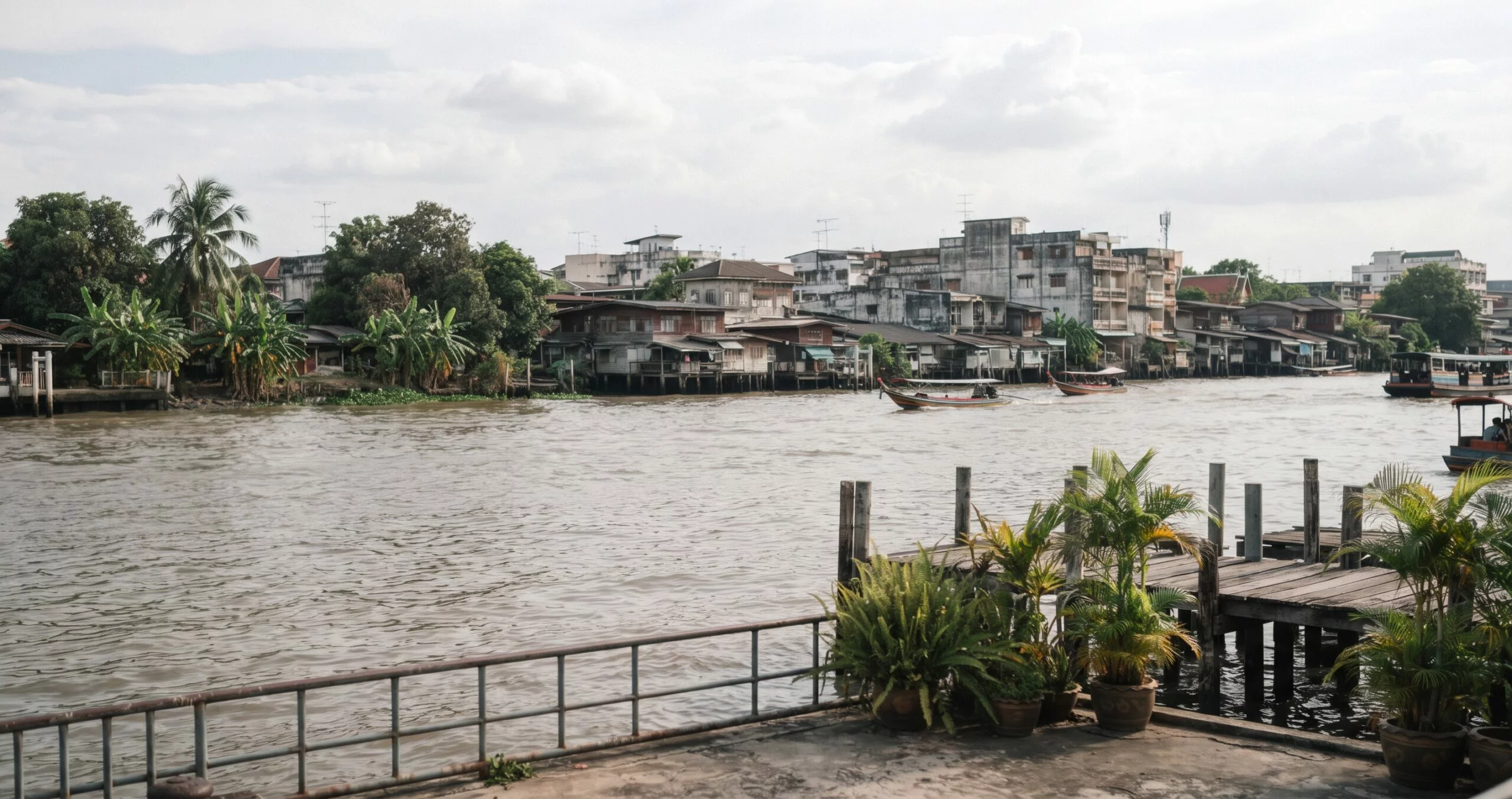
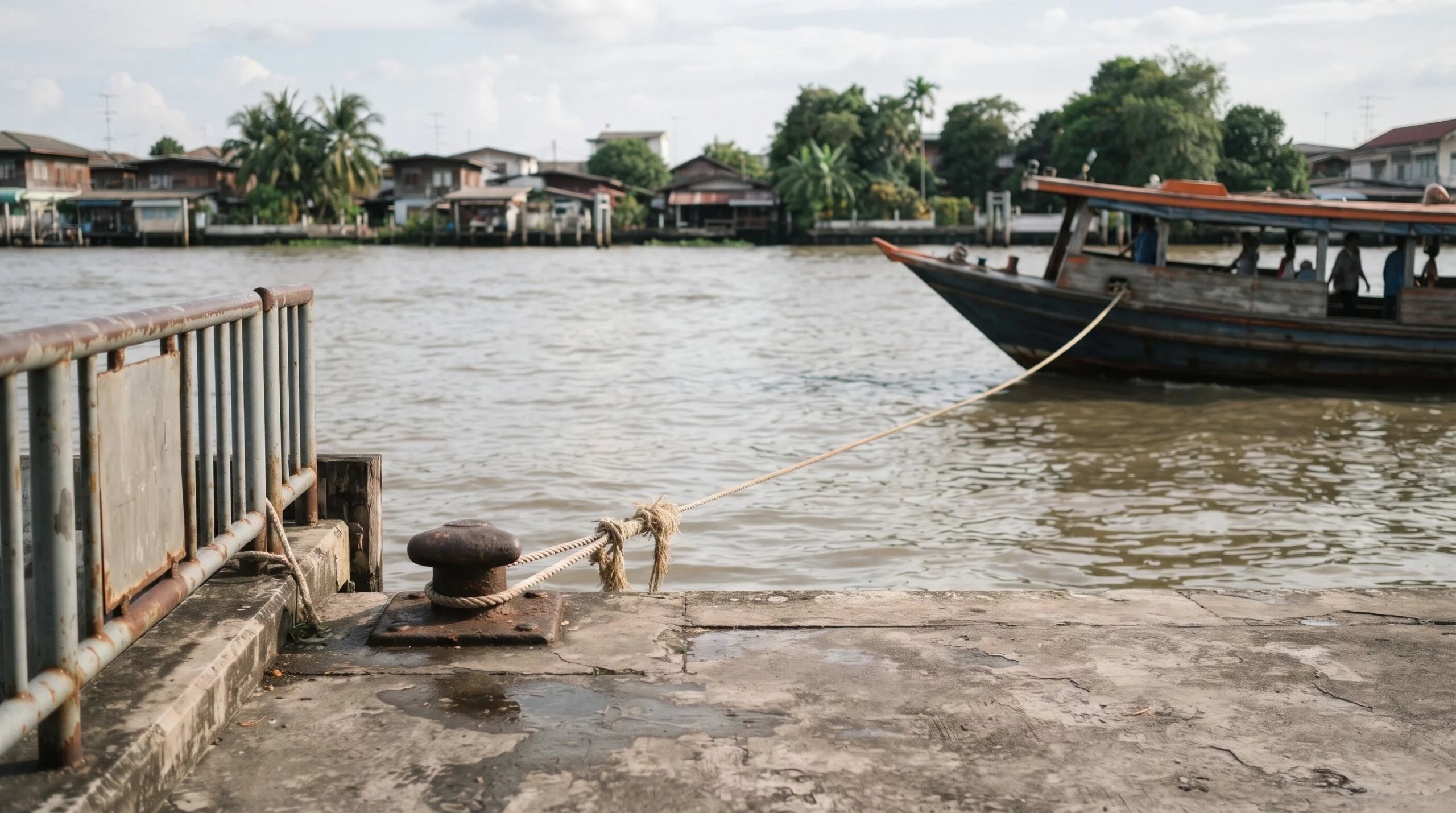
On arrival, spend a moment away from the movement of boarding passengers. Notice where people wait, where they walk and how goods occupy the available space. Watching first helps you understand the place without getting in the way of those who use it regularly. An appealing river view does not remove the practical purpose of a ramp, landing or access route. Avoid standing in a movement corridor to take a photograph. Find a stable position where looking at the water does not interfere with anyone else. Your visit then begins with attention to the people around you, rather than a rush to collect the first attractive image of the day.
Look at the Chao Phraya as a place of work
The river is more than a background for monuments. From the bank, you can observe departures, pauses, approaches and the changing perspectives they create. You do not have to identify every vessel to appreciate this organisation. Keep a clear distinction between what you can see and what you are guessing: a boat may carry passengers, but its precise route cannot be read from its outline. Make a few notes about movement, distance and sound instead of inventing an explanation. An everyday scene becomes more interesting when you allow something to remain unknown and later connect your observations with information that can actually be checked.
Move from the water into an ordinary shopping street
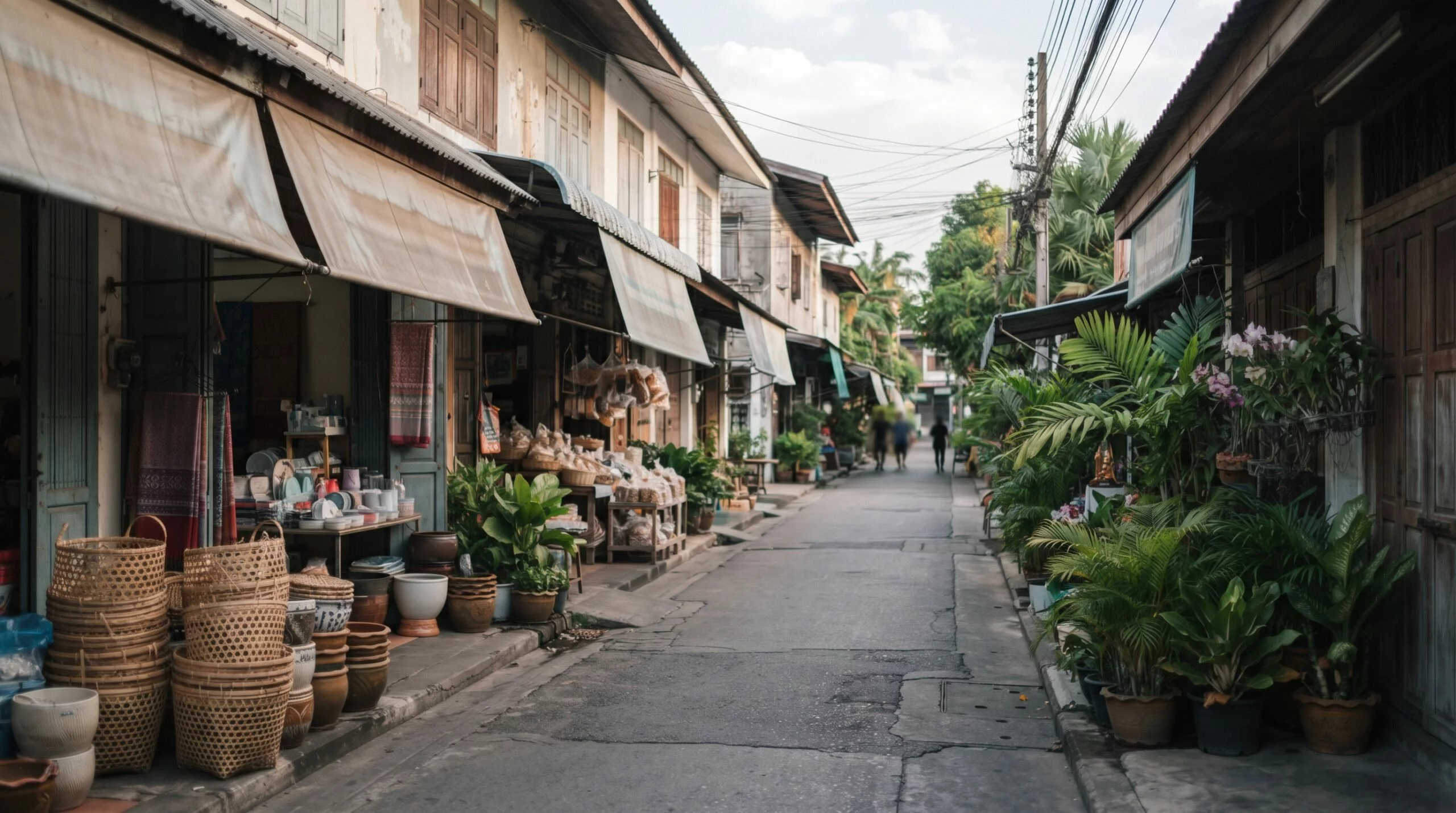
A nearby street may offer a different way to understand Nonthaburi after the landing place. Look for a comfortable position from which to notice the relationship between shopfront, awning and displayed goods. Objects can suggest activities, but they do not automatically grant permission to photograph a person or the inside of a business. A smile and a clear request make an encounter easier. If you buy something, do so because the purchase suits you, not because you think a transaction buys unrestricted use of the scene. This is a place where people live and work. Its ordinary continuity is precisely what gives a walk some depth.
Read materials without inventing a building’s history
Wood, plaster, metal and tiles can make it tempting to date a facade by sight. Resist turning a weathered surface into evidence of a precise age. A worn colour may reflect a particular maintenance cycle rather than a centuries old story. Describe what is visible: a shutter, a gallery, a repair or a change of material. If a reliable sign or official guide gives a date, add that information separately. This approach makes architectural observation available to everyone without requiring instant expertise. You can appreciate a street’s texture while avoiding an invented heritage designation or a pleasing anecdote that does not actually belong to the building.
Give a museum a deliberate place in the day
Nonthaburi Museum is among the reference points highlighted by the national tourism authority. If you want to visit, confirm access arrangements and opening information directly before making it the centre of your plans. An interesting address on a tourism page is not a guarantee that a door will be open when you arrive. Prepare a question as well: how did the area develop around the river, which objects explain local activities, or what changes appear in the documents on display? A clear question makes choosing easier. Even a partial visit can then deepen what you noticed outdoors rather than becoming another stop completed merely because it was listed.
Koh Kret is another project, not an automatic extra
Official introductions often connect Nonthaburi with Koh Kret and its Mon heritage, including pottery. That is a good reason to become interested, but it does not mean an island visit belongs automatically at the end of your urban walk. Check the relevant connections, the appropriate crossing point and the time needed to return before adding it. A provincial description can bring separate places together on one page without making them part of one simple route. Keeping Koh Kret for another day is a sensible choice. Leaving an extension for later does not weaken today’s visit; it can give each area the attention and practical preparation it deserves.
Make a pause part of understanding the place
A break can help connect the things you have just seen. Sit somewhere you are genuinely welcome, order something simple and look at the street from your seat. Note one detail from the pier, one material on a facade and one question you still have. This small review prevents individual scenes from dissolving into a general impression. It also gives you an opportunity to assess energy before deciding what comes next. There is no obligation to continue because three more items remain in a programme. The quality of an outing includes the space it leaves for comfort, conversation and a change of mind when the original plan no longer fits.
Eat without turning every dish into a challenge
Trying food can remain straightforward. Choose a counter or establishment whose operation you can understand, see what is being offered and ask questions before ordering. Dietary restrictions need a specific answer; the familiar appearance of a dish does not reveal every ingredient. Avoid ordering several preparations only to photograph them if you do not intend to eat them. A modest meal selected with attention can create a clearer memory than an accumulation of tastings. Keep drinking water and a shaded pause in your plans as well. You do not need to wait until the heat makes the return journey feel disproportionately demanding before choosing to stop.
Travel together without multiplying everyone’s tasks
With children or people who move at different speeds, choose an observation that can be shared. You might recognise the same landing place on the way back, notice three ways a facade is protected from the sun or sketch the outline of a boat. Keep the activity light rather than turning the walk into a test. More importantly, plan somewhere to sit, a chance to eat and a shorter return option. Discuss these possibilities before anyone feels obliged to carry on quietly. A shared day does not require everyone to study the same object at the same moment. It needs a structure in which people can express their needs without overturning every decision.
Plan movement around the real ground
A short distance on a map may involve a difficult crossing, a narrow pavement or a detour. If someone uses a mobility aid, ask the relevant operators or local contacts about actual walking conditions and boarding arrangements. This text does not declare a complete route accessible. A shorter outing with reliable resting points may be more useful than an ambitious circuit that works only in theory. On arrival, going back the way you came can be more comfortable than searching for an uncertain connection. Preparing in this way does not reduce discovery. It simply avoids asking an abstract distance to make a promise the physical route may not support.
Photograph with an intention and room for others
Before raising a camera, decide what you want to show: the connection between street and shop, a material detail or the width of the river. An intention helps you frame a scene without taking endless photographs. Stand away from queues and entrances, avoid identifiable faces when permission has not been given and accept a refusal immediately. At a place of worship, follow local guidance about clothing, footwear and photographs. A successful image does not depend on catching someone in a private moment. A threshold, a patch of shade or a distant boat can communicate an attentive presence without taking over the space.
Understand the illustrations accompanying this article
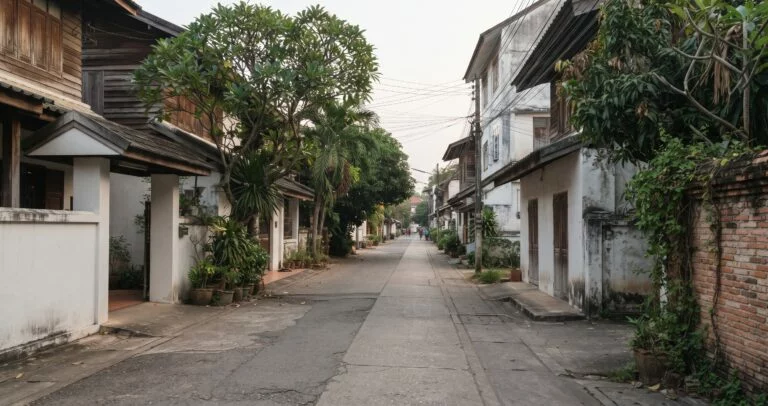
The images here were generated with Gemini from editorial prompts and supplied by the owner to illustrate the article. They evoke a riverside, a landing place and a shopping street. They are not photographs taken in Nonthaburi on a specified day. They do not establish that a business is open or that a particular pier has a particular condition. This distinction matters when using an article to prepare travel. Use the illustrations to enter an atmosphere, and current official information to decide a journey. Your own observations can later give the imagined setting genuinely located details, recorded through your notes and any personal photographs you choose to take.
Keep observation and explanation in separate columns
A notebook page can be divided into three headings: observed, learned and still to check. In the first, write something visible during your visit; in the second, a fact from an identified sign or source; in the third, a question for later. This simple method helps prevent an impression turning into certainty when you describe the day afterwards. A few words on a phone work just as well. There is no need to write a complete report on the spot. The purpose is to retain the precision of a detail and the origin of an explanation without allowing note taking to consume all your attention.
Review the return before the final stop
Around the middle of the outing, check your intended journey back. Look at the time, the group’s location and the relevant operator’s information. Keep a realistic alternative if the original service no longer fits the situation. An option is only useful when you know how to reach it and what it requires of everyone. Do not let one last visit push departure towards an unnecessarily tight limit. Returning calmly is part of the experience, particularly when the day will continue in Bangkok. An address can always be noted for another occasion instead of becoming a reason to hurry across town today.
Add one extension for a clear reason
If time and energy remain, choose an extra stop for a specific purpose: explore a question at the museum, enter a temple whose access has been confirmed or observe a different stretch of water. Do not combine extensions simply because the icons look close on a screen. Every addition changes the pace, pauses and return arrangements. Ask what the stop would show you that you have not yet considered. If the answer is vague, sitting for a few more minutes in the same place may offer more than another transfer. A programme should remain a tool for the day, rather than a measure of how efficiently you can collect destinations.
Leave with a relationship rather than a collection
Nonthaburi rewards retaining a connection: between landing place and street, between an object and an explanation, or between local memory and the river’s present use. That connection does not have to summarise the entire province. It matters because it was made through your actual outing. Before leaving, review your landmarks, make sure everyone knows the next destination and keep the necessary information easy to find. Afterwards, you can describe a precise day, including its choices and limits, without claiming to have seen everything. The river will have helped you look more carefully, rather than merely transporting you between the sights someone else expected you to collect.
Sources for planning your visit
- Tourism Authority of Thailand — Nonthaburi
- Government Public Relations Department — Nonthaburi riverside heritage
- Chao Phraya Express Boat — official service information

To go further
Mr Schaka’s guidebook, Bangkok – The Practical Guide, covers the essentials: transport, neighbourhoods, addresses, food, etiquette and safety, updated for 2026–2027.