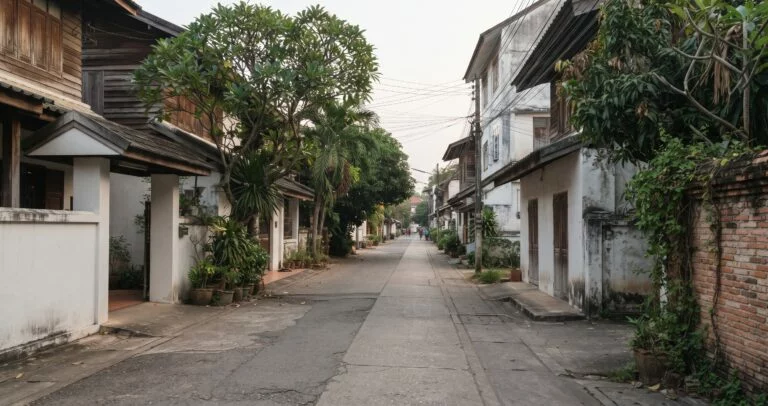
Read the town on foot
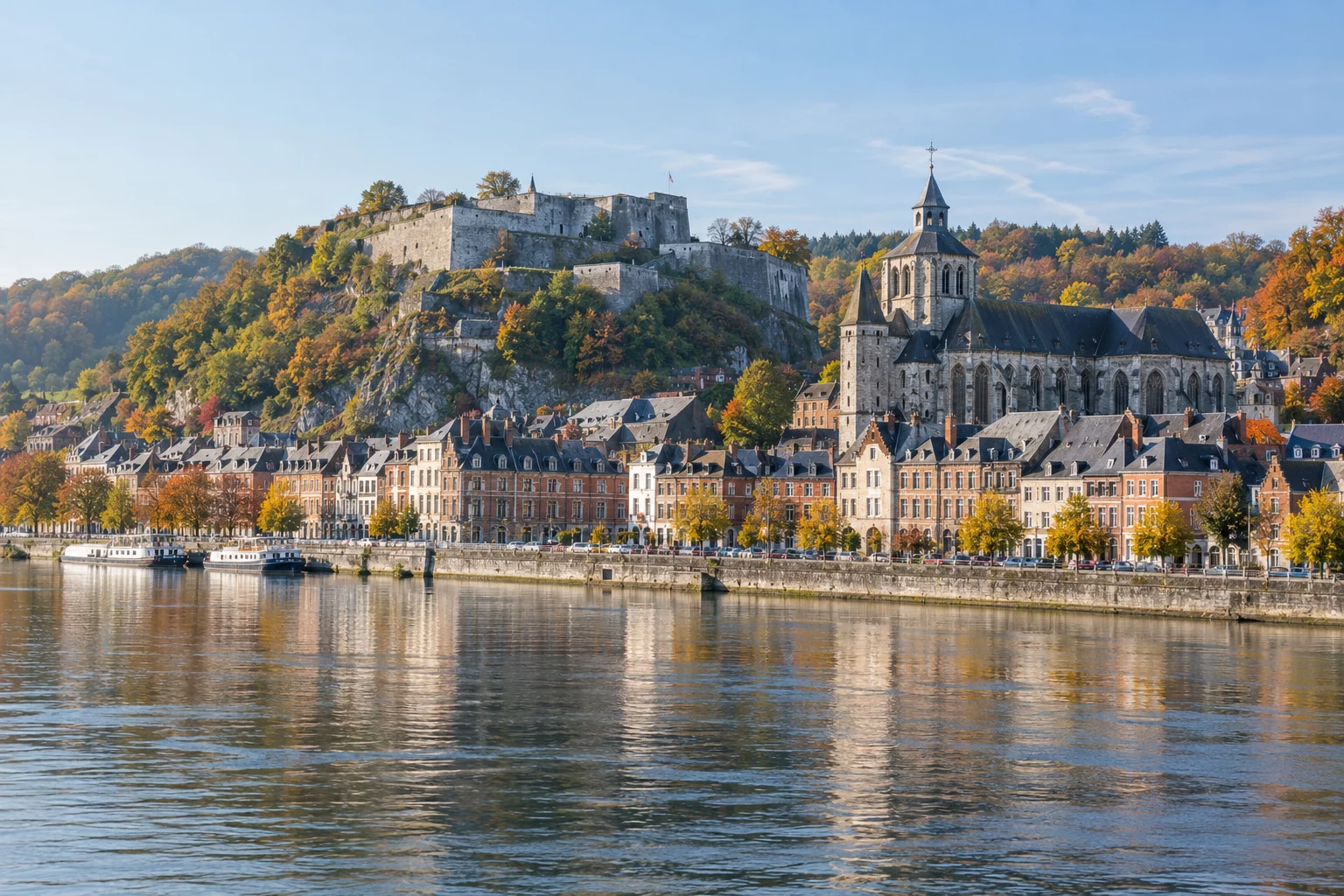
In Huy, the Meuse, slopes and central streets make a town easier to understand on foot than by rushing between monuments. VisitHuy lists a heritage route of about 2.1 kilometres and 45 minutes, excluding stops. Treat that estimate as a guide, not a strict timetable: an open church, a break or a photograph will add time. Check the official map and route conditions before setting out.
Grand-Place and Bassinia
Begin at the Grand-Place, both a heritage landmark and a public space used every day. Its façades, shops and terraces show a centre that remains lived in. Local tourism information dates Bassinia fountain to 1406. Pause to observe its details, position and the streets that meet around it. Monuments invite us to imagine how a square has served residents over time. Keep walkways clear and avoid touching fragile features.
The collegiate church and lanes
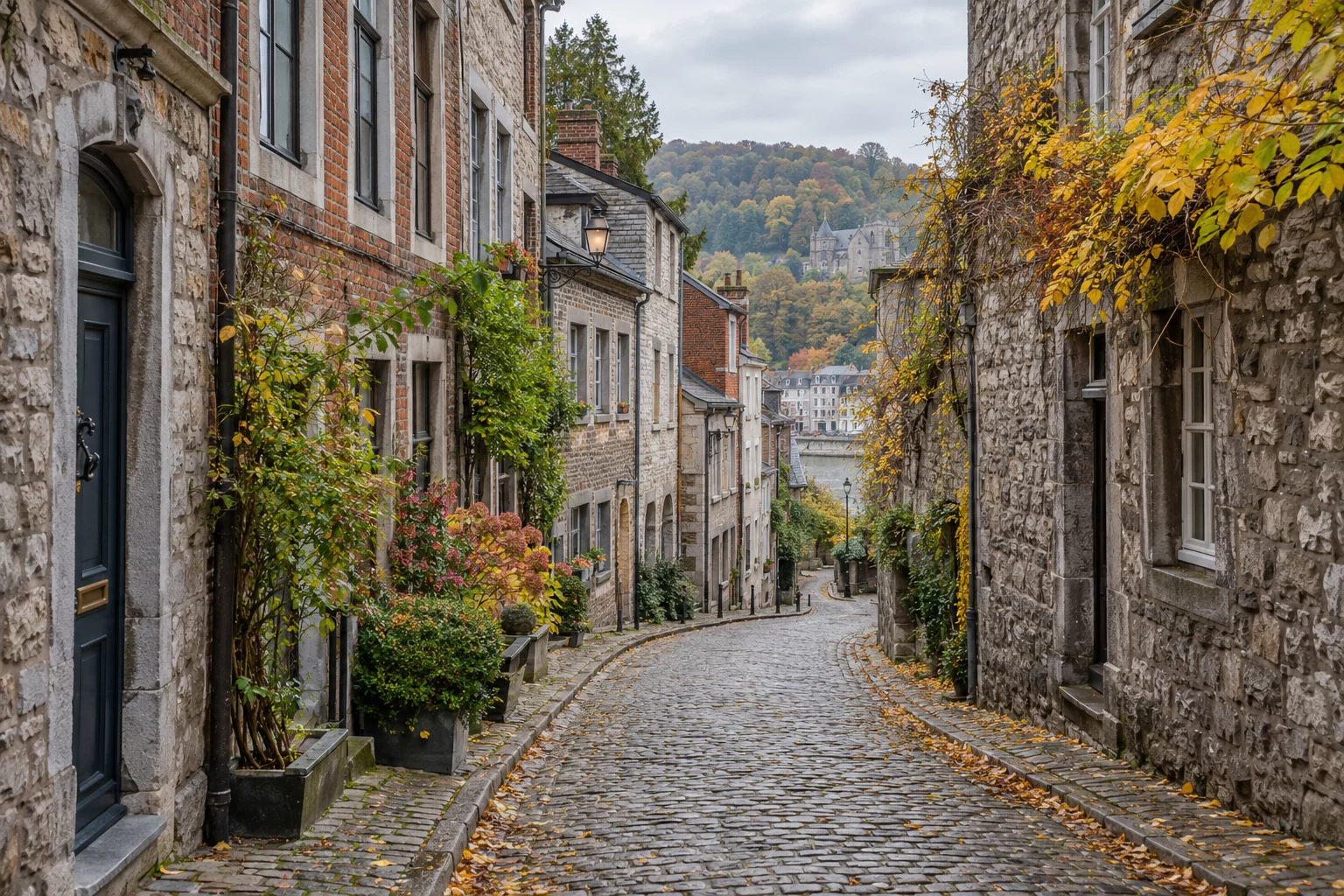
The Collegiate Church of Notre-Dame shapes several views across the centre. Before entering, notice how it sits among nearby streets and buildings. If open, follow instructions, speak quietly and respect worshippers; hours may depend on services. The lanes give the walk its human scale, though some sections are steep or paved. Comfortable shoes help. Save an offline map if signs are intermittent, and step somewhere safe before checking directions.
A walk at your own pace
The route is described as moderate. If mobility is a concern, ask VisitHuy for advice and choose suitable sections; a shorter loop can still be rewarding. Leave time for the Meuse or Huy-Petite if crossings are open. Historic streets are also homes: do not block entrances and ask before photographing someone. A stop at a local business supports the centre. The best walk leaves room to observe instead of collecting stops.
Plan the day
Museum, church and tour schedules can vary by day and event. Check them before building your plan around a specific stop. Paving may be slippery when wet; in warm weather, bring water and take shaded breaks. Families can choose a few landmarks instead of an ambitious route. If arriving by train, account for the walk to your starting point and the return. Flexibility makes the visit more enjoyable and lets you spend longer on something that catches your interest.
See Huy differently
A town is not measured by the number of monuments checked off. In Huy, the contrast between river and lanes, a quiet façade or the rhythm of a square may stay with you longer than a checklist. Pause to notice how residents use the centre today. Take rubbish with you, follow local rules and support businesses. Avoid intrusive photographs of homes. This attention connects heritage with contemporary life and gives the walk a more personal pace.
Shape the visit around your pace
Approach Huy as a sequence of small scenes rather than a checklist of monuments. The Meuse offers an easy point of orientation: it follows the town, recalls its role as a crossing place and provides viewpoints where you can pause. From the quays, notice how streets lead towards the centre and how the surrounding slopes tighten the view. This first reading explains why a few minutes on foot can take you from open riverside space to a quiet lane and then to a lively square.
Read the façades and details
In the old centre, let your eyes move across windows, doorways and building materials. The façades do not all belong to the same period, and that mixture is part of the town’s appeal. Look for changes in stone, door surrounds, shop signs and rooflines. You do not need to know every date: compare proportions, notice which buildings define a square and which are tucked into a narrow street. Take one photograph of the whole scene and another of a detail. This creates a fuller memory than a hurried sequence of snapshots.
Use the collegiate church as a landmark
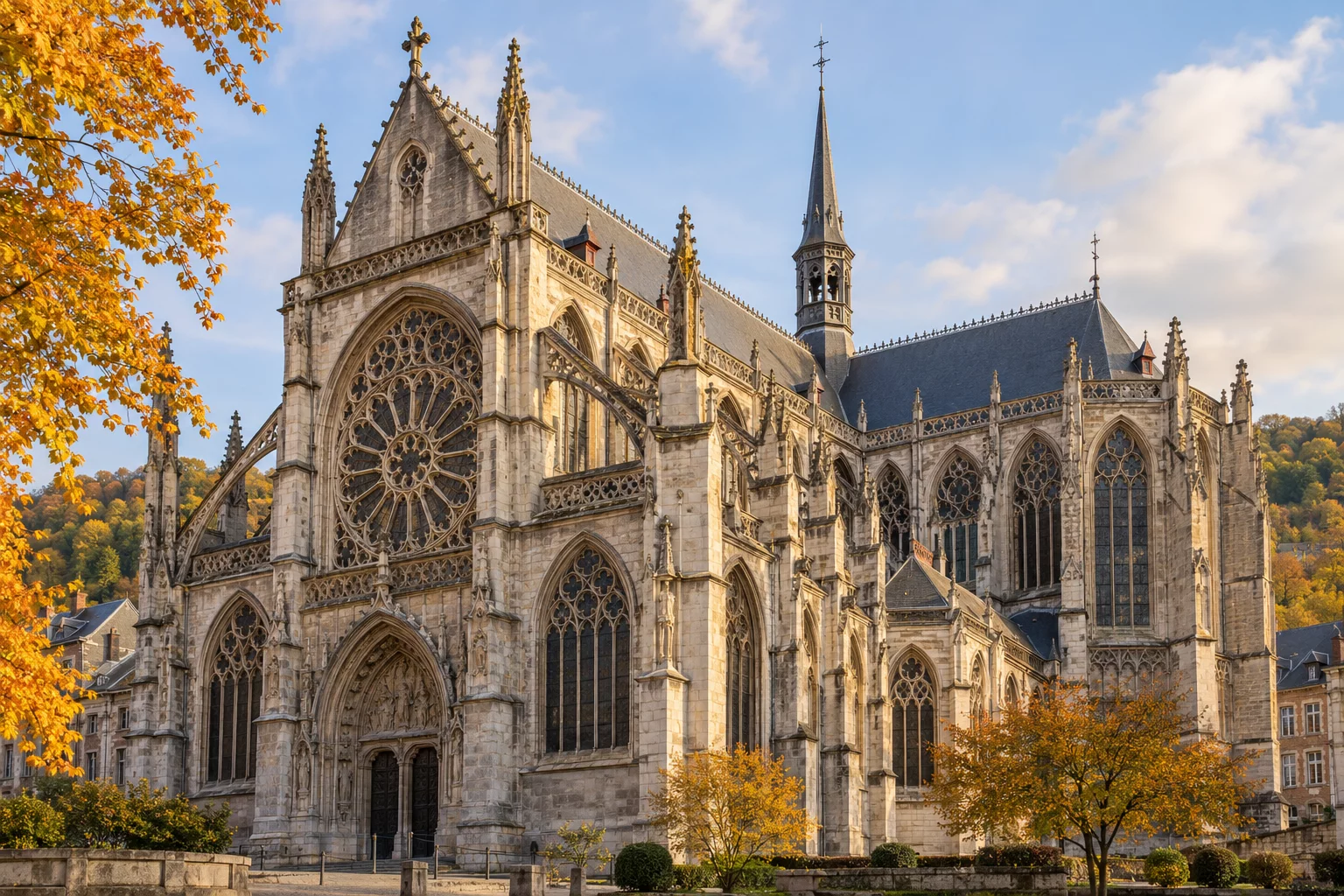
The Collegiate Church of Notre-Dame and Saint-Domitien is one of the town’s key landmarks. Notice how its mass fits into the surrounding streets, then look at the whole exterior before focusing on a doorway or masonry. Churches are places of worship as well as historic buildings: check access arrangements, respect services and behave appropriately. If the interior is open, keep your voice low, avoid flash photography and give priority to people who have come to pray. If it is closed, the exterior remains worthwhile.
Slopes, breaks and practical preparation
Depending on the route, Huy includes climbs and steps. A short walk can feel more demanding than the distance suggests. Wear secure shoes, keep your hands free on steep sections and take a break before you are tired. To avoid steep ground, adapt the walk by spending more time in lower streets and along the Meuse. Check the map and choose sections that suit your mobility. Water and a light jacket are useful even for a town walk.
Spend time around Bassinia
The Bassinia fountain draws attention in the heart of town. Instead of taking only a quick photograph, observe the square: pedestrian routes, façades, places to sit and everyday activity. A historic square is not an empty stage; it remains a place for meeting and moving through town. Stand where you will not block a doorway or pedestrian route, then watch for a few minutes. That is often when the contrast between heritage and ordinary life becomes most visible.
Let a break extend the walk
Plan a pause in the centre rather than rushing between sights. A drink or local dish helps you slow down and spread out the effort, especially after climbing steep streets. Opening times vary, so check directly and keep a simple alternative in mind. Be considerate of residents, outdoor tables and private entrances when taking photographs. A town visit is more enjoyable when it leaves room for the people who live there.
Prepare for an attentive walk
Before leaving, save the official route map and check for diversions. VisitHuy’s 2.1-kilometre, approximately 45-minute circuit is a useful guide, but may not include stops, interior visits or detours. In wet weather, paving and steps can be slippery; in summer, carry water and seek shade. With children, turn the walk into an observation game: find a coat of arms, spot a tower or compare two doorways. This keeps them engaged without making the outing a race.
What to take away from Huy
At the end, return to the Meuse or a square you have already crossed. Compare your first impression with what you noticed on foot: the relationship between river and centre, religious landmarks and the transition from shopping streets to quiet lanes. Write down places to revisit and questions that remain. A good route does not answer everything; it gives you a reason to return, visit a museum or explore another neighbourhood. Which stop would make you want to stay longer?
FAQ
How long is the walk?
About 2.1 km and 45 minutes according to VisitHuy, excluding visits and breaks.
Is it easy?
It is described as moderate; paving and slopes may make it challenging.
Do I need to book?
The public route needs no booking; check opening times for individual sites.
What should I bring?
Comfortable shoes, an offline map and extra time for visits.

The book
The Empty Wall is the second book of Oscar’s Notebook, a series of crime novels set in Liège.