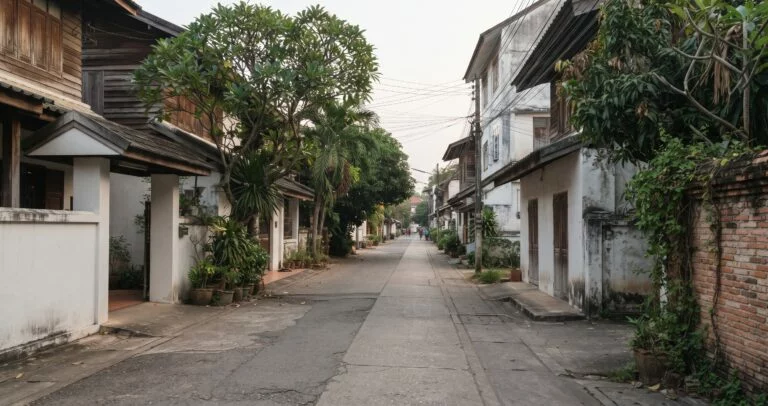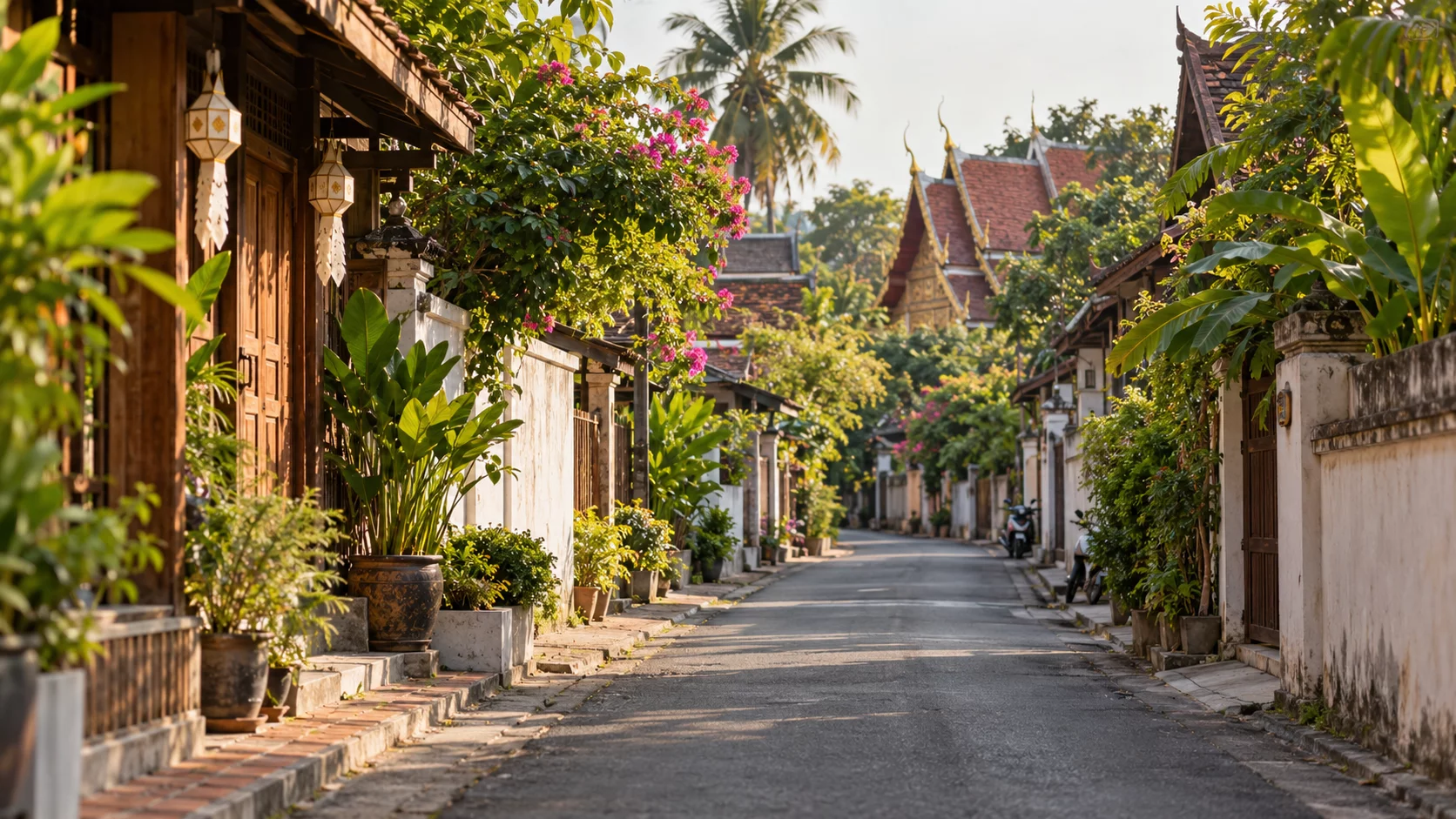
A first visit to Chiang Mai can quickly become a list of temples to complete. Yet the clearest memory sometimes comes from a transition: leaving the street, pausing at a courtyard entrance and understanding where you can look without interrupting what is happening. The old city can be discovered through spaces and distances rather than an accumulation of names. Wat Chedi Luang and Wat Phra Singh provide two anchors for preparing this approach. They are not compulsory stages in a timed circuit. The idea is to choose, observe carefully and keep questions precise enough to explore afterwards. A visit can feel complete even when some questions remain unanswered.
Locate the old city without reducing it to a diagram
The provincial administration's heritage presentation describes Chiang Mai's historic core as an almost square area enclosed by a moat and walls. This helps you read a map, but does not summarise what you will encounter in its streets. Use it to locate your starting and return points, then change scale. Notice how an entrance, facade or small lane alters your perception. A map explains spatial relationships; it does not remove the need to understand actual passages and instructions. The line on a screen is a preparation aid rather than a promise that every apparent connection can be used.
Choose one temple first and retain the second as an option. This leaves space for a real discovery instead of comparing every minute with the next stop. Before departure, check visitor information with the responsible organisation or available official sources. Access to a building cannot be inferred from an open courtyard. One part of a site may welcome visits while another does not. Your plan should accept that difference rather than treating every boundary as a disappointment to work around. The quality of the visit need not depend on entering every space you originally imagined.
Enter a courtyard with one simple question
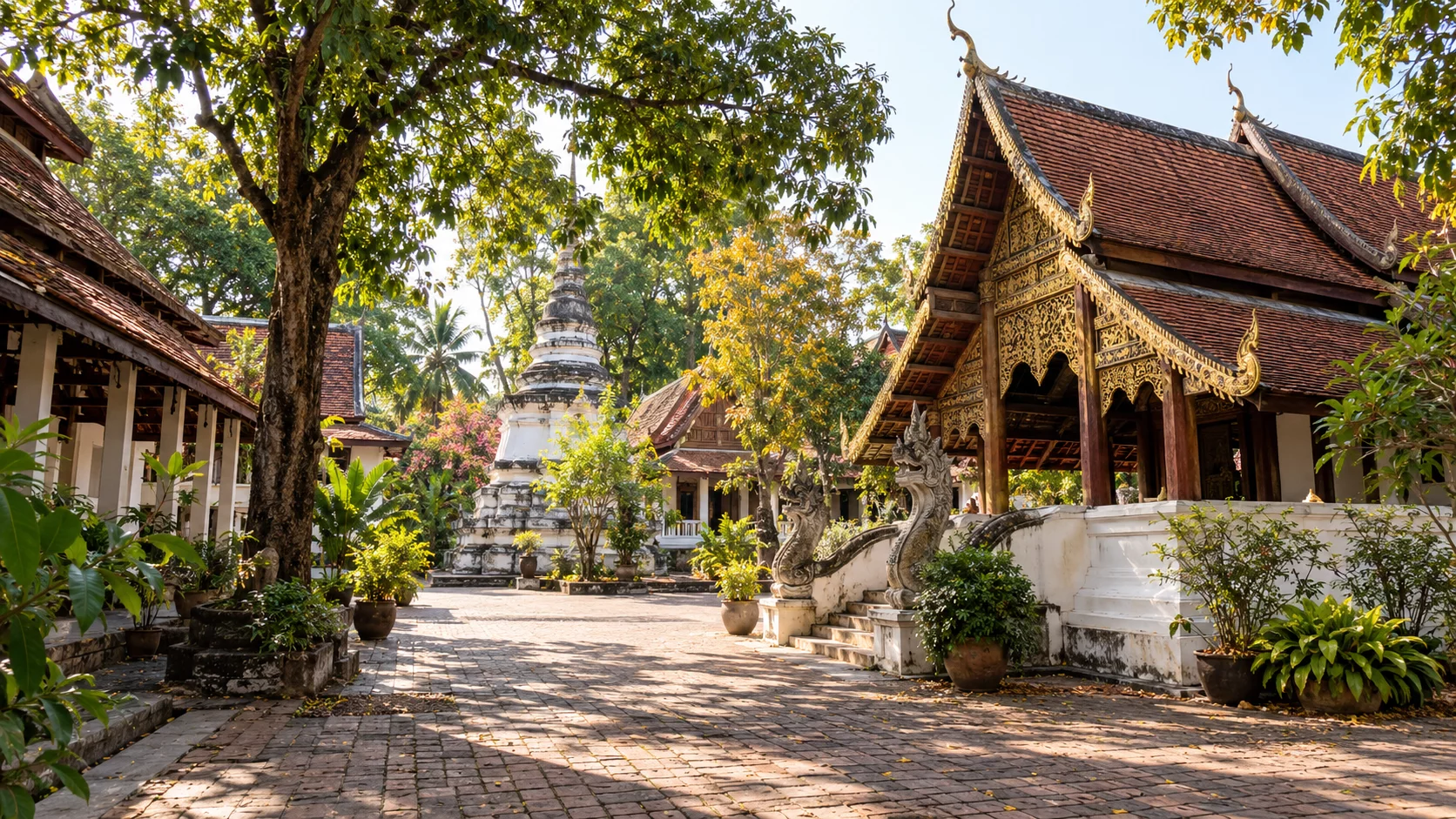
On arrival, do not immediately search for the best photograph. Stop where you are not obstructing anyone and ask how the space is arranged. Where do visitors move? Which passages are marked or appear reserved? Where might a pause be appropriate? This is not about guessing uses from a single gesture. Read instructions and allow time to understand. If something remains unclear, ask a brief question before advancing. Acknowledged uncertainty is better than confidence based on a photograph seen elsewhere. Another person's previous visit does not tell you exactly what is appropriate during yours.
A courtyard can be an observation point without becoming your living room. Keep belongings together, avoid occupying a threshold for long and be ready to change position. If taking notes, begin with three elements: a direction, a material and an interval between two structures. These references are enough to build a first impression. They also prevent you filling quiet with assumptions about people nearby. You can describe a space accurately without knowing what everyone thinks or what an activity means. Let the things you do not understand remain distinct from the details you can actually see.
At Wat Chedi Luang, look at the overall mass first
Thailand's tourism office in Japan highlights Wat Chedi Luang's great chedi and its damaged upper part. This documented point gives the eye a concrete subject. From an authorised position, notice how the volume stands against its surroundings. Begin with a silhouette, then consider proportions between visible parts. You do not need a series of memorised measurements to start seeing. A simple description of what dominates the frame can be more useful than repeating a height without understanding what it refers to. Looking and researching can support one another without having to happen at exactly the same time.
Change your distance afterwards if circulation and access allow it. A detail that dominated nearby may recede within a wider view. Record that change rather than searching for one picture supposed to contain the whole monument. Do not mentally complete missing parts as though your reconstruction were certain. If drawing a hypothesis, identify it as one. The distinction between what survives, what has been restored and what you imagine deserves documented research rather than a quick conclusion in front of the building. An honest sketch can preserve the question without pretending to settle the history.
At Wat Phra Singh, distinguish the site from one building
The official Thai tourism description places Wat Phra Singh on Sam Lan and names Wihan Lai Kham among its notable elements. Record the names beforehand so you can distinguish the temple complex from a particular structure. This modest distinction greatly improves captions and memories. A photograph taken within the grounds is not automatically of the building you read about in a guide. Look for an indication on site and retain uncertainty when nothing identifies your subject. A name should help you be precise rather than lend authority to a picture that has not been checked.
Choose one relationship to observe without becoming scattered: a roof against the sky, an opening and the interior it reveals, or an ornament and the surface carrying it. You do not have to decipher everything immediately. Note shape and position, then seek meaning in an appropriate source if you want to continue. Saying that you do not yet recognise a motif is more faithful than assigning it an appealing spiritual meaning. The interest of the visit may begin in that particular question. There is room for curiosity without presenting every first impression as an explanation.
Compare two places without ranking them
If you visit both temples, avoid making the second a repetition or competitor. Keep the same question and see how the visual answer changes. Where did you step back? Where did you focus more on a detail? What had to remain outside your frame? These questions describe your experience. They do not decide which temple best represents a culture or measure religious significance through its effect on a traveller. Your attention is a useful subject, provided it is not confused with a judgement about the value of a place to other people.
Prepare two small pages with identical headings: approach, first volume noticed, confirmed detail and open question. Fill them after each visit, away from passages where movement is needed. Comparison then becomes a memory tool rather than a beauty contest. If one page remains shorter, do not balance it artificially. You may not have accessed equivalent spaces, or your attention may have differed. This limit belongs to the story and can be stated simply. A visit is not an examination in which every page must prove equal effort or complete coverage of the same categories.
Prepare your clothing and read the thresholds
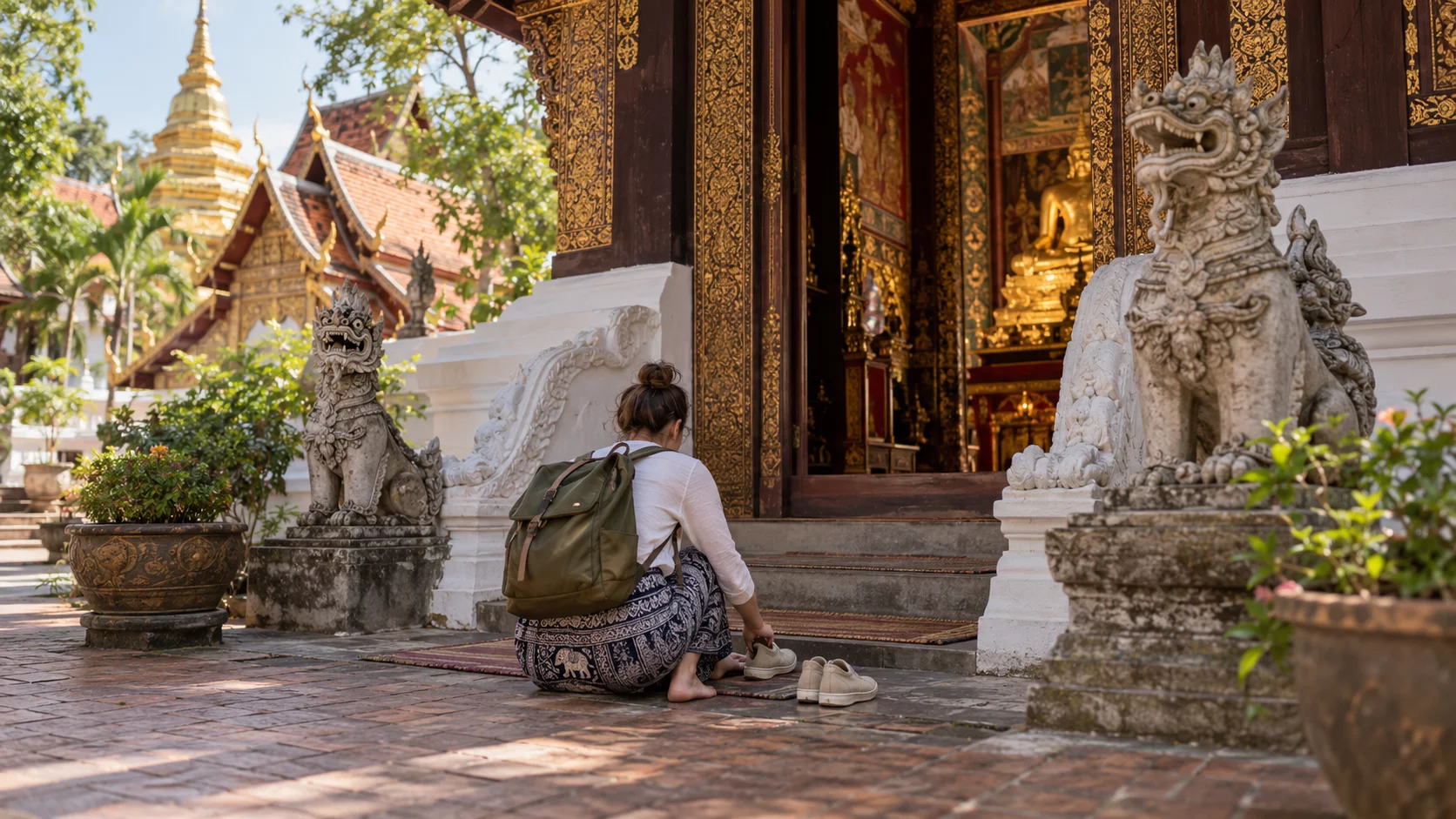
The Thai government portal recommends covering clothing, removing shoes before certain buildings and respectful behaviour, while noting that details differ by place. Prepare suitable clothes and follow the indications present. This reduces dependence on an improvised last-minute solution. Do not assume a practice observed at one temple applies identically at the next. The actual threshold, signs and people responsible for the place remain your references for deciding how to enter. A general guide can prepare you to pay attention, but cannot replace the specific information in front of you.
Take time to put belongings away before approaching an entrance. If shoes need removing, do so without blocking the passage and remember where you put them. If a step, threshold or requested posture presents a difficulty, ask what alternative is available instead of copying an uncomfortable action. Respect does not require pretending to have the same abilities as everyone else. It requires seeking a clear arrangement with the venue and accepting that a space may sometimes not suit your visit. Asking early can make the decision calmer than struggling at the point where others need to pass.
Distinguish observation from participation
Other visitors' presence does not automatically show you how to join an activity. If a practice is underway, remain in a position that allows participants to continue. Do not imitate a gesture only to obtain a photograph or ask someone to repeat it for your camera. You may look attentively while choosing not to participate. This is not a lack of interest. It acknowledges that a short visit does not instantly provide the understanding needed for every action. You can remain curious without turning the situation into a performance in which you expect a role.
If you want to ask something, begin by checking whether the moment is convenient. Prepare a limited subject, such as the name of a space or how to interpret a sign. Do not expect one person to speak for all residents, all believers or an entire region. An individual answer can be valuable without becoming a general rule. Record who explained what only with agreement and within the limits discussed. A conversation remains an encounter, not a resource to extract completely. Thank the person and allow them to return to their own purpose without another sequence of questions.
Photograph architecture without taking over the courtyard
Before making a picture, check what is permitted in the precise space you occupy. Permission outdoors does not necessarily apply inside. If a sign limits photography, choose notes or memory rather than looking for a discreet angle to evade it. The absence of a photograph does not make the visit incomplete. It may encourage you to retain a colour relationship, proportion or sequence of volumes that you can later describe in your own words. Different ways of remembering can coexist without the camera becoming the only proof that you paid attention.
For architecture, wait for the passage to clear naturally rather than moving other visitors. Avoid making a person engaged in reflection an involuntary subject. Check the edges too: somebody can be recognisable without appearing in the centre. If a photograph requires occupying a shared space for a long time, seek a simpler solution. A short series with an overall view and a detail may be enough to accompany an account without turning the courtyard into a production session. The place continues to function while you look, and your composition should allow that continuity.
Keep one detail without asking it to represent everything
Finally choose an architectural detail you can recognise in your notes: a relationship between two lines, a cut of shadow or a meeting of materials. Describe it precisely enough to recover it in memory, without making it a symbol of the whole of Chiang Mai. A fragment may matter because it organised your attention that day. It need not summarise a tradition, period or the identity of people using the site to deserve a place in your account. A modest personal reason can be sufficient without making the detail carry a grander claim.
Return mentally to that detail when comparing the two pages. Was the shape itself interesting, its position in the courtyard, or the time you took to notice it? This shifts attention from collecting objects to the quality of an encounter with a space. An incomplete answer is acceptable. Observation is not a demonstration you must successfully deliver, and the article can retain a trace of what remains to understand. You may later discover that the detail mattered for a reason different from the one you first wrote, which gives the notebook another layer.
Return to the street between visits
When leaving the grounds, allow a moment to change rhythm. Check your belongings and recover your position before following a new direction. The transition between temple and street also belongs to discovering the old city. Note what changes in your attention: viewing distance, desire to walk, need for quiet or rest. These observations concern your route. Avoid making them a simplistic opposition between a spiritual interior and an outside assumed to lack depth. The visit is part of a wider city, not an isolated experience that makes surrounding daily life less meaningful.
If continuing to the second temple, check the actual route on a map and on site. Two names alone do not constitute a suitable itinerary for every person. Do not cut through a courtyard or building because a line looks shorter on screen. You can also decide the first visit is enough and keep the other for another day. This preserves opportunities to read, ask and rest rather than finishing a list when you are no longer really seeing your surroundings. A postponed visit can remain an invitation instead of becoming an unfinished obligation.
Write an account that leaves room for the place
Afterwards, begin with something actually observed: a volume appearing, a change in distance or reading a sign. Describe your position so readers understand what you could see. Add a verified fact and distinguish it from an impression. This simple structure gives an article substance without inventing dialogue or testimony. It also preserves a personal voice without presenting your response as every visitor's shared experience. The reader can follow an individual encounter while recognising that other positions, times and reasons for being there would create a different account.
For every building name, check that it matches the associated picture or note. For a symbolic explanation, retain its supporting source. If using a generated illustration, identify it as a creation inspired by an architectural atmosphere rather than a documentary photograph. Images can help evoke a courtyard, but do not prove that a detail exists at a particular location. This clarity strengthens the account. Readers know what was observed, what was researched and what is visual accompaniment. A carefully labelled illustration need not borrow the authority of a real visit to serve a useful purpose.
Three choices for a more personal visit
Must you see both temples in one day? Not necessarily. Choose according to your availability and interest after checking current conditions. An attentive visit with a question worth keeping can offer more than a sequence of photographed entrances. If you return, take up the initial question and see whether it changes. You will build understanding gradually rather than reduce the memory to having completed someone else's recommended selection. The choice to stop can be part of a thoughtful visit rather than evidence that the programme was insufficiently ambitious.
Must you understand every ornament? No. Begin by naming what you see without giving it an unverified meaning. Keeping a question for future reading is a serious way to visit. It respects complexity and provides a reason to consult local resources. A clearly expressed unknown is better than an improvised interpretation later repeated as cultural fact. You do not need to make your first encounter sound complete for it to be worth describing honestly.
What if a courtyard does not allow the pause you imagined? Move or omit that stop. Your plan does not take priority over the temple's functioning. Write elsewhere and retain a few references in memory. Discovering Chiang Mai through courtyards does not mean remaining in them at any cost. It means recognising spaces in which you are a guest, then allowing that attention to alter how you pass through the old city. You may leave with fewer pictures and a more precise idea of what you still want to learn.
Sources and preparation references
- Provincial administration: moat and walls
- TAT Japan: Wat Chedi Luang
- TAT: Wat Phra Singh
- Government portal: temple visits
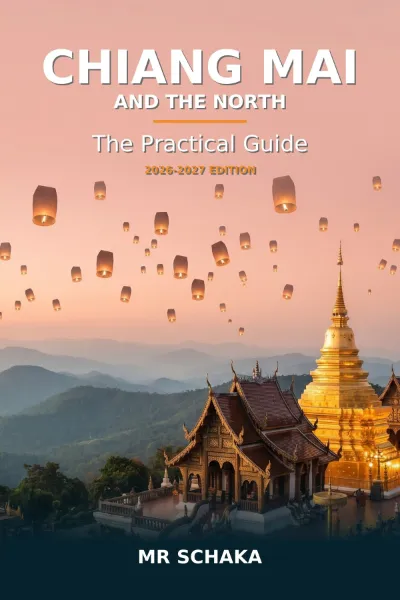
To go further
Mr Schaka’s guidebook, Chiang Mai and the North – The Practical Guide, covers the essentials: transport, neighbourhoods, addresses, food, etiquette and safety, updated for 2026–2027.