Malmedy can be approached through a simple question: how does a small town arrange encounters? A square gives people room to stop, a street leads towards another activity, a frontage announces a use, and a narrow opening suggests a quieter layer behind it. This provides a thread for a walk without requiring a complete knowledge of local history. It also works when time is limited. Choose a few public spaces and consider their relationships instead of collecting photographic stops. The centre then becomes more than attractive scenery. It emerges as a place where everyday needs, collective memories and continuing uses share the same setting.
Place Malmedy within the province of Liège
Malmedy is in the province of Liège, in eastern Belgium. Keeping that basic location in mind helps distinguish an urban visit from a separate outing into the High Fens. Nearby landscapes may tempt you to extend the day, but they deserve their own preparation. For this first approach, let the town centre remain the main subject. A square, a sequence of frontages and a cultural venue can provide a substantial visit. Mark your arrival and departure points on a map before adding further ambitions. A clear framework leaves more attention available for the town itself and less for repeatedly working out where you are meant to go next.
Use an open space to understand distance
After arriving, look at an open space from a position that does not interrupt people moving through it. Where does a shopping street begin? Where do pedestrians change direction? Which buildings draw the eye, and which remain useful as landmarks when you turn around? These are not questions requiring specialist answers. They help establish a first mental map. A tree, a window or a corner can be more dependable than a business that may be closed. The value of this first pause lies in what it clarifies: orientation, possible places to rest and the actual relationship between the things you hope to bring together.
Look at Place Albert Ier as a working space
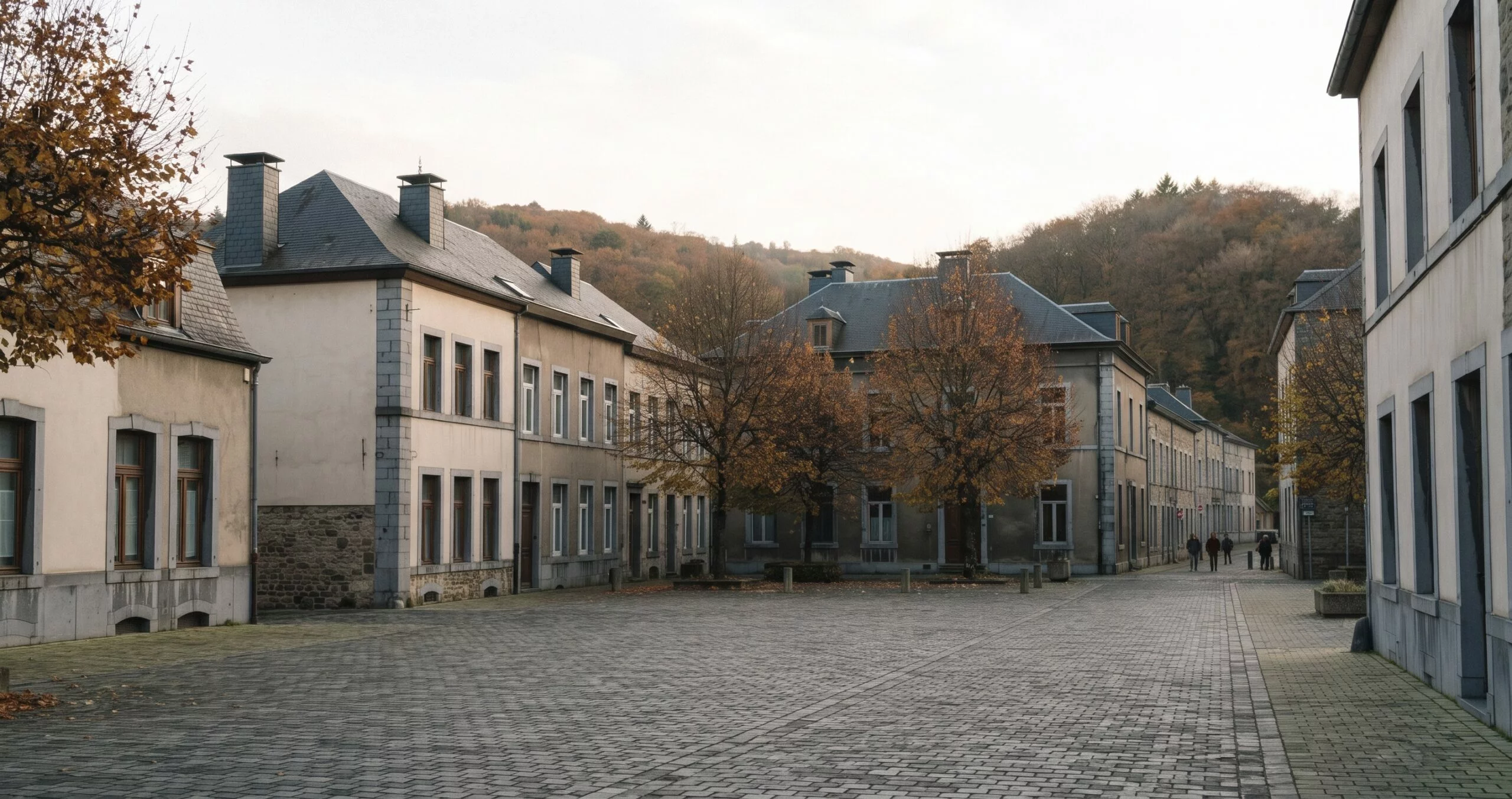
Place Albert Ier is a useful reference when preparing an exploration of the centre. On arrival, replace your expected atmosphere with the one that is actually there: businesses opening or closing, deliveries, residents, visitors and changing light. A square does not become motionless because it appears in a guide. A good walk makes room for this everyday movement. If an area is occupied or difficult to cross, begin with an adjoining street and return later. The purpose is not to recreate an ideal photograph. It is to understand how an open space participates in the life of Malmedy and how its surroundings connect.
Move from an overall view to a single detail
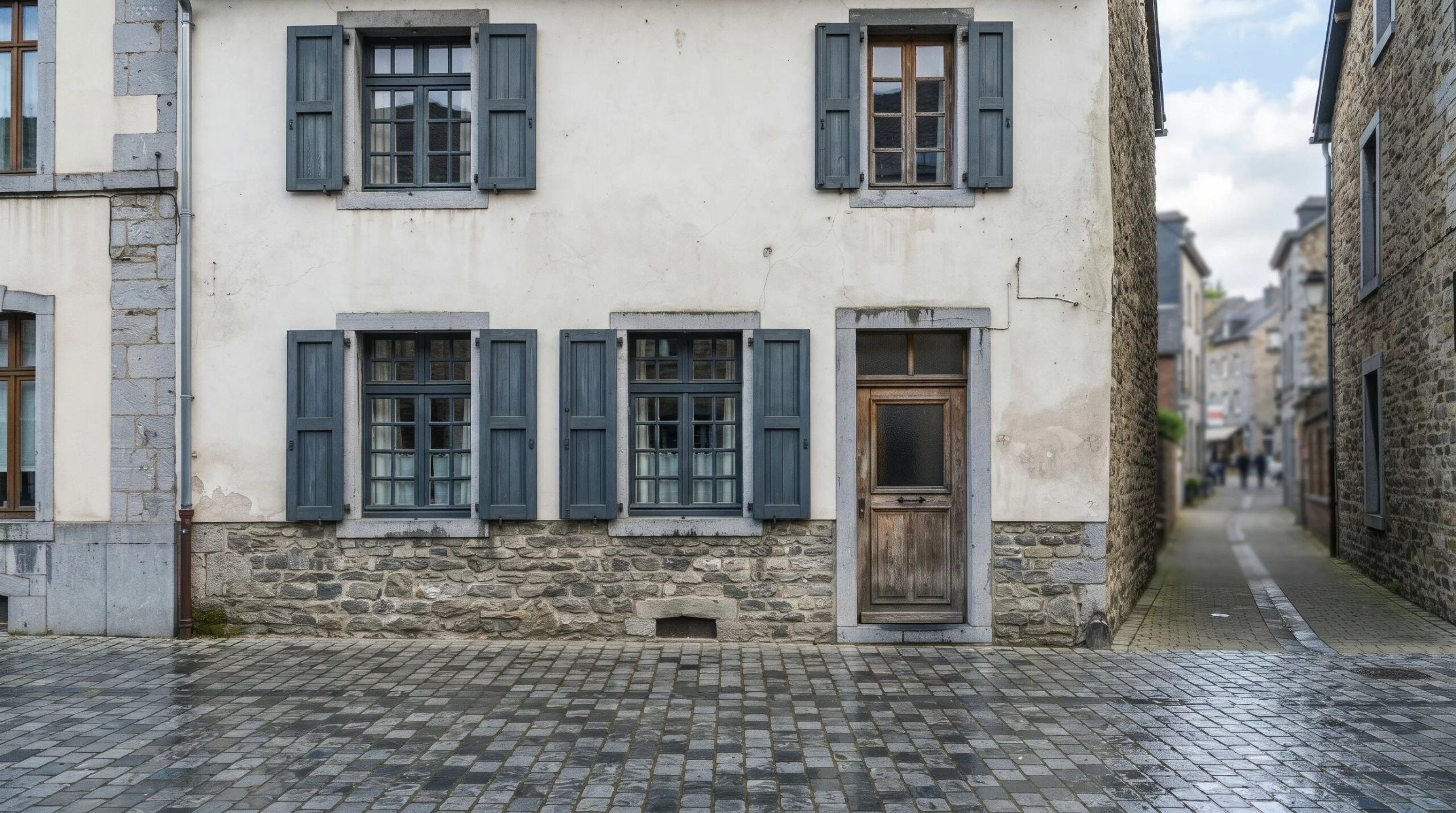
Once you have taken in a square, deliberately reduce your field of vision. Choose a frontage and examine the relationship between door and windows, the way the ground floor meets the pavement, or the materials gathered around a threshold. Do not date a whole building from the colour of its stone. Restoration can retain an older arrangement while replacing parts of the fabric. A detail becomes useful because it produces a precise question, not because it gives an immediate historical answer. Record what can genuinely be seen, then look for interpretation in a reliable source, a museum explanation or a properly informed guided visit.
Read frontages as relationships with the street
A frontage is not simply the outer face of a building. It also manages a relationship: a shop window invites attention, a step marks a transition, and a shutter protects privacy. Comparing neighbouring buildings shows how a continuous street can support different activities. Notice a repeated window pattern, then identify where that pattern changes. This is a small, practical exercise in looking, rather than an examination in architectural terminology. There is no need to photograph every property or seek admission to private interiors. The public street already offers plenty to consider, provided that observation remains curious about the people and uses behind the visible surfaces.
Use the Malmundarium as a cultural anchor
The Malmundarium occupies Malmedy’s former Benedictine monastery. That change of use makes it a helpful cultural anchor for the walk, rather than merely another attraction to complete. A building can keep a strong presence in a town while taking on different functions. If an indoor visit matters to your plans, consult current visitor information before travelling. You can then choose between looking at the surrounding public area and allowing time for the spaces that are accessible. Match that decision to the time and attention you actually have. Understanding the importance of a place does not require claiming to have seen every room inside it.
Let materials suggest questions about work
The Malmundarium’s educational resources include leather, paper, carnival and local history. Each offers a different way into the town. Paper raises questions about the transformation of material; leather directs attention towards tools and skill; carnival connects objects to collective practice. Returning outside, you may find yourself asking what kind of work once occupied a building and what evidence remains. Keep the question separate from its answer. An apparently industrial frontage does not establish a former workshop by itself. The interest lies in using cultural knowledge to sharpen observation, then checking any historical interpretation rather than assigning an occupation to every building that looks old.
Understand Cwarmê without expecting a parade
Malmedy’s carnival, known as Cwarmê, forms part of its local cultural heritage. Discovering its significance does not require the celebration to be taking place on the day of your walk. Outside the festival period, interpretation can explore the passing on of characters, objects and shared references. A heritage resource or an appropriate museum display provides context that the street alone may not supply. Understanding a tradition and watching it happen are different experiences. A November article should not promise costumes around every corner. It can instead encourage a closer interest in the meanings that make a public celebration recognisably local and important to its participants.
Keep announced projects in the future tense
Cultural announcements may describe preparations, intended changes or spaces that are not yet available to visitors. Read their wording carefully before building a day’s programme around them. An announced project is not automatically an open attraction, and an online presentation is not enough to confirm admission. Contact the venue directly if a particular development matters to you. The walk suggested here remains useful without relying on a new opening. Squares, street frontages and passages already provide a framework. That independence makes changes easier to accommodate and prevents a whole day from resting on an assumption that was never actually checked with the organisation concerned.
An opening is not necessarily a public invitation
The spaces between buildings can attract more attention than a broad view. They hint at a courtyard, another layer of the town or a possible shortcut. Yet an opening visible from the street is not necessarily a public passage. Keep to authorised routes and seek clarification when the status of a space is uncertain. A sequence of doorways and courtyards can be appreciated from outside without walking into a residential setting. This restraint does not diminish the pleasure of looking. It recognises that a town continues to contain ordinary lives, and that visitors gain more by understanding boundaries than by treating every doorway as tourist access.
Give the walk two complementary movements
One flexible method is to begin with open spaces, then turn towards streets and details. In the first part, look for relationships: a square leads towards a cultural building, a street continues an axis, or a change in width introduces another pace. In the second part, return to something that caught your attention. Going back is not a failure of route planning. It lets you reconsider an element with more context. End this second movement when concentration begins to fade, rather than treating the visit as unfinished. A few relationships understood properly can provide more satisfaction than a long sequence of locations passed without much attention.
November changes the way you look
A November day may be bright, overcast or wet. There is no reason to invent its weather in advance. Prepare options instead: an extra layer, a shorter version of the walk and a verified possibility for shelter. Low light can emphasise the relief of stone, while a cloudy sky can make differences in colour easier to compare. If the surface underfoot becomes slippery, wait until you reach a stable place before studying a detail. Seasonal atmosphere should be discovered on arrival. It should never force the group to maintain a route that no longer suits the conditions, the available light or the people taking part.
Choose a pause that leaves room for others
A pause can help gather impressions as well as restore energy. Find an appropriate place and record three things: a shape, a material and a question. If you enter a business, respect its purpose and the conditions under which it welcomes customers. A table is not an unlimited observation station merely because it offers a good view. In public space, avoid blocking a doorway or occupying the narrowest part of a passage. These small choices make a visitor’s presence less intrusive. They also allow you to continue with a clearer sense of what the walk has already offered, without immediately demanding another attraction to make the day worthwhile.
Photograph a relationship, not a collection
For a personal record, try showing how elements connect: threshold and pavement, a street opening and its square, or a frontage and the activity it accommodates. Such a photograph can say more than numerous isolated details whose locations become impossible to remember. Wait when someone is entering a home, avoid close portraits without agreement and leave objects where they belong. Windows and reflections may reveal private information, so examine what is actually in the frame before sharing it. Photography should extend the attention you bring to a place. It should not require residents to perform a role, move aside or become an unrequested part of your story.
Let children begin with visible differences
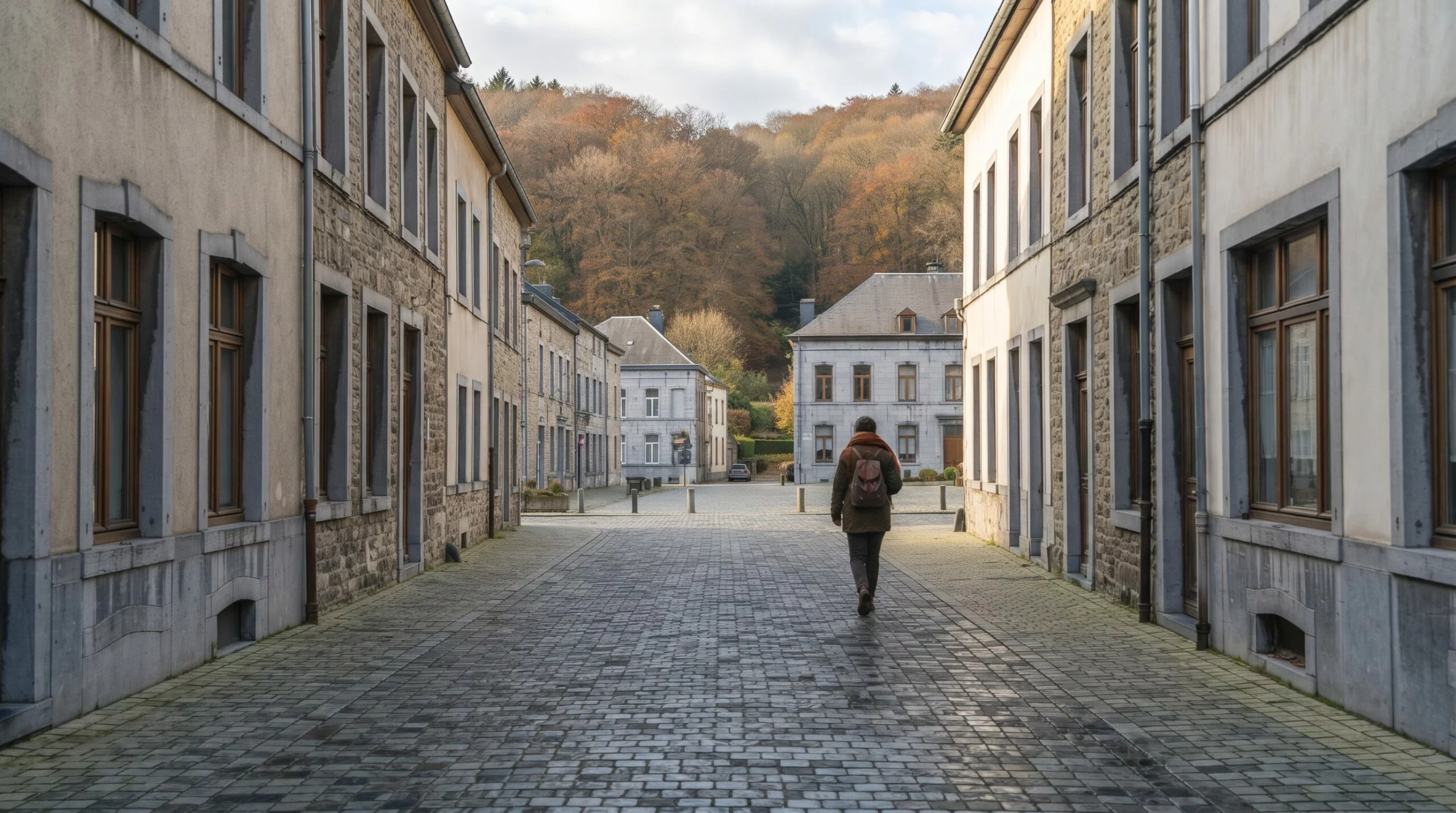
For a family visit, suggest a limited comparison: two different doors, a rough material beside a smooth one, or reasons why a square feels easier to cross than a narrow street. The aim is not to teach a complete urban history during one outing. It is to share an observation that can have several reasonable answers. Let children choose a detail and ask what they would like to understand about it. A question that cannot be answered immediately can become a small investigation afterwards. Above all, allow a pace in which stopping is possible without everybody feeling late for an overfilled programme of compulsory highlights.
Prepare specific mobility questions
A centre that looks compact on a map is not necessarily straightforward for every visitor. Thresholds, slopes, surfaces, temporary works and places to rest may matter as much as distance. Before travelling, ask the relevant organisations about the actual sections you intend to use, rather than relying on an overall description such as accessible. Explain the requirement: a route without steps, enough clear width or a suitable place to drop someone off. Adapt the walk on arrival without feeling that the experience has failed. A small number of well-chosen public spaces can still produce a rich visit when there is time to observe them and connect their meanings.
Do not add every nearby possibility
Surrounding landscapes and neighbouring places can make an outing expand almost without notice. An urban visit and a walk in the countryside, however, do not require identical preparation. Moving from one programme to another should take account of transport, daylight, equipment and the group’s remaining energy. An idea for a return visit need not become an immediate obligation. Malmedy also deserves time spent within its centre. Declining an extra stop can make room for conversation, a cultural visit or a second look at a street already passed. The pleasure of being somewhere is often easier to recognise when the next destination is not constantly calling for departure.
Read names without inventing their origins
Street names offer another possible thread. Record a name that catches your attention and see whether a local source explains it. Do not infer a former trade from a single word: a name may have changed, refer to a person or preserve a form whose meaning is no longer obvious. In a notebook, separate the copied name from your own hypothesis. This modest discipline prevents an appealing guess from turning into a confidently stated history. It also supplies a precise reason to consult the tourist office or a heritage publication afterwards, allowing a question raised by the walk to lead towards a better grounded understanding of the town.
Put information in a useful order
Begin preparation with what genuinely shapes the day: travel, the return time, walking capacity and any intended indoor visit. Then add the material that may enrich what you notice. This order avoids two common extremes: collecting so much information that it hides direct observation, or improvising so completely that every practical decision has to be solved on arrival. A short page of notes is often enough. Include a starting point, a cultural resource and the questions that still need checking. Between decisions, the phone can remain out of sight while the useful details are still close enough to consult when they are actually required.
What the illustrations can and cannot show
The images accompanying this article are AI-generated illustrations. They evoke a square, a frontage and a street within a plausible eastern Belgian atmosphere; they are not photographs taken in Malmedy on a stated date. They therefore cannot establish an opening, the present condition of a pavement or the exact appearance of a particular house. Clear captions keep their role understandable, and the written article should not give them a documentary authority they do not possess. For a precise visit, official resources and current information remain the appropriate references. An evocative picture may support a reading mood without becoming evidence for a factual promise about the town.
Leave with an interpretation that knows its limits
Before returning, choose something to take away: a relationship between a square and a street, a question about a material, or an idea learned in a cultural setting. There is no need to summarise the whole of Malmedy in order for the outing to matter. A personal interpretation becomes stronger when it distinguishes what was observed, what was learned and what still needs checking. Look at your map again, confirm the return journey and leave a sensible margin. Another visit can follow a different thread. For today, a few spaces understood together are enough to produce a precise impression that remains after the immediate photographs have been put away.
Sources for preparing your visit
- Malmundarium — présentation officielle
- Malmundarium — dossiers pédagogiques
- Fédération Wallonie-Bruxelles — Carnaval de Malmedy
- Ostbelgien — accueil touristique à Malmedy

The book
The Empty Wall is the second book of Oscar’s Notebook, a series of crime novels set in Liège.