The name Kanchanaburi often brings an image of a bridge and river. An attentive visit benefits from widening that frame, then distinguishing what it contains: a waterside landscape, a town where life continues, and places connected with the history of the Second World War. These dimensions can meet within one day without becoming interchangeable stages in a leisure programme. They need different rhythms. Looking at a riverbank, reading a document and entering a cemetery call for different kinds of attention. This guide suggests preparing those transitions with specific references, without making the memory of people into scenery for an excursion or requiring a single image to explain an entire place.
First understand the rivers' place in the town
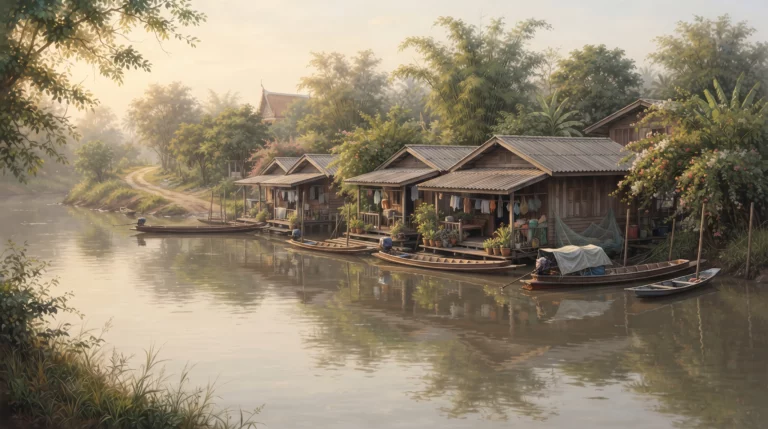
Thailand's tourism authority describes the town at the confluence of the Khwae Noi and Khwae Yai, where the Mae Klong begins. This helps explain why water is more than a background for a bridge photograph. Before choosing a stopping point, examine the map and identify the river concerned. Several names may appear in resources. An image found under the general name River Kwai does not always establish its exact location. Keep the specific place separate from the familiar label, especially when connecting a photograph to information about a particular stretch of water.
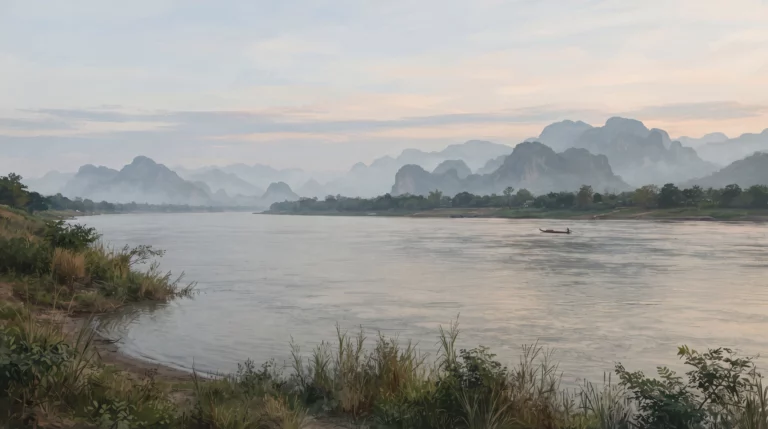
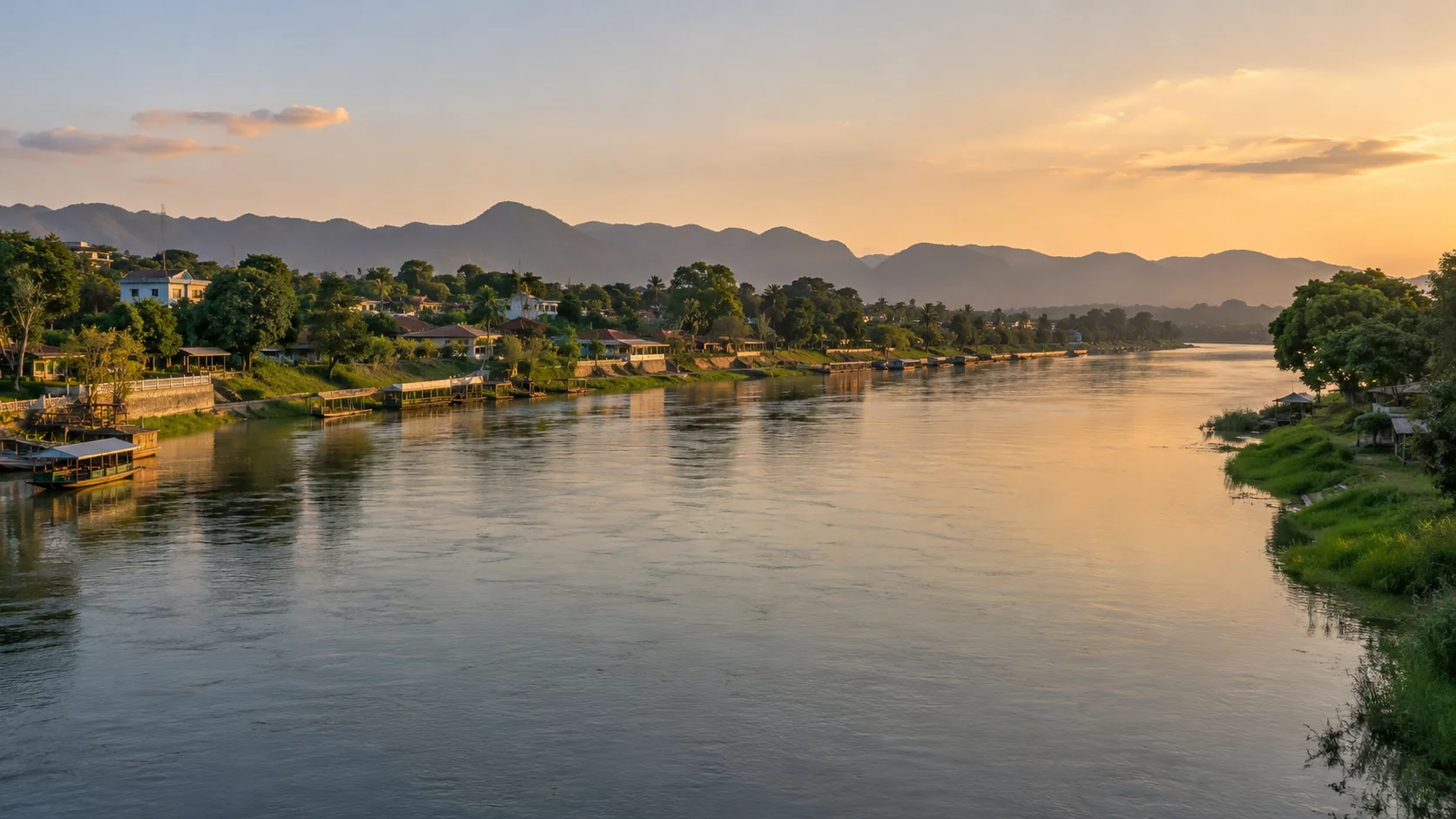
Choose an observation point with confirmed access, then notice how water organises its surroundings: distance between banks, the presence of a structure or a moving boat if you see one. Describe the scene as it appears. Do not give a structure a function or history simply because it looks old. A present landscape may raise a historical question without automatically answering it. This distinction allows a sensitive and careful discovery without requiring every reflection to tell the story of war. You can look closely at what is there while acknowledging what cannot be established by appearance alone.
Place the bridge within a wider history
The official description of the Bridge over the River Kwai identifies it as part of the Second World War railway. This provides a concrete starting point. The visible bridge does not by itself summarise the construction, movements or experiences of those subjected to the project. Keep one question before visiting: what larger system did this structure belong to? You can then seek a documented explanation rather than assume the familiar silhouette provides complete understanding. The fact that a landmark is recognisable can help orient curiosity without making recognition the same thing as knowledge.
Do not infer that an element necessarily dates from the war because of its appearance. Distinguishing an earlier part, a repair and a later alteration requires a precise source. Without that information, describe the form without assigning a date. Apply the same care to stories encountered through cinema. Fiction may explain why a name is familiar; it is not evidence about the structure in front of you. Leave room for uncertainty and note what you want to check after seeing the site. A question clearly retained is more useful than an appealing answer accepted merely because it sounds familiar.
Name the people before simplifying the account
The Australian Department of Veterans' Affairs historical portal recalls construction under Japanese authority using Allied prisoners of war and Asian labourers subjected to coercion. This frame avoids telling the whole history through a single nationality or category. People's experiences and the available sources are not interchangeable. You do not need to choose a numerical total before beginning to understand the project's human dimension. First preserve the plurality of those concerned in the words you use. An account can remain accessible without removing the distinctions that make the history more than a general story of suffering.
Separate categories encountered in documents and record unfamiliar terms. Do not replace a historical expression with something more spectacular to intensify the writing. When a source presents an estimate, keep it as an estimate and establish its scope before repeating it. Numbers concerning military prisoners do not become a total for every victim. A substantial article need not accumulate poorly compared figures. Instead, show what each document actually establishes. If the boundary of a statistic remains unclear, leaving it out may preserve more accuracy than attaching a confident-looking number to a broad sentence.
Give a museum a different role from the landscape
The Thailand-Burma Railway Centre describes itself as a museum and information and research centre devoted to the line's history. This makes it a reference for further study, subject to checking current visitor arrangements. A documentary visit and a waterside stop do not duplicate one another. One may situate an object or testimony; the other allows attention to a present space. They can inform each other without either replacing the other's work. Looking at water does not establish a historical sequence, and reading a panel does not fully describe the town through which you have travelled.
Choose two questions before a documentary visit rather than aim to retain everything. For example, how were people moved, or how can sources reconstruct a journey? Distinguish an historical photograph, object, map and later written explanation. Note provenance when provided. This modest practice prevents every medium blending into one impression. It also allows you to be affected by what you discover without abandoning precision. Feeling and careful reading need not compete. The question can help you stay with an important piece of information rather than move quickly through material simply because there is more to see.
Enter a cemetery as a place of remembrance
Commonwealth War Graves Commission resources document cemeteries connected with the railway, including Kanchanaburi. Visiting calls for a different presence from stopping at a viewpoint. Read the instructions and leave others room to remember. You do not know why they are there or their relationship with the inscribed names. There is no need to seek a visible reaction in order to recognise the weight of a memorial place. Let the visit remain meaningful without turning another person's grief, silence or family connection into material for your own story or photograph.
Move without treating rows of graves as a portrait background. If keeping a note, select something you can explain respectfully: a name, date or question raised by an inscription, without inventing the missing biography. Brief information remains brief information. It may lead to later research, but it does not authorise writing a deceased person's thoughts or assuming their family's feelings. Restraint can give an account more force than manufactured emotion. A carefully copied detail, checked afterwards, can also provide a more useful starting point than a long passage in which most of the meaning has been supplied by imagination.
Recognise the limits of what is represented
A cemetery and its inscriptions make certain stories visible. They are not the entire human history of the line. Retain this distinction when moving between graves and resources on Asian labourers and prisoners. The absence of a name in the place you visit does not establish that a person or group did not matter. It may instead invite questions about how traces are created, preserved and consulted. A physical place and a historical record each have boundaries. Understanding those boundaries is part of learning, rather than an obstacle that an evocative narrative should hide.
Avoid presenting your visit as a complete repair of such silences. A traveller can learn, transmit carefully and acknowledge ignorance; they do not replace families, researchers or institutions. A clear sentence about a document's limit is better than a promise finally to make every voice heard. Direct readers to competent organisations for further study. This modest scale does not weaken the effort. It makes it honest and allows future research to extend the visit. The account can invite more understanding without claiming to have supplied what generations of work have not completely recovered.
Organise transitions rather than a rapid sequence
Prepare the day's geography without assuming every named place is immediately nearby or reached in the same way. Check addresses, transport and each stage's conditions. If considering a railway journey, obtain current information from the operator. This guide guarantees neither a departure nor passage over a section. A list of historical names is not a usable itinerary. It still needs to become a project suited to your time and abilities. Separating that practical work from historical reading prevents a meaningful place being reduced to a hurried stop because movement took longer than expected.
Leave space between visits carrying emotional weight. You may want to reread a note, sit down or not speak immediately. The pause should not become another imposed group activity. State from the beginning that shortening the programme is possible. This avoids treating the next remembrance site as an obligation despite exhausted attention. Fewer places understood more precisely can form a coherent and respectful day. It also gives the group a shared permission to change pace instead of expecting the person who needs a break to justify disrupting what everyone else thinks has been promised.
Meet the town in its present
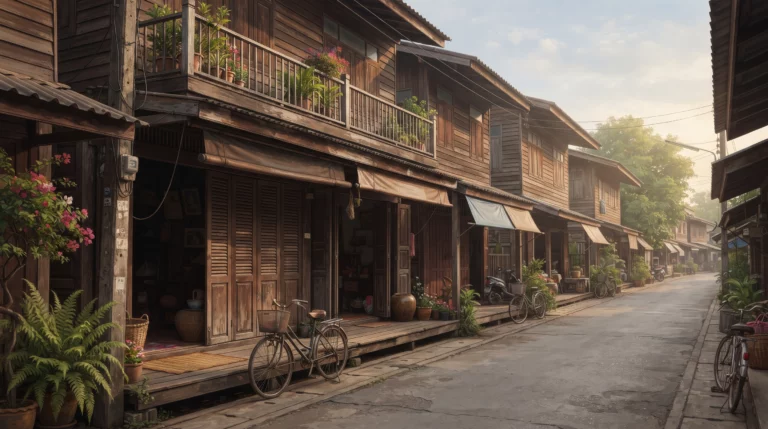
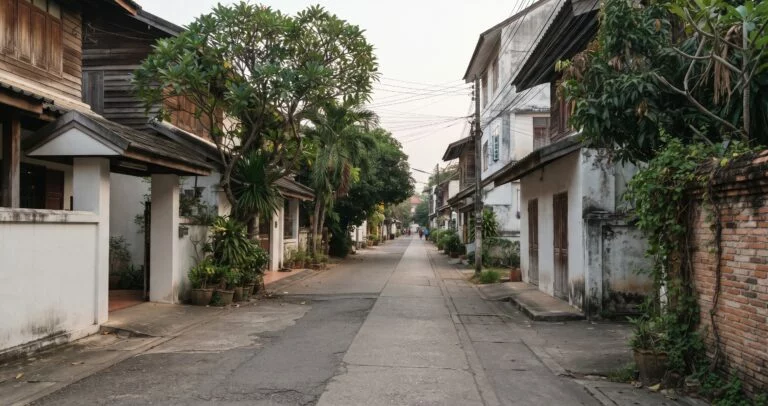
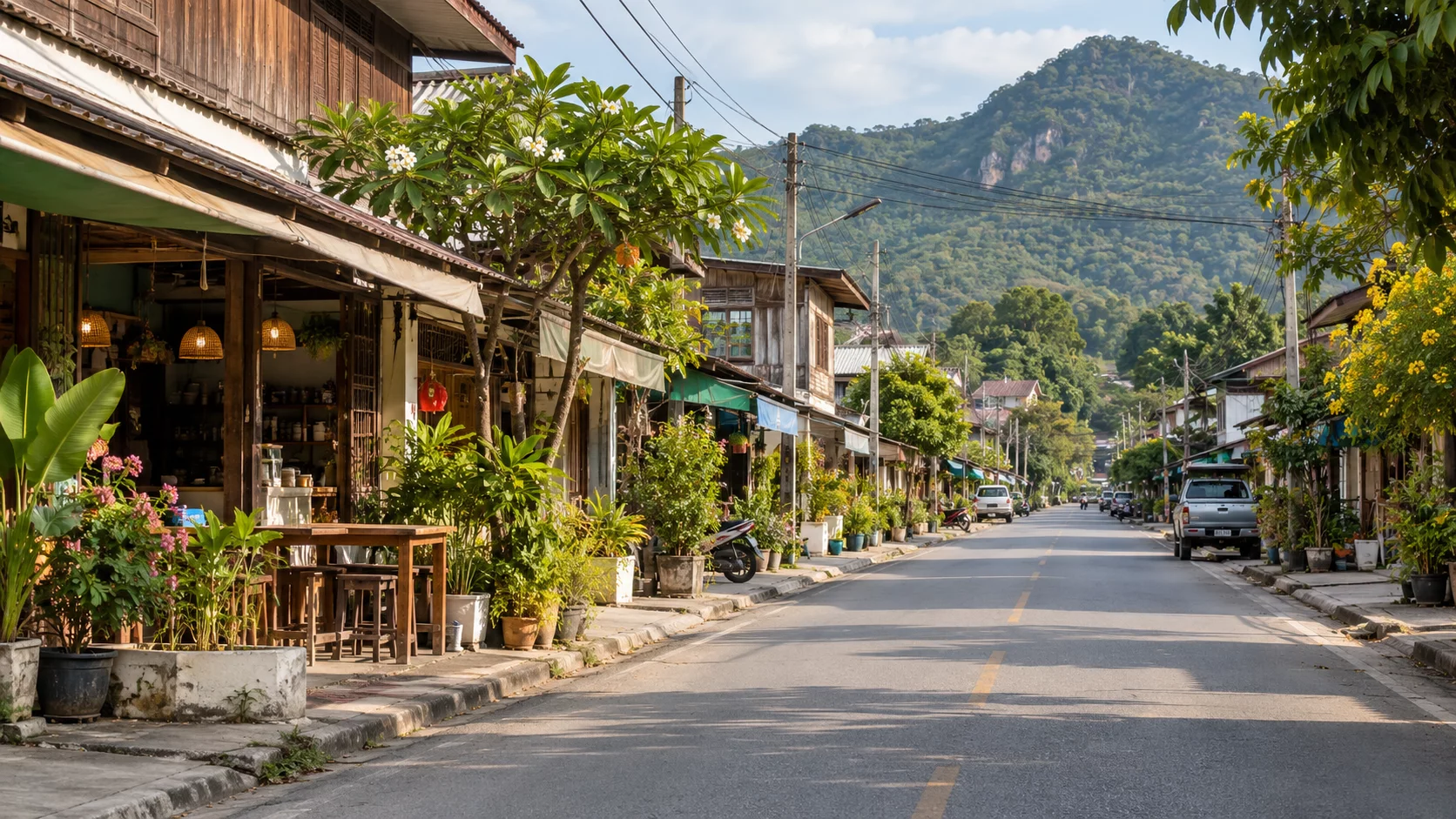
An ordinary Kanchanaburi street is not a reconstruction arranged for visitors. People work, move and live days not organised around your historical account. Observe transitions between buildings, passages and open spaces without giving every detail a wartime meaning. Describe how your attention returns to the present. This does not diminish remembrance; it avoids fixing an entire town in the sole role of illustrating a past event. The place can hold historical significance and contemporary lives without every encounter needing to connect directly to the subject that brought you there.
Keep a pause or purchase a straightforward interaction. People do not owe a family testimony to make the stop interesting. If conversation develops and you wish to quote it, ask permission and check what the person agrees to share. Do not extend an individual memory to all residents. The current town can appear through modest, observed elements without becoming a lesson about how a whole population lives with history. A shopfront, a route or a brief exchange may remain ordinary. That ordinariness is part of the present, not something your article must improve with an invented symbolic role.
Photograph with an explicit intention
Before taking out a camera in a museum or remembrance site, check local rules. Access does not automatically permit photographing every document or person. If photography is unavailable, keep a written reference and seek an authorised resource later. A precise note may be more useful than an unidentified picture. You do not need visual proof of every minute for the visit to matter or to write attentively. Choosing not to photograph can preserve attention for a document or space instead of turning each pause into the technical task of recording it.
For a river landscape, inspect what enters the frame and what the caption can actually say. A peaceful picture does not prove the place has always been peaceful; a dark one does not document past suffering. Separate present visual qualities from researched history. Identify generated illustrations and do not attach testimony presented as personal experience to them. A creation's light can support a reading, but cannot become an archive. Clear labelling allows a visual atmosphere to accompany an article without implying the image provides evidence of a particular historical site, moment or condition.
Accompany a child's or group's questions
Before a family remembrance visit, explain simply that the subject includes war, coerced work and people who died. Do not promise an amusing adventure to gain agreement, then abruptly change the register in front of documents. Offer pauses and adapt the number of stages. A child may ask a concrete question needing a short answer rather than a summary of the war. If you do not know, say so and save it for suitable research later. The purpose is not to produce an impressive response, but to make the encounter understandable without overwhelming the question asked.
Adults may respond differently too. Some want to read at length; others prefer quiet. There is no need to organise compulsory speaking rounds or compare emotional intensity. Agree a meeting point and time compatible with the place. A shared visit can leave different memories. Respect includes this variety of reception without treating a quiet person as less affected or interested. The experience does not have to create a uniform account before the group can leave. Conversation may happen later, or remain limited to the practical questions that people feel ready to share.

Write from sources without imitating a witness
Afterwards, begin with something real: information discovered, a checked name or a question raised by a document. Distinguish three levels in the notes: present observation, sourced historical information and personal interpretation. This allows a clear voice without inventing captivity or dialogue. The people concerned do not need a traveller to speak in their place for their history to deserve study and transmission. An honest account of learning can be substantial. It can show the limits of a short encounter while still explaining how that encounter changed the questions you want to ask.
Retain the source supporting each fact and its exact subject. When resources have different scopes or estimates, do not automatically select the most striking number. Explain the difference if useful, or omit the figure when it cannot be resolved. An honest presentation can be precise and accessible without adding dramatic language to every paragraph. The seriousness of events is not increased by staging your own emotion. Let the evidence carry what it establishes, and allow your interpretation to remain identifiable as interpretation rather than wrapping it in the authority of a source that says something narrower.
Three references for completing your preparation
Must you visit the bridge, museum and cemetery in one day? Not necessarily. Choose a combination whose places and movements you can manage after checking current conditions. The goal is not a complete collection of familiar views. Keep a question and another place for a future visit. A shorter programme may leave more space for learning and remembrance. It also makes it easier to let each site have a purpose, instead of making every stop an illustration of the same brief story repeated until the day is full.
Can you enjoy the river during the stay? Yes. A present landscape and a pause do not in themselves erase history. Attention means not turning remembrance sites into accessories for entertainment and not claiming a walk explains all documented suffering. Let different moments have their place, words and uses rather than imposing one emotion on the whole day. You can take time to look at water while keeping the historical visit distinct enough to retain its meaning. The relationship needs thought, not a requirement to express the same feeling at every stage.
What should the notebook retain? A precise relationship between something seen and something learned. It may be a river page accompanied by a historical question, or a reading note connected to a name. Kanchanaburi can remain a present town, waterside landscape and place of remembrance. The account need not dissolve these dimensions into one image to give each a fair place. A few carefully connected observations can provide a better memory than a dramatic conclusion that pretends a short visit has settled everything the history raises.
Sources and preparation references
- TAT: Kanchanaburi and its rivers
- TAT: Bridge over the River Kwai
- DVA Anzac Portal: Burma-Thailand Railway
- Thailand-Burma Railway Centre
- CWGC: local cemetery visit resource
To go further
Mr Schaka’s guidebook, Secret Thailand – Where Nobody Goes – The Practical Guide, covers the essentials: transport, neighbourhoods, addresses, food, etiquette and safety, updated for 2026–2027.