Read Chaudfontaine between the water and the slopes
An outing in Chaudfontaine can begin with a simple question: how does water influence the way people inhabit and move through a valley? The river, places associated with thermal history, parks and hillsides offer different ways to read the landscape. Rather than adding every available walk to one programme, choose what you want to understand and how much time you want to spend outside. This suggestion gives particular attention to transitions: moving from buildings to a path, looking along a riverbank and then raising your eyes towards the slopes. It supports a discovery in the province of Liège without promising a continuous itinerary whose access is guaranteed at every point.
Keep the river separate from thermal history
Chaudfontaine’s name naturally invites thoughts about water, but not every kind of water in the landscape tells the same story. The Vesdre is the river you can see crossing the valley; thermal history concerns other movements and uses of water. A walk becomes more precise when it retains that distinction. Look at the riverbanks to understand an inhabited corridor, then use a local resource to explore the story of springs and bathing. You do not need to imagine steam rising from the river to make the place interesting. The character of a town is often clearer in differences that can be explained than in a dramatic image invented to summarise it.
Choose an area before choosing a distance
Visit Chaudfontaine’s walking catalogue presents separate proposals with different starting points and profiles. A municipal name does not mean every path begins in the same place or connects to the others without effort. Start with your actual arrival point, then choose an area you can realistically explore. A valley outing, a park visit and a climb towards higher ground do not ask the same things of your body. A suitable distance depends on slopes, surfaces and resting time as well as kilometres. Choosing one area often makes it easier to understand how its parts relate, instead of spending the whole day trying to connect places selected from different maps.
Check access during a period of works
For a visit around 5 November 2026, one practical local notice deserves attention. A municipal announcement about the connection between Fonds des Cris and Parc Hauster gives 5 November as the planned resumption of alternating traffic, following a junction and Avenue des Thermes closure through 4 November. That is an announced timetable, not an observation that the works have finished. Read any updated notice and follow information on site before travelling. This article therefore guarantees neither a particular pedestrian passage nor a continuous route through that area. A calmly planned detour is more useful than treating a projected reopening as an established condition on the ground.
Begin where you actually arrive
An outing starts at the bus stop, parking place or station where you arrive, not at the first attraction shown in a brochure. Locate that point on a current map and choose an initial destination you can recognise easily. When travelling together, make sure everyone understands the return point and means of transport. If using public transport, consult the operator’s timetable and any disruptions for your travel date. Do not construct a return journey around an assumed frequency. For a short discovery, preparation can remain light: a saved map, a reference address and a clear option for finishing early already make the walk much more relaxed.
Look at the valley before following a path
From a public position where you are not in anyone’s way, identify three layers: the valley floor, the buildings and the slopes. You do not need a complete panorama to see this arrangement. A street opening, a gap between trees or a view beside the water may be enough. Ask where movement is concentrated, where people stop and how the landform limits or opens the view. This first reading gives later stops some context. A bench, facade or tree no longer appears as an isolated object. The landscape becomes a set of relationships that you can observe without claiming to explain every historical process behind them.
Follow the Vesdre with attention to scale
Local tourism information presents the Vesdre as an important thread through Chaudfontaine. On the ground, concentrate on what you can actually examine: visible width, reflections, vegetation and the relationship with nearby buildings. The same river has a different presence depending on where you stand. Avoid drawing a conclusion about its overall condition from one attractive scene, or about access from a photograph. An appealing bank may not be an authorised path. Stay in areas open to the public and follow local indications. Enjoying the water does not require getting as close as possible, climbing beyond a barrier or leaving a route merely to improve the angle of a picture.
A park offers another scale of attention
A park provides a different rhythm from a road or street. You can pause over a sequence of details: an alignment, an opening, a surface or a way of framing the view. Instead of heading immediately for the furthest point, select a short first sequence and see how it suits the group. A bench is more than a convenience; it can become an observation point. From a settled position, notice what walking made less obvious, such as the difference between a wooded background and a nearby branch. Slowing down becomes a tool for understanding rather than an instruction that everyone must move in a particular way.
Hauster brings art into conversation with landscape
Visit Chaudfontaine introduces Parc Hauster as the setting for the Festival of the Five Seasons, a route combining landscape and artistic creations. Obtain the available local information and check current access conditions before visiting. An outdoor work benefits from being considered within its surroundings: how does it use a perspective, a material or a change in the ground? You do not have to like every proposal. Describing what a creation makes you notice is already a way to begin a conversation. Avoid treating each installation as equipment to climb or rearrange. Its presence in a public setting does not mean that every possible use is appropriate.
Compare observations instead of finding the right answer
Different people may notice different things in the same work or arrangement. One might talk about colour, another about shade or the way a path continues behind it. That variety belongs to the visit. Try describing what is visible before deciding what it is supposed to mean. With children, ask which part of the landscape became more noticeable because the installation was there. There is no need to improvise a lecture or insist on a single interpretation. Conversation is more rewarding when observations can circulate and nobody feels required to prove expertise. An uncertain response can be the beginning of a useful exchange rather than a failure to understand.
Use Source O Rama as an information reference
Visit Chaudfontaine provides tourist information contact details at Source O Rama on Avenue des Thermes. It can therefore be a useful contact for planning the area, requesting a document or confirming a local situation. Check opening arrangements before relying on an in person welcome at your arrival time. A person with local knowledge may answer a precise question better than a broad search: which access makes sense today, where does the selected route begin, or what part fits your available time? Prepare two useful questions rather than asking how to see absolutely everything. You are more likely to receive an answer suited to the actual day you want to have.
Decide between the valley floor and higher ground
The surrounding slopes can soon make you want to climb. Before following an ascending path, consider what it adds to your outing: a view, another neighbourhood or a woodland atmosphere. Check an official route and its return rather than imagining that any path will join a convenient loop. Even a short climb can become tiring after a longer walk, particularly if the descent is slippery. Staying on the valley floor is a genuine way to discover the place, not a lesser achievement. A territory is not understood through the amount of elevation gained. What matters is the attention given to the part you have chosen.
In November, read the ground as well as the trees
Autumn changes colours, but it also changes walking conditions. Leaves may cover an uneven surface, and damp ground calls for a different level of attention from a dry path. Without predicting the weather on a particular day, prepare suitable outdoor clothing and check conditions before leaving. A landscape does not lose its interest under cloud: materials, reflections and subtle differences in colour can become easier to see. Keep the freedom to shorten the outing, however. A walk selected for pleasure does not have to turn into a test when rain, difficult footing or discomfort changes the character of the experience for someone in the group.
Build an outing that leaves room for breaks
Try arranging the visit around three moments instead of ten destinations: an observation of the valley, a park area and a warm pause if an open establishment welcomes you. This structure does not require linking places through an unverified crossing. It also leaves room for conversations and unexpected discoveries. Plan a break before everyone is exhausted, not as a reward reserved for completing the final effort. If the group includes different walking speeds, agree when you will decide whether to continue or return. A collective choice is easier when it has a place in the day, rather than arriving as an awkward interruption of an inflexible plan.
Ask specific questions about accessibility
A path described as pleasant does not automatically suit every visitor. For a wheelchair, pushchair or walking aid, ask about slopes, surfaces, steps, works and places to turn around. Seek an answer about the precise section you are considering, rather than a general judgement about the entire municipality. This guide does not certify a fully accessible circuit. A shorter distance with reliable resting possibilities may be preferable to a longer route with unclear conditions. The needs of a participant are information to use during planning, not a problem to discover only after the group has committed itself to a section that is difficult to leave.
A family walk can remain a walk
When exploring with children, offer one open activity: find two ways a tree appears in the water, choose an interesting texture or sketch the slope behind a row of houses. Then allow each person to look in their own way. There is no need to fill every available minute with instructions. Questions that arise spontaneously can give a better direction than a prepared exercise. Leave room to eat, warm up and return without rushing. A shared memory may develop through a conversation on a bench, an accepted detour or the decision to stop sooner. None of those choices has to turn the day into an unsuccessful attempt to finish a programme.
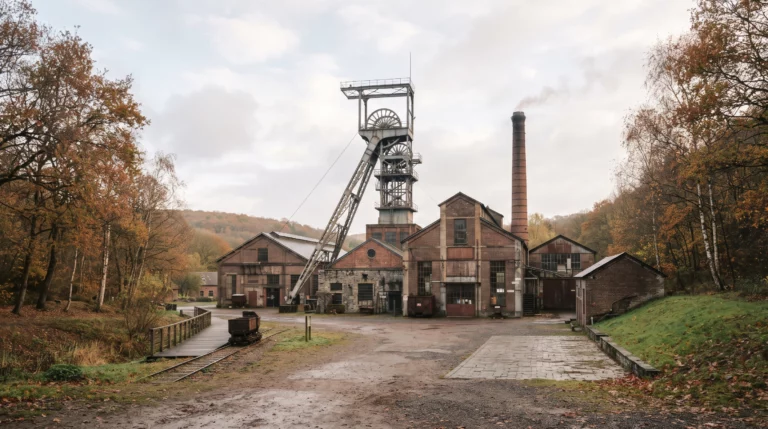
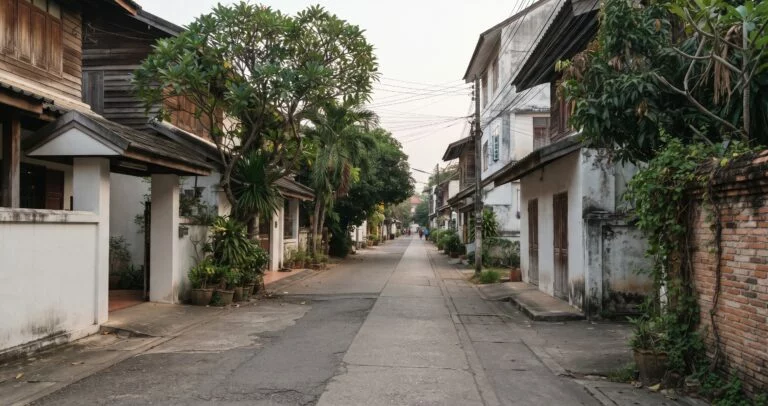
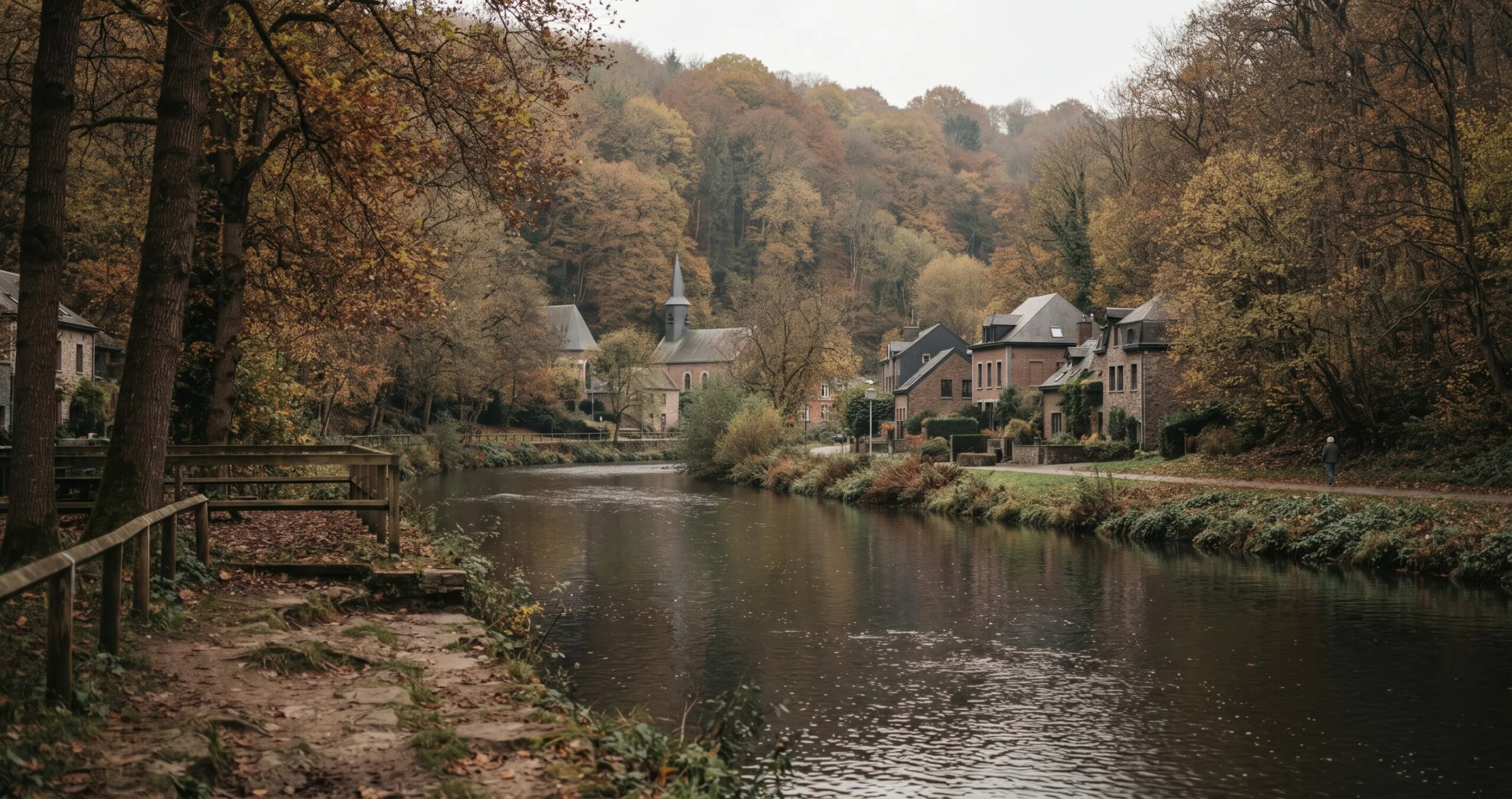
The illustrations evoke a setting, not current access
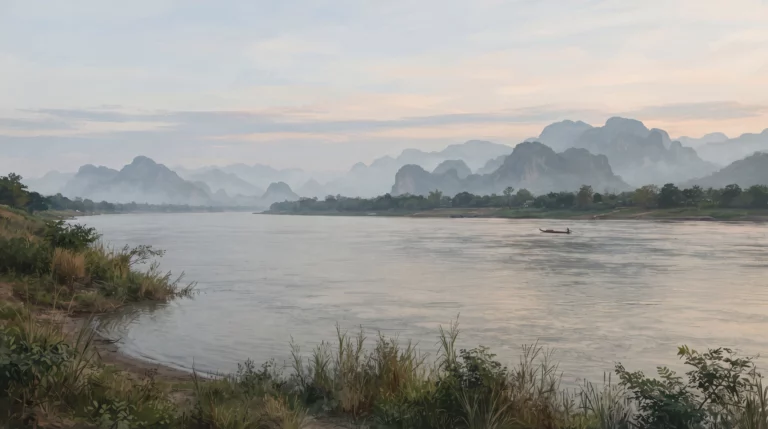
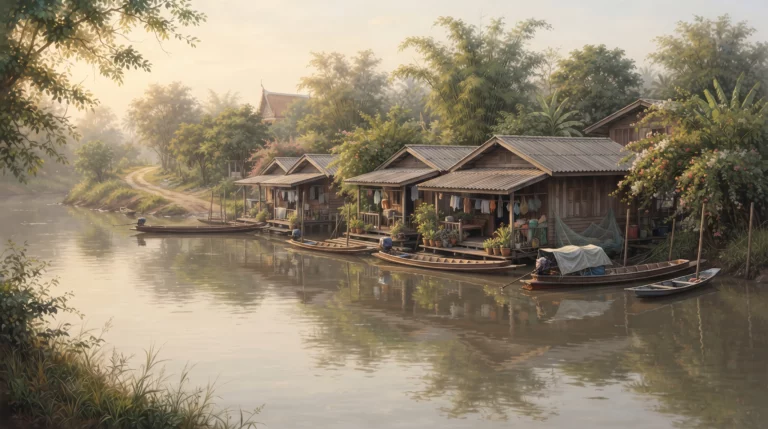
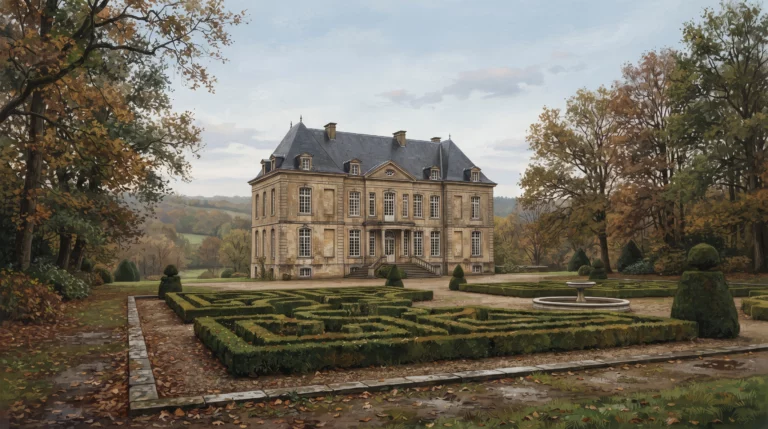
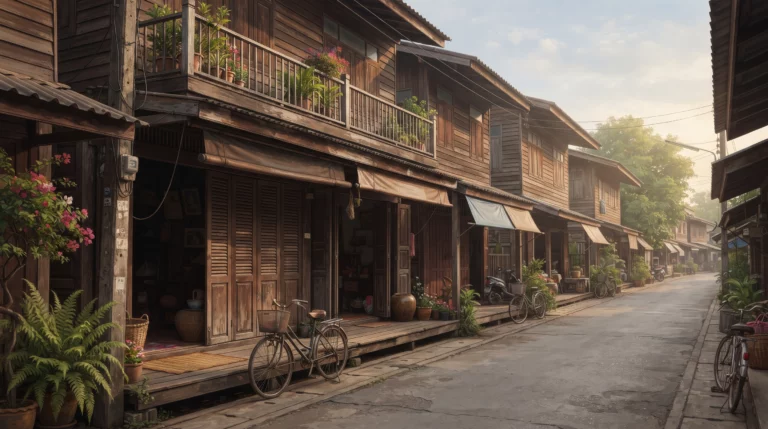
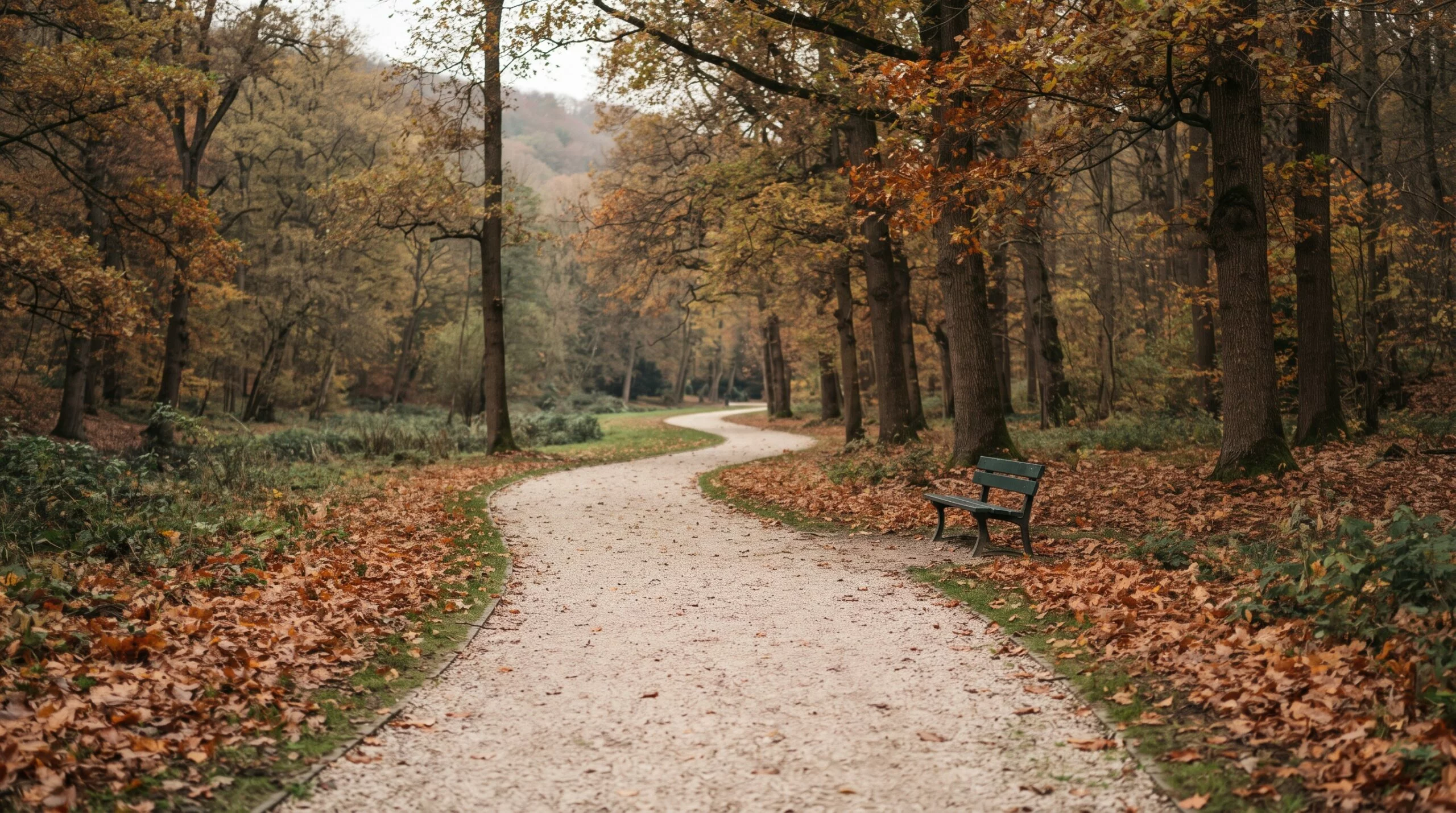
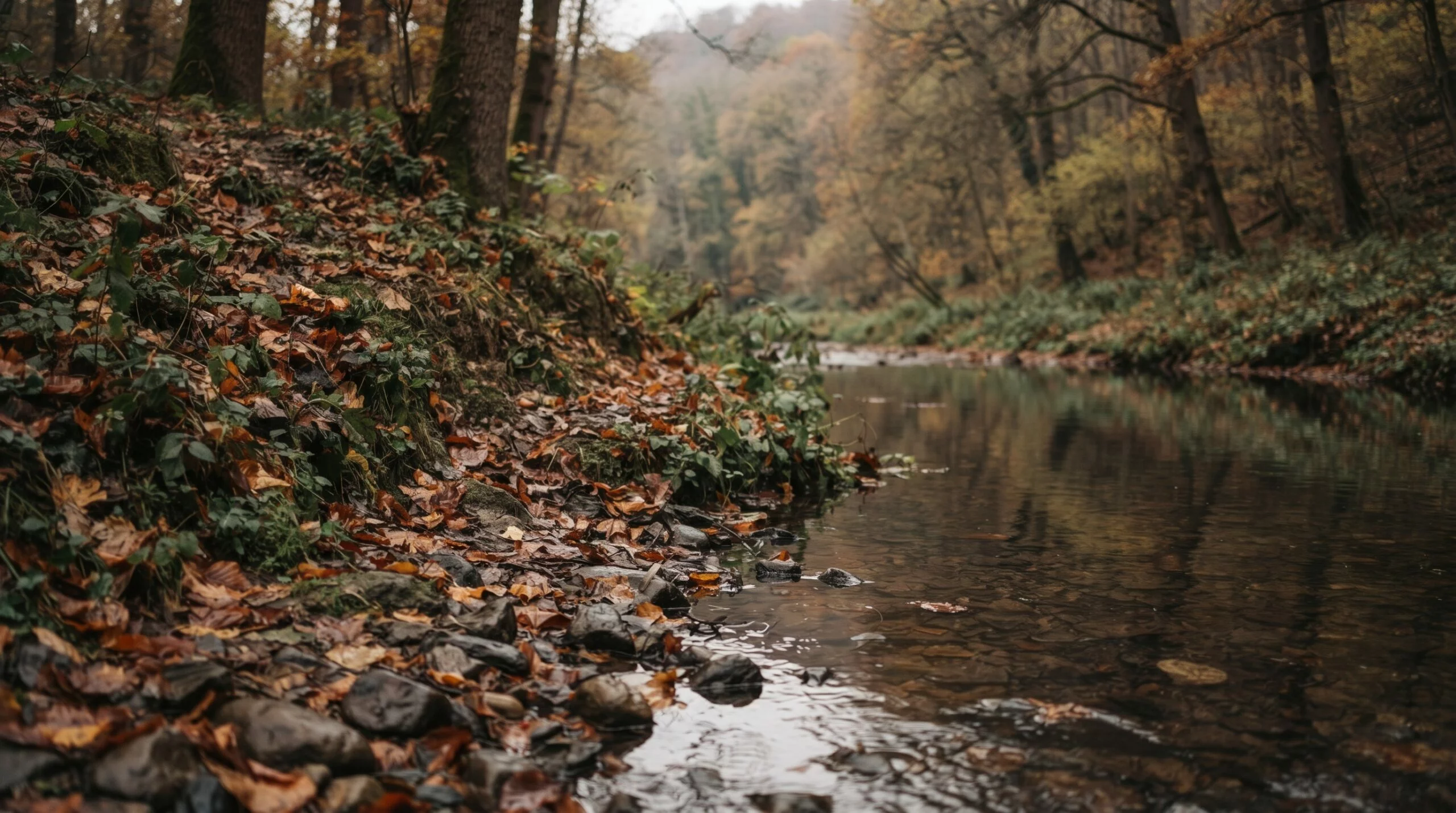
The three images accompanying this article were generated with Gemini and supplied to support the text. They suggest a valley landscape, a park path and a riverside detail. They do not show an identified itinerary and are not photographs taken in Chaudfontaine during the publication period. Their role is editorial: conveying an atmosphere without proving an opening, water level or path condition. To decide where to walk, use current local information and the indications you encounter. The beauty of an illustration should never become a shortcut around a practical check. A convincing imagined scene and a verified route are different kinds of information, with different uses for a visitor.
Record a transition rather than every object
In a notebook, retain one change that struck you: from traffic sound to the quiet of a park, from an open river view to a wooded passage, or from an artwork to the surroundings it reveals. Describe what changes instead of writing only that the landscape is beautiful. That precision gives a more personal memory afterwards. You can add the name of a source consulted or a question to investigate at home. There is no requirement to record everything or publish every image. The notebook helps preserve a relationship while leaving the walk enough time and attention to be an experience rather than a documentation task.
Revise the plan using the place in front of you
On arrival, your programme may meet a sign, a work site, tiredness or simply somewhere you want to stay longer. Accepting that information is not losing control of the day. It is making the day more appropriate. Consult the route and return options before moving into another area; do not follow a shortcut simply because it appears to point in the right direction. If the planned stop no longer fits, choose a nearby alternative that you understand or return towards the arrival point. Flexibility works best with a few secure references, rather than unlimited improvisation that passes uncertainty from one person to the next.
Leave with a more precise reading of the valley
Before heading home, name something that Chaudfontaine helped you distinguish: river and springs, places of movement and places of pause, the slope you observed and the path you actually walked. You do not have to enter every attraction to retain something particular. Check the return journey, keep useful documents and leave a later visit to hold what you did not choose today. The valley remains a living place with uses, changes and constraints. Discovering it attentively means relating those realities to the pleasure of walking, rather than replacing them with an ideal route designed far away from the conditions of the ground.
Sources for planning your visit
- Visit Chaudfontaine — information touristique
- Visit Chaudfontaine — La Vesdre
- Visit Chaudfontaine — promenades et parc Hauster
- Visit Chaudfontaine — itinéraires
- Commune de Chaudfontaine — avis travaux Fonds des Cris / parc Hauster

The book
The Empty Wall is the second book of Oscar’s Notebook, a series of crime novels set in Liège.