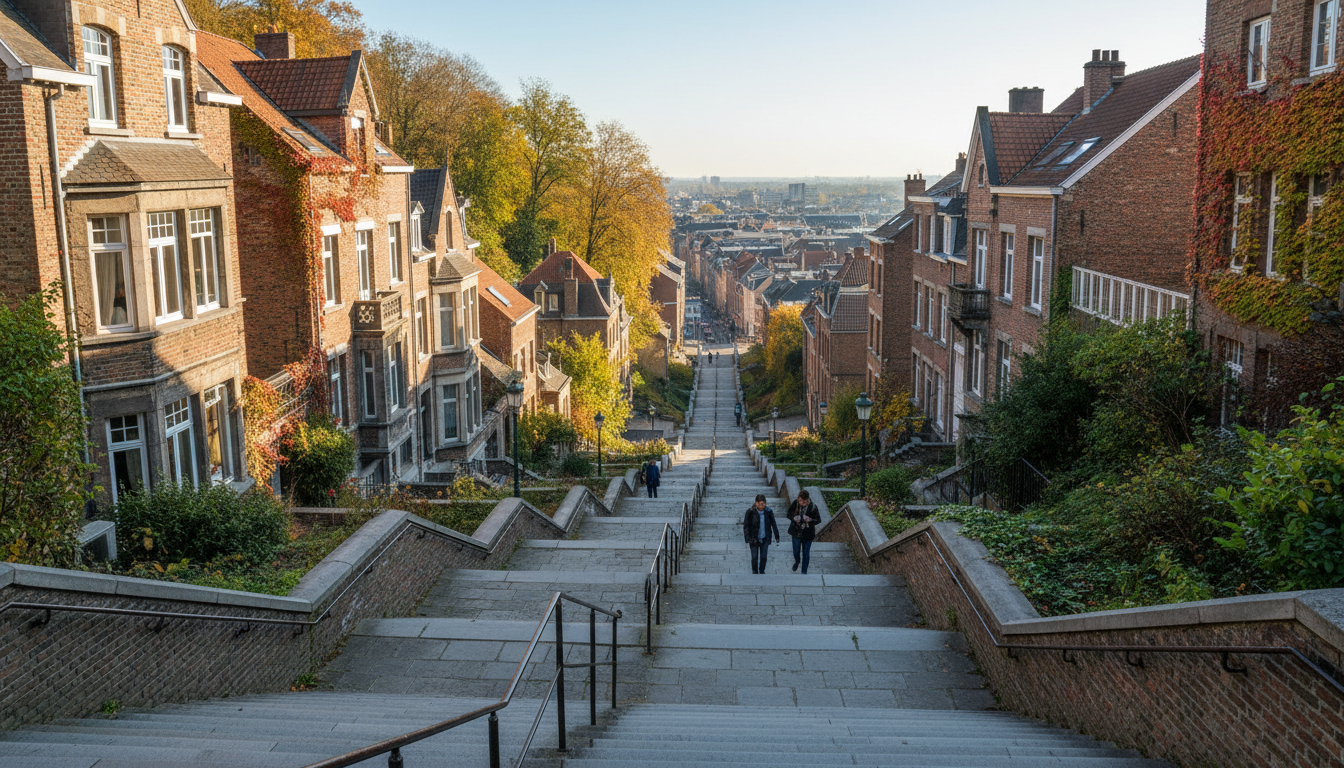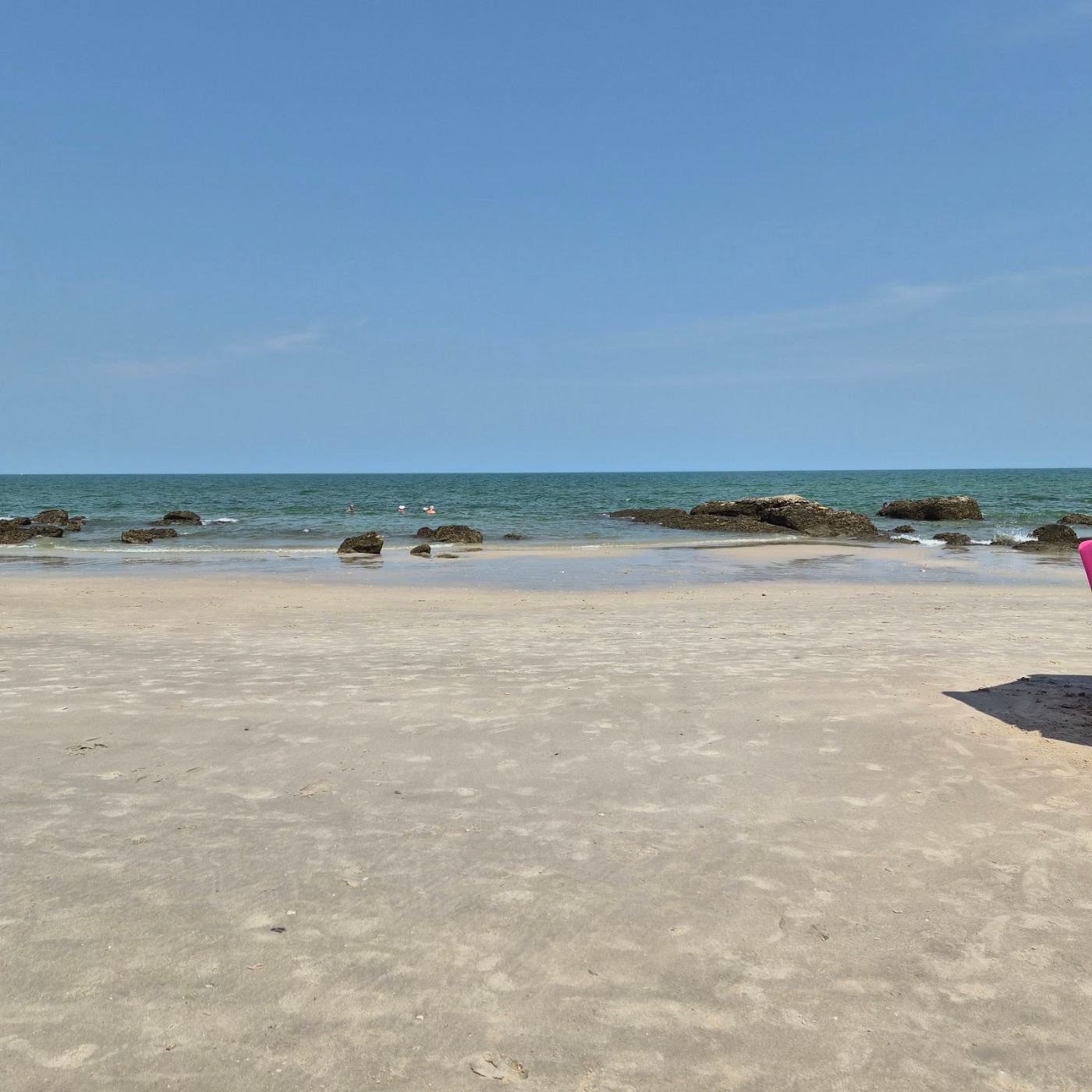
Sticky heat, fine-particle smog in the dry season, temple stairs as far as the eye can see: Thailand was not designed for tired lungs. Yet travelling when you are short of breath in Thailand is entirely possible, as long as you pick your season and use a few tricks. Asthma, COPD, lung disease, age or recovery from an illness: this practical guide is for you. Mr Schaka lives with pulmonary fibrosis and has been travelling in Thailand for years. He even wrote a book about it.
Short of breath in Thailand? Start with your doctor
Let’s be clear from the start: this article gives no medical advice. Before you book anything, talk to your lung specialist or your doctor about your plans. Only they can tell you whether the flight, the heat and the pollution are reasonable for you, at what time of year, and what you need to bring. Everything that follows is pure logistics.
Mr Schaka tells the story of his own trip with pulmonary fibrosis in The Season of Breath, a true story. Among other things, you learn that a spiral staircase can become a character in its own right.
Pick the right season: no furnace, no smog
In Thailand, the best season for your lungs is not necessarily the one in the brochures. Two periods call for caution:
- The hot season, March to May. April is usually the hottest month: in Bangkok, daytime highs hover around 35 to 36°C, and nights stay warm. Walking at noon becomes a combat sport.
- The fine-particle (PM2.5) season. In Bangkok, pollution rises mainly during the “cool” season, roughly December to February, sometimes into March. In the north (Chiang Mai, Chiang Rai), crop burning and forest fires push PM2.5 up mostly from January to March, often into April.
The paradox is that the most pleasant months temperature-wise are also the most polluted. The rainy season (roughly June to October) and November often bring cleaner air, at the cost of humidity and showers. For the weather month by month, see the best time to visit Thailand, and decide on your dates with your doctor.
Once there, install an air-quality app: IQAir AirVisual, or Air4Thai, the free app of Thailand’s Pollution Control Department, which shows the air quality index and PM2.5 readings by station. A quick look in the morning, and red days become days for museums, massages or shopping malls.
Bangkok without wearing yourself out
Bangkok is perfectly enjoyable at an ant’s pace. A few simple rules:
- The train rather than the pavement. The BTS (elevated) and the MRT (underground) are air-conditioned. Every MRT station has lifts. On the BTS, not every station has one, and not every exit: the platforms sit high above the street and the stairs can be long. Find the exit with a lift before you get off.
- Grab rather than walking. Eight hundred metres at 34°C on uneven pavements are well worth a car booked through the app.
- The boat, with care. On the Chao Phraya river, the air moves and you stay seated. But the floating piers sway and boarding is quick: avoid rush hour and accept the crew’s helping hand.
- Breaks in shopping malls. Air conditioning, benches, clean toilets, restaurants: the big malls are the city’s unofficial oases. A break is not an admission of weakness, it’s a strategy.
Your choice of neighbourhood matters too. In The Season of Breath, Mr Schaka recounts choosing old Bangkok, in Banglamphu, for one stay: a low-rise district, “almost without stairs”, and a hotel whose lift he had checked before booking. All the practical details on trains and boats are in getting around Bangkok.
Good to know: to plan short trips and avoid detours, install Mr Schaka’s free app Thaïlande en poche. It installs straight from the website and brings together the guide’s maps and addresses: handy for knowing in advance whether a place is two steps or two kilometres away.
Temples: count the steps before you climb
Thai temples love heights. Before you set off, know what to expect:
- Wat Arun (Bangkok). The steps of the great central prang are narrow, very steep, and get steeper as you climb, with few handrails. Visitors can only go up to an intermediate terrace. The temple is just as beautiful from below, or from the opposite bank at sunset.
- The Golden Mount (Wat Saket, Bangkok). 344 steps, but they spiral gently around the hill. Go early in the morning, at your own pace, and stop as often as you need.
- Doi Suthep (Chiang Mai). The famous naga staircase has 306 steps. Good news: a small funicular-style cabin goes up to the temple, for around 50 baht for foreigners (check the fare on site).
- Wat Pho and the Grand Palace. Almost flat, but vast, and the paving reflects the heat. Come at opening time.
Islands, beaches and hotels: aim for flat
Many islands are mountainous inland. The seafront, though, is often flat. Choose a hotel at beach level rather than a hillside bungalow that looks lovely in photos but sits at the top of dozens of steps. Famous viewpoints have to be earned: on Koh Phi Phi, you climb around 320 concrete steps, then a steep trail, to reach the lookout.
For your hotel, in the city or on the islands, assume nothing: many small hotels and shophouses have no lift. Write before booking and ask for a ground-floor room or one near the lift.
Flights and insurance: what to arrange in advance
As Mr Schaka describes in his book, the air in a plane cabin is like mountain air, thinner in oxygen: healthy lungs don’t notice, others do. If your doctor thinks you need oxygen during the flight, you have to arrange it with the airline well before departure. Every airline has its own rules: a medical form completed by your doctor, whether a portable oxygen concentrator is allowed, how many batteries, how much notice (often at least 48 to 72 hours). Ask as soon as you book. Remember airport assistance too: the corridors are long.
As for insurance, a condition you had before buying the policy generally has to be declared to be covered. Chronic lung conditions often mean an extra premium, and an undeclared condition may not be covered. Read the policy, compare several insurers and check the conditions before you leave.
Good to know: carry your medicines in your hand luggage with the prescription, and ask your doctor for a letter in English summarising your situation. Import rules for some medicines change: check before you travel.
Frequently asked questions
What is the best time to go if I get breathless easily?
There is no universal answer. People often avoid April (heat) and the PM2.5 peaks (December to March in Bangkok, January to April in the north). November is often a good compromise. Make the decision with your doctor.
Does the Bangkok metro have lifts?
Yes, at every MRT station. On the BTS, not everywhere and not at every exit: check before you get off.
Can I avoid the stairs at Doi Suthep?
Yes. A cabin goes up to the temple for around 50 baht (check on site).
Can I get oxygen on the plane?
Sometimes, depending on the airline, only on prior request and with a medical certificate. Talk to your doctor, then to the airline, well before departure.
Read also: Thailand travel over 50: pace, comfort and pleasant surprises

The book
Mr Schaka lives with pulmonary fibrosis and has been travelling in Thailand for years. In The Season of Breath, available in English, he tells the story of that journey, one step at a time, with humour and no self-pity.