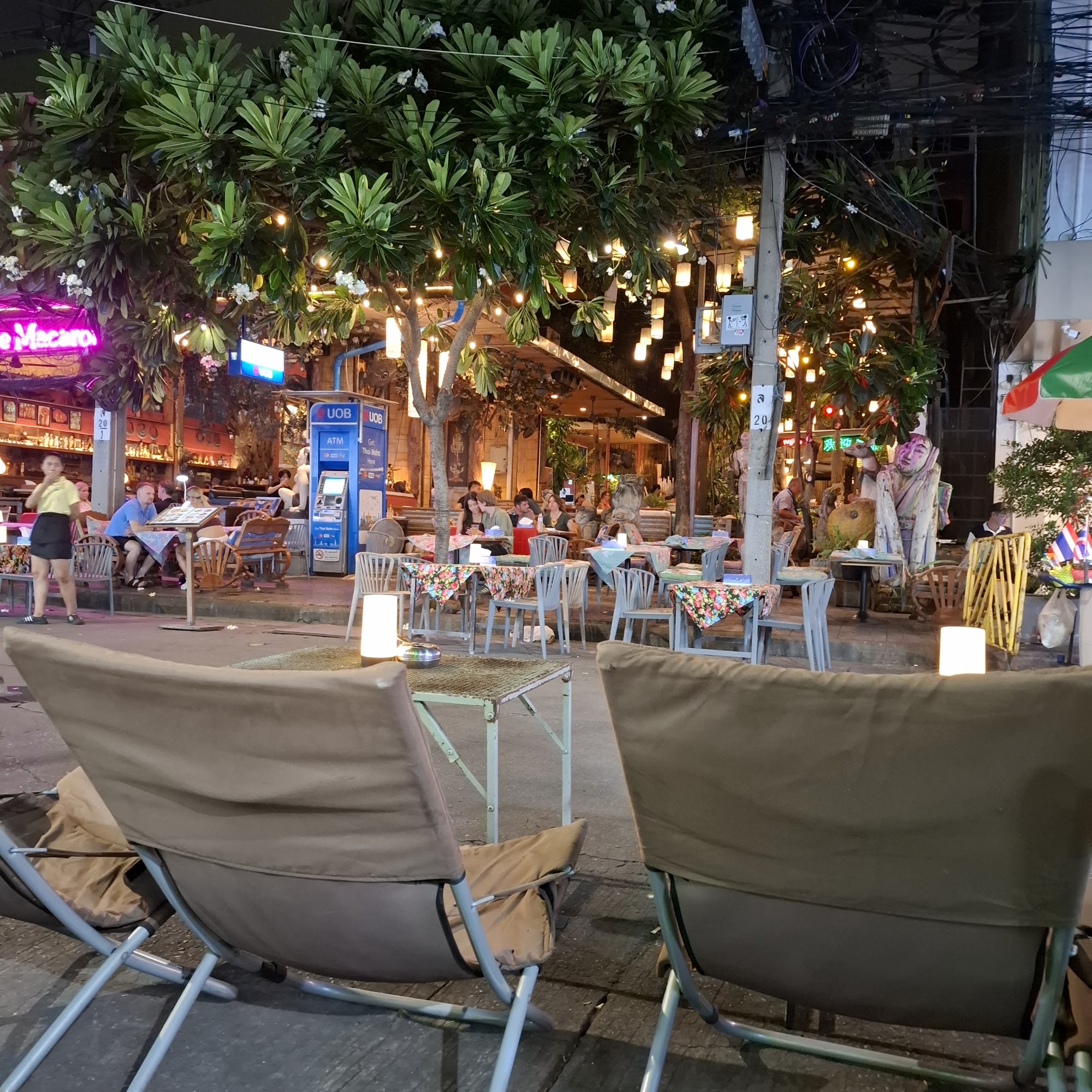
Over my many stays, cafés in Bangkok have become my offices, my reading rooms and my refuge from the midday heat. Between Thai speciality coffee, the old houses of Chinatown and the little counter on the street corner, here is how I choose where to sit depending on what I need to do: write, read or simply catch my breath for an hour.
Why Bangkok is a café city
When I first arrived, I expected iced tea and very sweet instant coffee. Instead I found a city where a new café opens almost every week, where Thai baristas take part in international competitions and where roasters work with beans grown in the north of the country. The air conditioning is generous, the wifi is almost always free, and nobody looks at you oddly if you stay an hour with a book.
You still need to know where to go. A shopping-centre café does not have the same atmosphere as an old shophouse by the river, and a street counter is not made for opening a laptop. So I have got into the habit of thinking by neighbourhood and by type of café, rather than chasing the latest fashionable address.
Thai speciality coffee: beans from the North
Thailand grows its own coffee, mostly in the mountains of Chiang Mai, Chiang Rai and Nan provinces for arabica, and in the south for robusta. Many Bangkok roasters highlight these local origins, often with the name of the village or the small farm on the menu. It is a lovely way to taste the country differently.
In these speciality cafés, expect to pay roughly 80 to 200 baht for a drink, depending on the method (espresso, filter, cold brew) and the bean. That is expensive by Thai standards, but you are also paying for the seat, the calm and the cool air. A few well-established names I know:
- Roots: a Thai roaster that works a lot with northern beans, with branches in several neighbourhoods, including one at The Commons in Thong Lo.
- Nana Coffee Roasters in Ari: a recognisable building, in-house roasting and a serious filter menu.
- Factory Coffee, near Phaya Thai BTS station: known for its signature drinks and often very busy.
Opening hours and addresses change quickly in Bangkok, so I always check the café’s up-to-date listing on an online map before crossing the city.
Ari and Phaya Thai: my neighbourhood for working
If I need to write for several hours, I go to Ari. The area lies north of the centre, on the BTS Sukhumvit line, and keeps a residential feel with its small streets, trees and offices. There is a high concentration of cafés, from the tiny counter to the large bright room, which means you can change places without getting back on the train.
Further south, Phaya Thai and Ratchathewi offer the same advantage, plus the connection to the Airport Rail Link. To understand how to reach these neighbourhoods without losing time in traffic jams, I explain the lines in my article on getting around Bangkok by BTS, MRT and boat.
Talat Noi and Songwat: cafés in old houses
To read or take a real break, I prefer old Bangkok. In Talat Noi and along Songwat Road, on the edge of Chinatown and close to the Chao Phraya River, old shophouses and warehouses have been turned into cafés. Bare walls, narrow staircases, antique Chinese furniture, sometimes a cat asleep on a chair: the atmosphere matters more than the wifi speed.
Mother Roaster, in Talat Noi, is one of these places: you climb to the upper floor of an old building to drink your coffee among objects from another era. The area can be reached on foot from Hua Lamphong MRT station, or by boat on the river. I recommend going early on a weekday morning: at weekends many visitors come to take photos and seats become scarce.
These cafés are not always suited to working for long. Few power sockets, low tables, steep stairs: I go there with a notebook or a book, not with a full day’s work.
Sukhumvit, Thong Lo and Ekkamai: convenient but pricier
Along Sukhumvit, especially around Phrom Phong, Thong Lo and Ekkamai, cafés are numerous, modern and easy to reach thanks to the BTS. You will meet many remote workers and expatriates there. Prices are often a little higher and the rooms noisier at peak times, but it is practical if you are staying in this area. If you are still unsure about your base, my guide on where to stay in Bangkok by neighbourhood can help.
Neighbourhood cafés and old-style coffee
The coffee I drink most often, however, does not come from a fashionable roaster. On almost every street, a small stall or shop makes Thai iced coffee, often very sweet, with condensed milk, for roughly 30 to 60 baht. If you want less sugar, say “wan noi” (a little sweet); vendors are used to it.
There are also old-style coffee shops, sometimes run by families of Chinese origin for decades, where coffee is filtered through a cloth sock and served with toast and soft-boiled eggs. You do not work there; you sit down to watch the neighbourhood go by. That is often where I find the Bangkok I love most.
Working in a café: the unwritten rules
Thai people are tolerant, but there are customs. I order a new drink or something to eat roughly every two hours, I do not take over a large table on my own when the room fills up, and I keep my voice down on the phone. Some cafés restrict laptop use at weekends or display a maximum time: I respect those little signs. The wifi password is often printed on the receipt.
My practical tips
- Bring a light jumper: the air conditioning is often set very cold.
- Check opening hours before setting off: many speciality cafés open around 8 am and close in the late afternoon, and some close one day a week.
- For working, aim for weekday mornings; for the photogenic cafés of old Bangkok, avoid Saturday and Sunday afternoons.
- Carry a power bank: sockets are not guaranteed.
- Plan a realistic coffee budget; my article on the budget for a week in Bangkok gives some benchmarks.
- Ask for “mai wan” (no sugar) or “wan noi” (a little sweet) at street coffee stalls.
- Combine a café with a visit: a coffee in Talat Noi in the morning, then a walk along the river.
Frequently asked questions
Is wifi free in Bangkok cafés?
In the vast majority of cafés, yes. The code is often on the receipt or displayed at the counter. To work with peace of mind, I also keep mobile data as a back-up.
How much does a coffee cost in Bangkok?
Roughly 30 to 60 baht for a street iced coffee, and roughly 80 to 200 baht in a speciality café. Prices vary with the neighbourhood and the brewing method.
Which neighbourhood is best for working on a laptop?
Ari and Phaya Thai are my favourites: plenty of cafés, a calm atmosphere and easy access by BTS. Sukhumvit is convenient too, but noisier and a little more expensive.
Can you stay a long time with just one coffee?
An hour or two, yes, without any problem. Beyond that, it is polite to order something else, especially if the café is filling up.
To go further
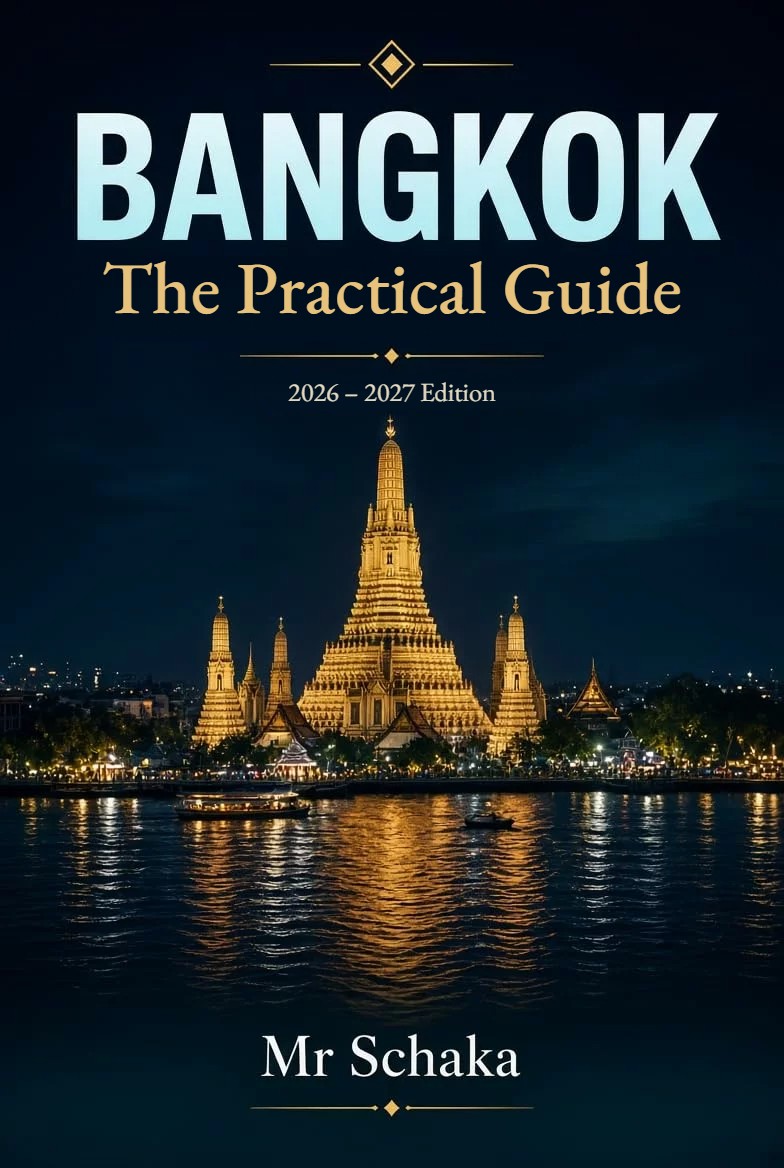
Mr Schaka’s guidebook, Bangkok – The Practical Guide, covers the essentials: transport, neighbourhoods, addresses, food, etiquette and safety, updated for 2026–2027.