Category: Oscar’s Notebook: articles

Liège, its characters and the history behind the detective series.

  • Liège guide: which city would you like to discover?

    Liège guide: which city would you like to discover?

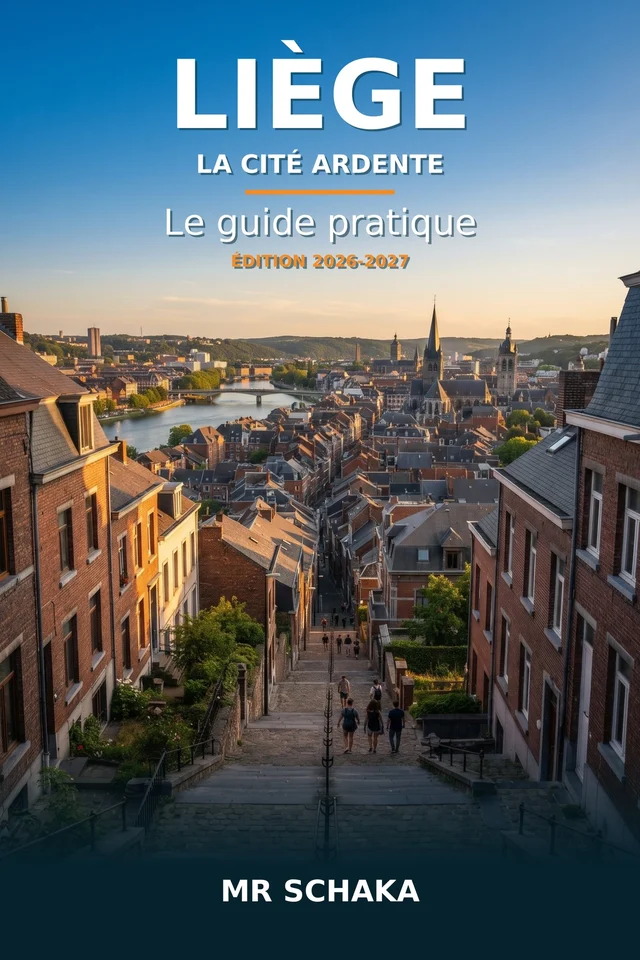
    You may know Liège through a station, a market, an expression or the memory of an evening. But if you had to organise a day for someone who had never walked through it, where would you begin? That question sits at the heart of LIÈGE – La Cité ardente – Le guide pratique by Mr Schaka. The book connects neighbourhoods, heritage and daily life so the city becomes more than names and pictures you recognise without knowing how to approach them.

    The 2026–2027 edition brings together twenty-one chapters, illustrated maps and a practical notebook. It supports a stay, but may also interest someone from the region wanting to look differently at familiar habits. What would you most like to show? Which journeys would you choose? How much room would you give the Meuse, cafés and slopes? Answers already suggest something more personal than an impersonal ranking of supposedly essential attractions. This introduction explores those questions as ways of discovering the book and deciding what use it could have for your own plans.

    What do you picture when you think of Liège?

    One image often appears first: Guillemins, the Perron, a riverbank or a climbing street. That reference point is useful, yet it can reduce the city to what is already familiar. The guide makes room for different faces of Liège. Heritage, museums, walks, food, a neighbourhood or time together can all become starting points. You do not have to choose everything at once. You need to understand why one possibility appeals now and what kind of day that preference might help you create.

    Write three words before opening the contents, then see whether the chapters answer them or suggest alternatives. This avoids treating the book only as a directory. It can broaden a question as well as supply an address. Perhaps you wanted a monument and discover that connections between districts interest you more. Good preparation need not simply confirm the original plan. It can provide reasons to change it while keeping the outing realistic for the time available. A guide becomes interesting when it helps explain those reasons rather than merely replacing one list with another.

    Is a neighbourhood a stop or a way of looking?

    The contents distinguish the historic centre, the Carré, Outremeuse, Guillemins and the quays, then Pierreuse and the slopes. These names organise discovery without creating sealed compartments. Ask what changes in the walk: space, uses, the relationship with water or the terrain. A neighbourhood becomes more engaging when it introduces a different question rather than simply another line in a programme where every stop is interchangeable. You begin to recognise not only what can be found there, but what spending time there might contribute to the wider visit.

    This helps with group planning too. One person wants a museum, another a walk and another a proper seated break. The guide can give discussion a shared basis. Instead of combining lists until the day becomes impossible, seek coherence within an area, adding something else if conditions allow. A neighbourhood becomes a tool for choosing together rather than a demand to visit everything that appears nearby on a page. The plan then belongs to the people taking part, not to the quantity of suggestions collected before they have considered their actual priorities.

    How do you move from arrival to discovery?

    The book treats arrival and circulation as part of the experience. They may seem secondary to monuments, yet shape its beginning. With luggage or after a long journey, your first need may not be sightseeing. What should happen first: leaving bags, understanding a route, resting or reaching the starting point without an unnecessary detour? Asking this makes the opening of a stay more realistic. It also protects the time intended for looking, instead of consuming it in a chain of small logistical problems that could have been clarified earlier.

    Separate these needs from the discovery programme. A station can be both something to observe and a practical arrival point without those functions being identical for everybody. The guide introduces ways to circulate; current operator information confirms the actual service. You need not memorise everything before departure. Preparing the first movement sufficiently allows you to lift your eyes towards the city rather than spend that entire hour solving avoidable questions. Practical organisation can support curiosity, leaving a traveller more available for the architecture, people and streets encountered immediately afterwards.

    Must the famous places come first?

    Well-known sites provide anchors and may make a fine introduction. Fame alone, however, does not determine how much time you want to give them. The book brings together heritage and museums, including the Saint-Lambert and market areas and city collections. Before selecting a stop, ask what you hope to understand or feel. Even a simple answer can shape a visit based on interest rather than fear of omission. A place is easier to remember when you can explain why you paused there instead of merely knowing it appeared on a recommended list.

    Choose one thread: how a square organises movement, a building’s changing role or the relationship between a collection and its setting. The guide suggests possibilities; observation tests them. Someone unfamiliar with architectural terms can still compare, describe and ask. Curiosity requires time and permission to stay with a question, not prior expertise. Moving immediately to the next stop may look efficient while preventing any real encounter. The practical choice is therefore not always the fastest one, particularly when attention is the reason you came to explore rather than simply pass through.
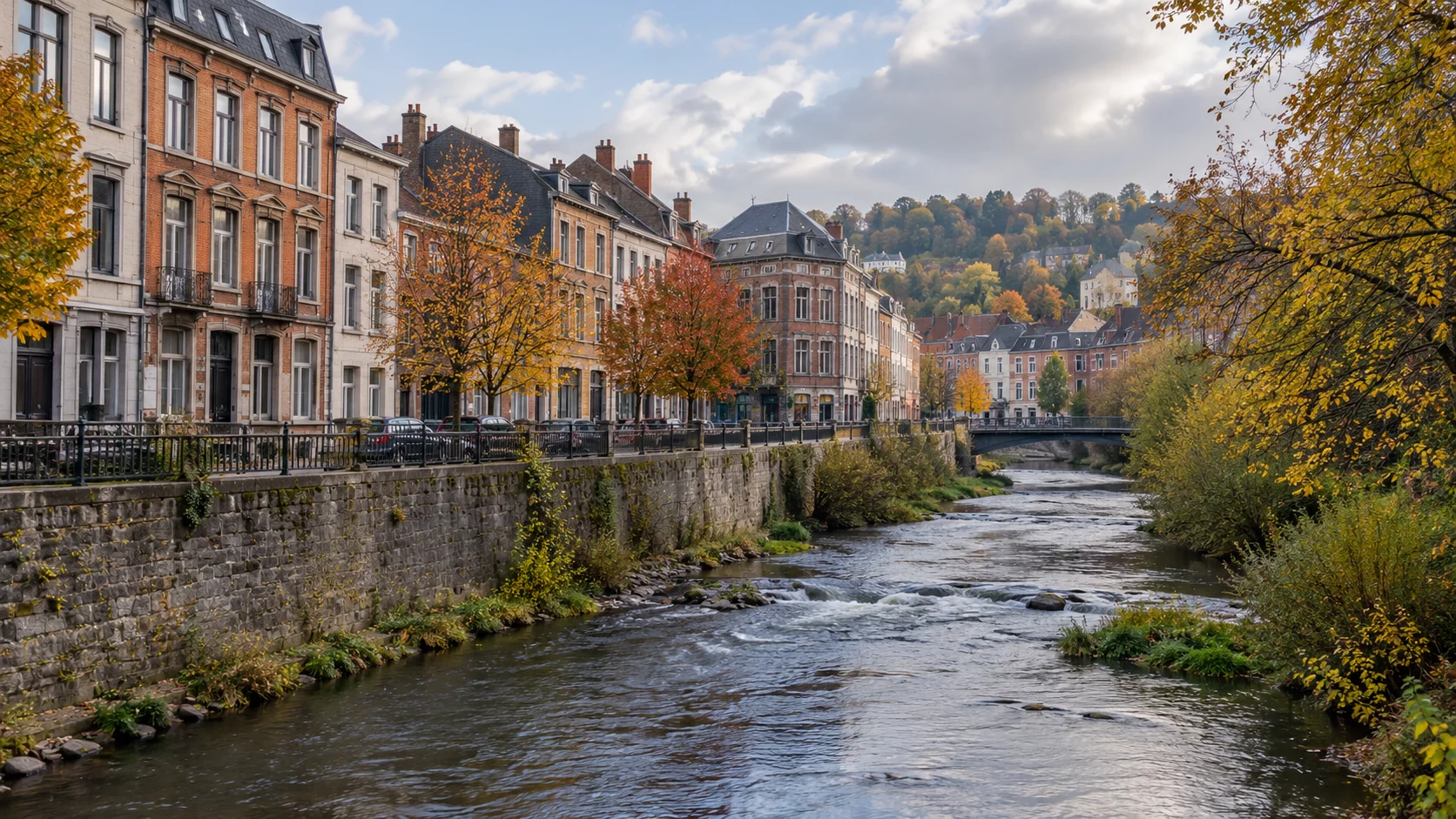
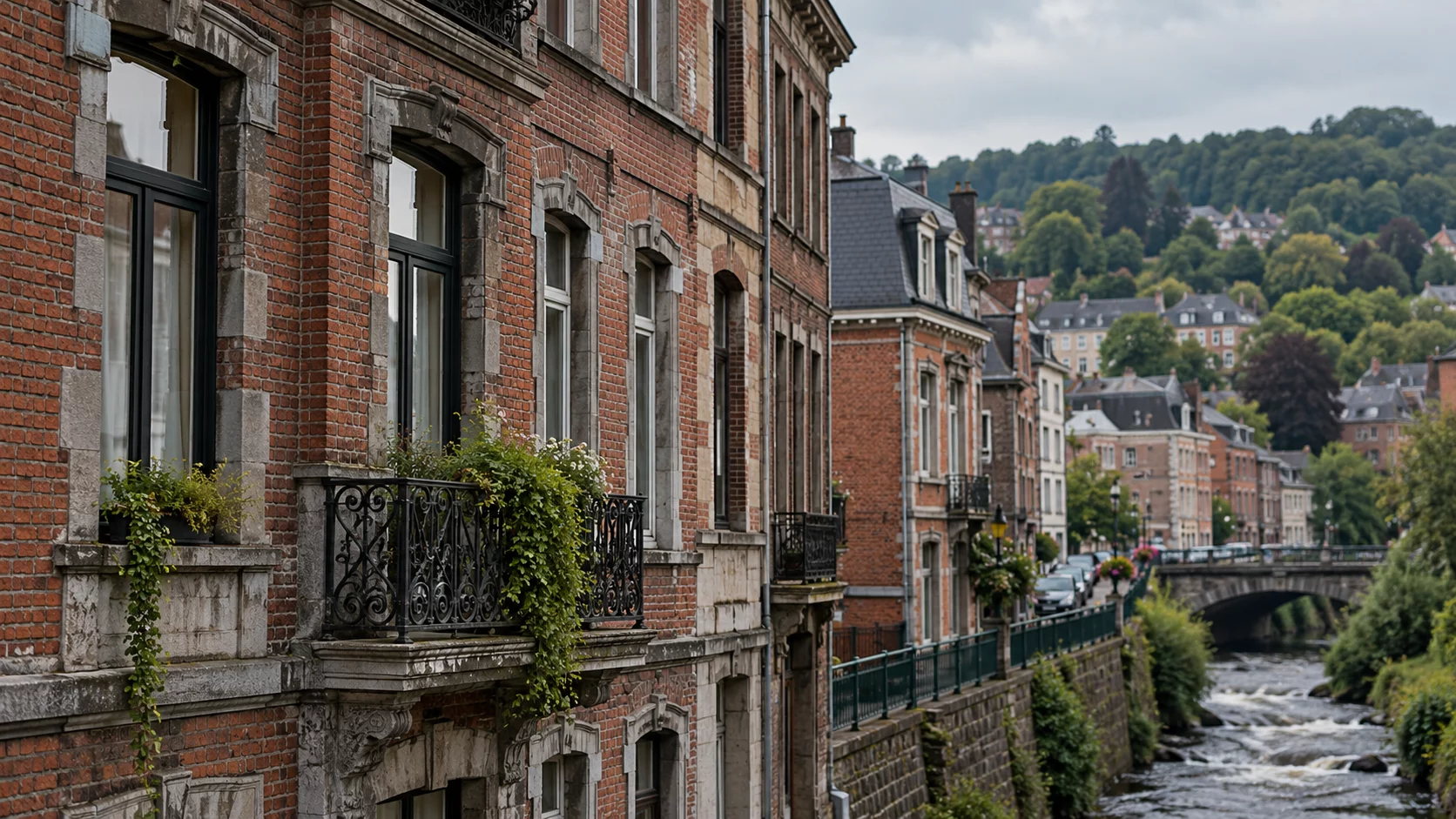
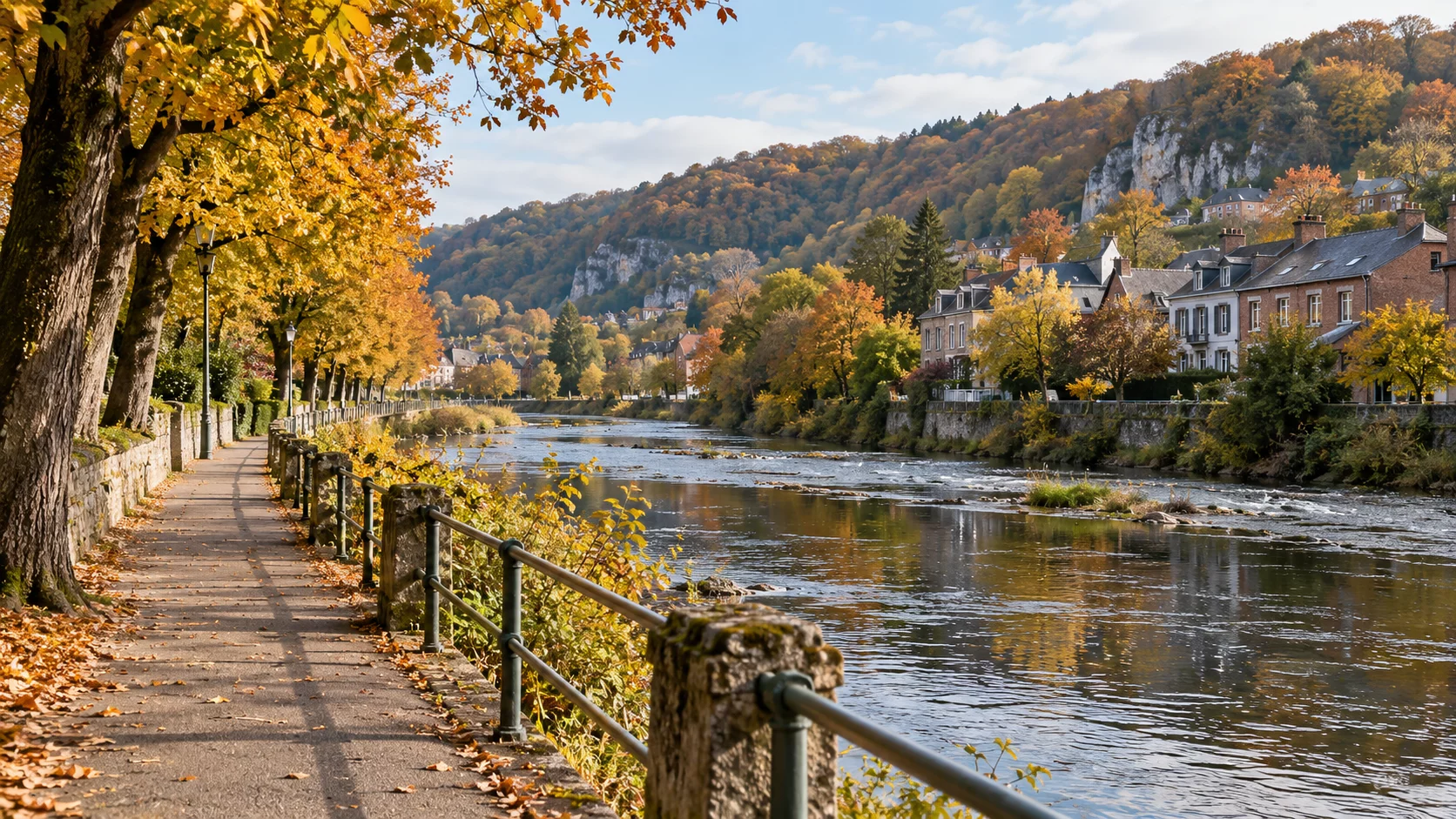
    AI-generated illustration accompanying the reading. An atmospheric image, not a documentary record or necessarily an exact scene from the book.

    What does the Meuse change in your route?

    The guide gives the river and natural areas a place of their own. The Meuse may serve as an anchor, a walking subject or a connection between parts first considered separately. What would you like from that section: breathing space between visits, a longer walk or another view of the city? Giving the river a purpose prevents it becoming only a transition towards the next monument. It also makes it easier to decide how long to remain, where to pause and whether to build the day around the water rather than cross it without noticing.

    An illustrated map explains the whole while local conditions clarify the usable route. Do not turn a simplified representation into a guarantee of uninterrupted passage or accessibility. Confirm the points relevant to your group and retain a return option. This preparation creates freedom afterwards: pausing for a facade or conversation need not undermine everything. The river becomes a presence whose role you choose, rather than a line on a plan. Knowing where the flexible parts are lets a walk remain open without leaving companions uncertain about how they will get back comfortably.

    Is the terrain part of the pleasure you seek?

    Pierreuse and the Coteaux de la Citadelle feature in the book. Their inclusion reminds readers that one city can require different kinds of effort. Do you want height, or would a simpler route suit this visit? Your answer need not resemble another traveller’s. A guide is valuable when it reveals consequences, not when it makes every proposal a performance required to qualify as having seen the destination. Choosing an appropriate alternative can be a well-informed decision rather than a lesser version of somebody else’s more demanding outing.

    Consider available time, surface conditions and people’s needs. Distance alone does not establish ease. A climb or a few steps may change the experience, while a more comfortable route can improve the entire stay. The book identifies questions; information suited to your circumstances should complete preparation. You can then choose a viewpoint or another activity without guilt, knowing what you want to retain. An outing is not made complete by ignoring a limitation. It becomes coherent when its parts support the attention and comfort needed to enjoy what has been chosen.

    #LiegeGuide #Liege #TravelBooks #MrSchaka

    Can the city be learned at the table?

    Local food, markets and evenings have their own space in the guide. They do more than fill time after visits. A meal offers opportunities to encounter a practice, ask an explanation or compare an assumption with what is served. What would you like to try, and in what setting? A seated pause, brief discovery and conversation require different choices. Naming this before hunger takes over gives the food chapter a practical function and keeps the break connected with what the people travelling together actually need that day.

    Distinguish interest in a product from a particular business’s current arrangements. Offers, hours and conditions can change. Confirm what matters to your visit and ask relevant questions on arrival. A speciality need not become an authenticity test imposed on hosts. Discovery can remain straightforward and respectful. Eating in Liège does not require tasting everything; understanding one preparation or enjoying a shared pause may enrich memory as much as a succession of addresses. The guide can encourage curiosity without turning the table into another place where a visitor must complete an exhausting checklist.

    Why prepare a museum instead of adding one at the last moment?

    The book introduces cultural venues including the Grand Curtius, La Boverie and the Museum of Walloon Life. Variety offers possibilities while requiring choices. With limited hours, which subject appeals, and how much time should remain for streets? A museum should not be a spare box between journeys without checking its programme. Its quality as an experience partly depends on the place given to it within the day and the attention available when you arrive. An interesting venue can become a poor encounter if visited solely because an unplanned gap needs filling.

    Preparation may involve only three decisions: the chosen venue, one discovery question and current access information. You need not arrange every room. The guide orients, while the museum’s resources clarify what is actually presented and the day’s conditions. This preserves a useful distinction between a planning publication and a changing programme. You arrive with a clear interest while remaining receptive, instead of expecting an experience inferred from an old picture. The book helps begin the conversation with a place; the visit supplies details that cannot be completely determined in advance.
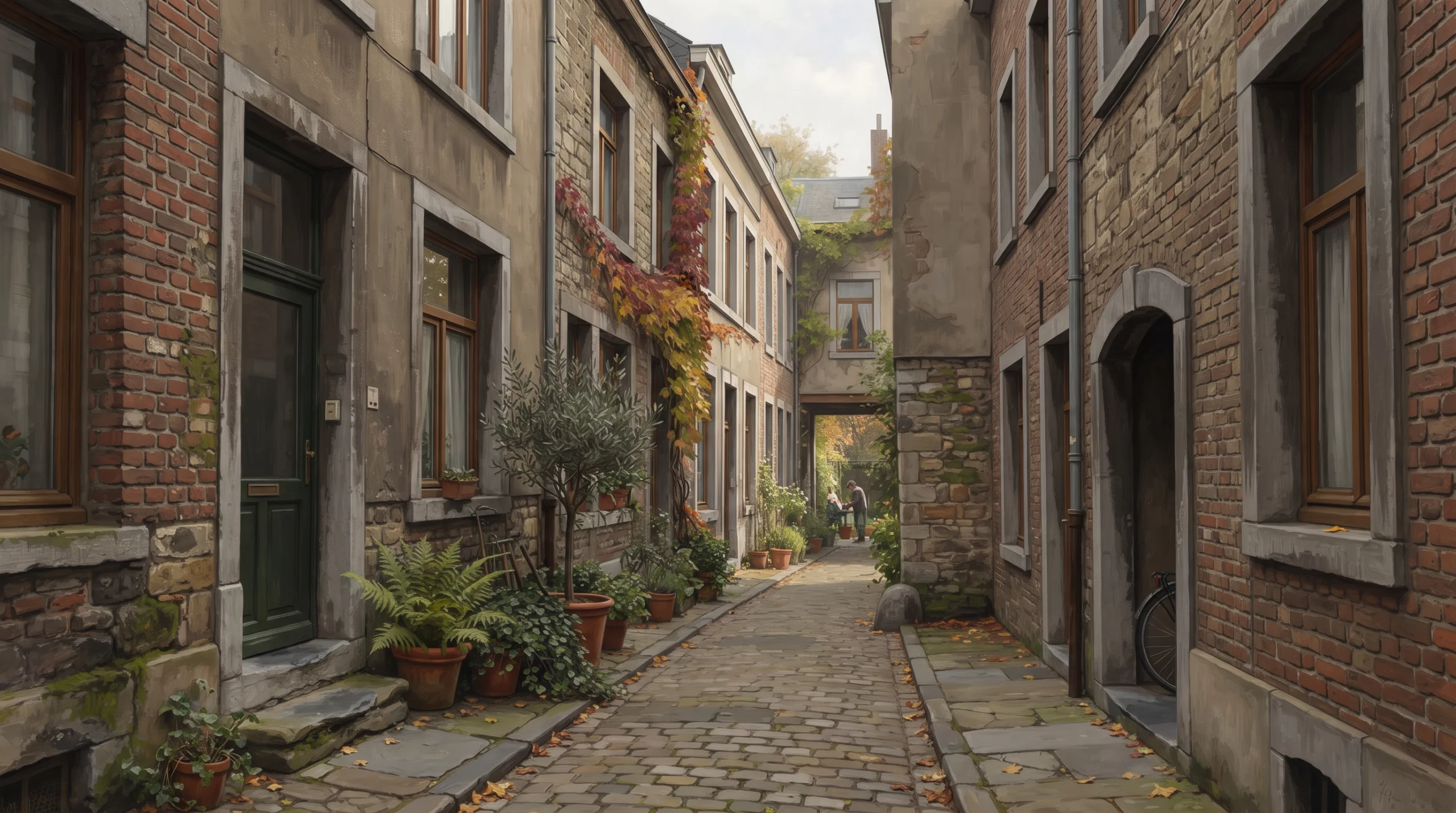
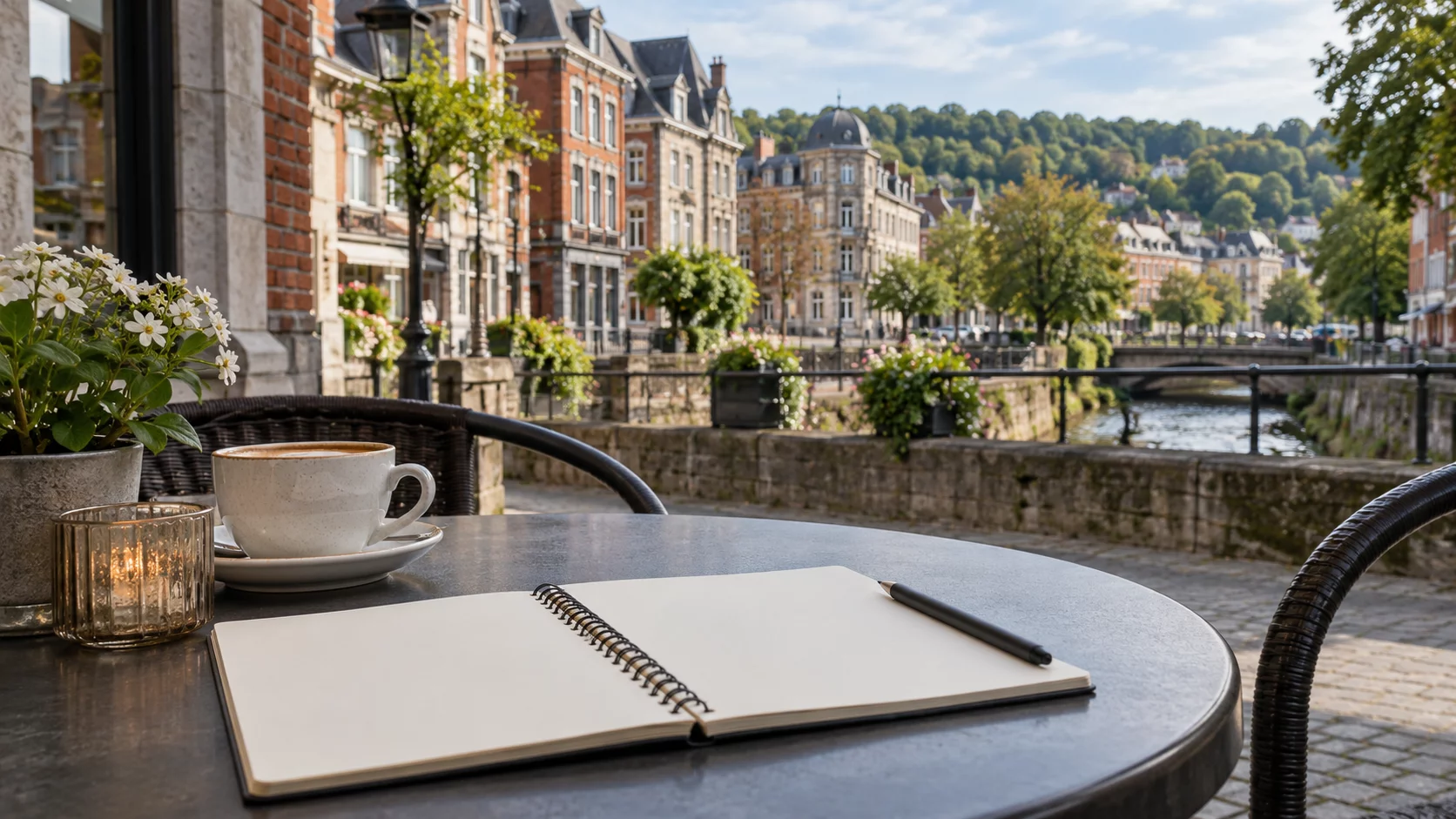
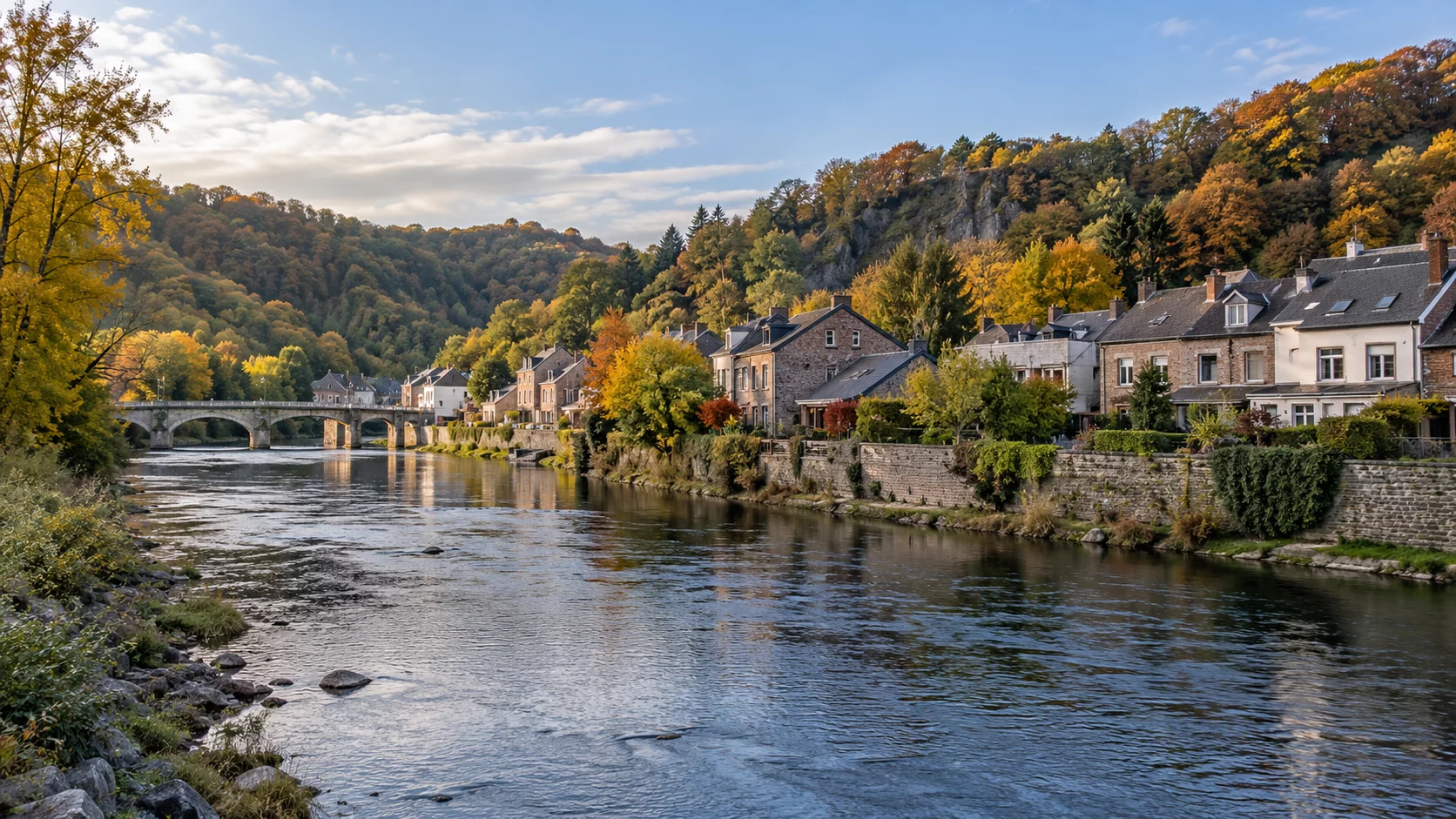
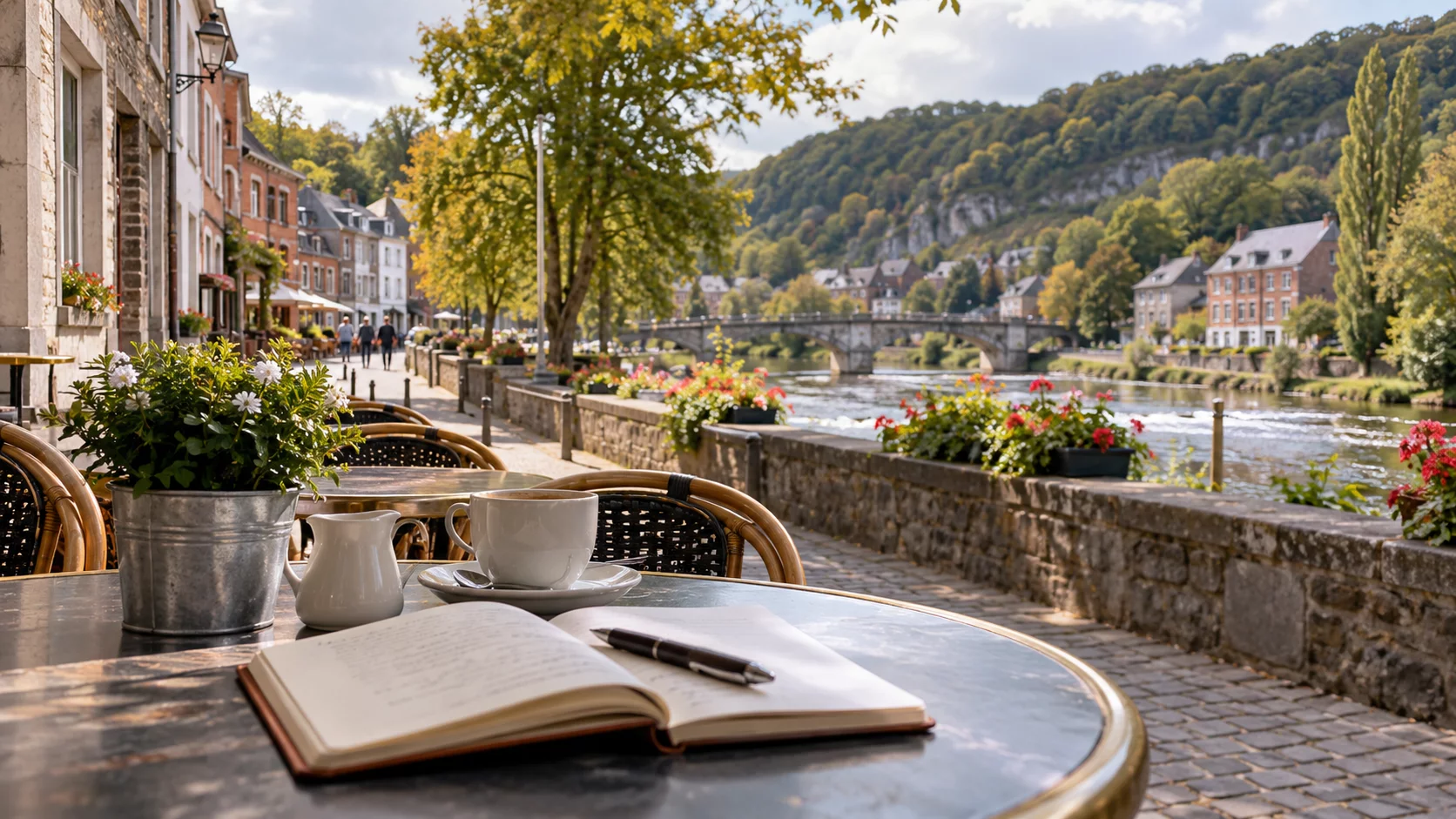
    AI-generated illustration accompanying the reading. An atmospheric image, not a documentary record or necessarily an exact scene from the book.

    What changes between one day and a longer stay?

    The contents offer one-, three-, five- and seven-day itineraries. Their purpose is to show ways of distributing discovery rather than impose a universal number of attractions. Calculate real time first: arrival, departure, appointments and rest. Two nights do not always provide two complete days. Recognising that prevents a short stay becoming a compressed long programme in which every ordinary delay feels irretrievable. Time understood honestly is often more useful than a large selection of ideas that depend on every connection working perfectly and nobody ever needing a pause.

    With longer, deepen rather than automatically add. Revisit a district, spend more time with a collection or move a walk according to conditions. The guide can support this flexibility without requiring every hour to produce another name. What does extra time make possible: variety, comfort or closer attention? Different answers can produce equally successful stays because they reflect genuine intentions. Rest and repetition may belong within discovery, not outside it. A second look can make a place clearer in a way that a new destination reached while tired cannot always provide.

    Does local knowledge remove the need to check?

    The guide is presented as written by an author from the Liège region. This connection can give coherence to selection and relationships between places. It does not make practical information permanent. The manuscript dates its collection to October 2026 and notes possible changes. Some sections explain the city; others need recent confirmation before booking or using a service. Understanding which function a passage serves makes the book easier to use without either expecting constant updating or dismissing its wider value when one small detail has changed after publication.

    Retain consultation dates and access to useful sources. A changed item does not invalidate the whole publication; it marks the distinction between reading and acting. Consider how you advise a friend: do you name somewhere, or explain why it could suit them? The guide is most interesting when it nourishes the second action. It supplies connections and criteria for adaptation rather than asking a reader to accept every preference simply because somebody knows the area. Local knowledge becomes shareable when reasons accompany recommendations and leave room for different circumstances.

    What could a local resident still discover?

    Living nearby does not mean looking closely every day. Familiar routes become efficient and cease to demand much attention. A book can shift that habit. Choose a chapter about a known area and find a question you never ask while passing through. Why does this place organise your movements? What do you show a visitor automatically, and what is always left aside? You need not pretend to be a tourist. You can simply allow a familiar environment to become slightly less automatic, using the book as an opportunity rather than an examination of existing knowledge.

    Interest may also come from differences between your experience and a proposed route. Instead of immediately deciding who is right, consider the needs each choice addresses. A daily commute and a short discovery have different purposes. The guide becomes a conversation with the city and other readers. You retain knowledge while giving it a chance to become more precise. Familiarity grows richer when it can be explained without assuming everyone shares the same habits. A route you once considered obvious may reveal reasons you had never needed to put into words before.

    Which Liège would you like to take home?

    The question may now be less simply where to go than what relationship you want with the city: monuments, walking time, encounters or reference points to find again later. LIÈGE – Le guide pratique offers a structure connecting those intentions. Its official page presents current formats without implying every announced medium is already available. This is a useful place to begin a practical choice before opening the book with questions that belong to your own stay, whether it lasts a day or extends across a longer week.

    The contents may confirm a plan or give reasons to change it. That distinguishes a discovery tool from a list: it leaves you a place in decisions. Between the Meuse, neighbourhoods and cultural venues, Liège can be remembered through what you chose to notice. The result need not be a city exhausted in a few days. It can be a first route understood well enough to make returning appealing. What would you want to look at again, and how might that second visit differ once the first has given familiar names a more personal meaning?

    The book and this introduction

    Discover the book on Mr Schaka’s website.

    Prepared from the book or its opening and the official book page, checked on 4 November 2026. Interpretations are offered as reading suggestions. Check the book page for current formats and availability.

    French, English and Thai versions of this article do not imply that the book is sold in all three languages.

    Book cover

    The book

    The Empty Wall is the second book of Oscar’s Notebook, a series of crime novels set in Liège.
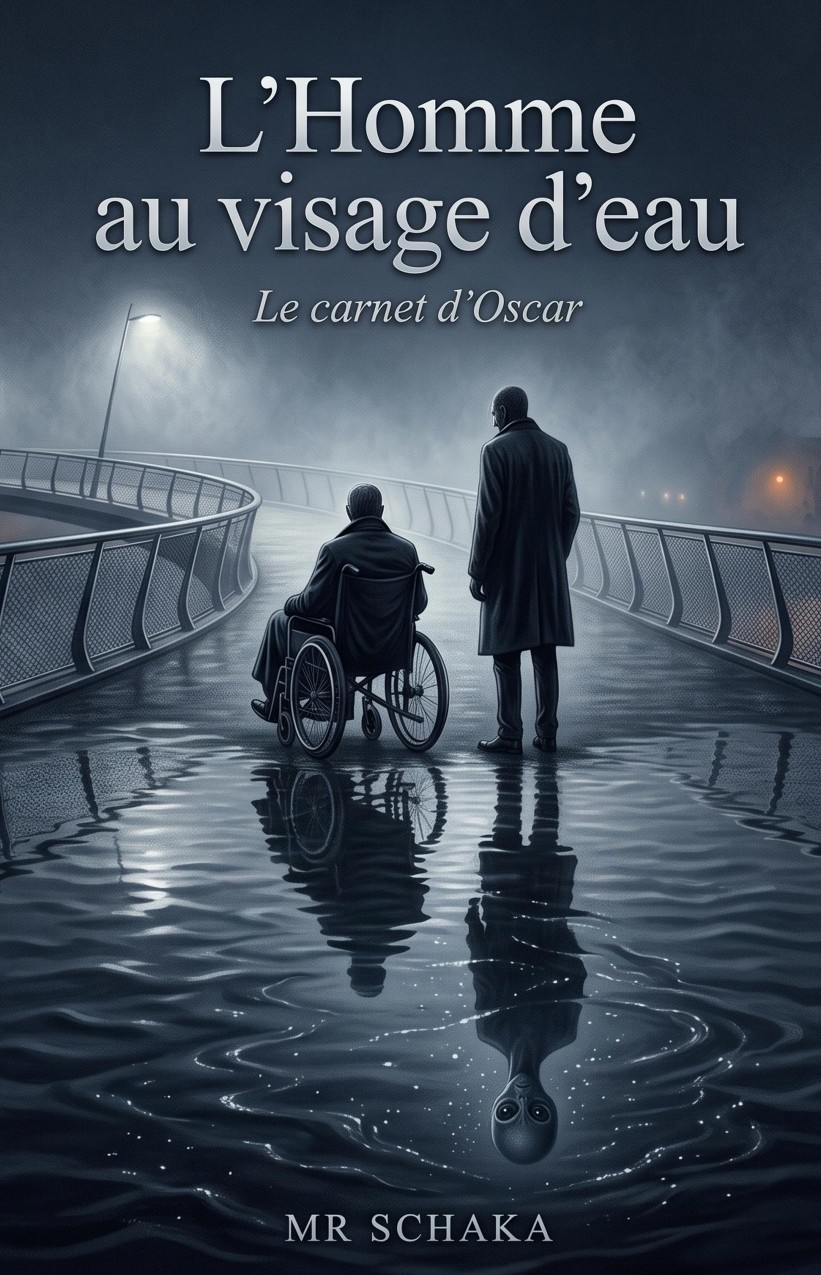
  • L’Homme au visage d’eau: would you notice the clue?

    L’Homme au visage d’eau: would you notice the clue?

    A visitor from another planet learning about péket and the unwritten rules of saying hello; a former inspector noticing details everyone else overlooks: L’Homme au visage d’eau opens Le carnet d’Oscar with an unusual encounter. Mr Schaka places his pair in Liège without asking readers to choose immediately between detective fiction and the strange. Investigation matters, but so does the way an apparently ordinary world becomes mysterious when somebody approaches it without our familiar assumptions about how people behave.

    This first volume introduces Oscar Blanc and Victor Lenoir. You can begin without knowing the author’s other books, carrying one question: what becomes visible when the normal stops seeming obvious? This introduction draws on the manuscript’s opening and the official presentation. It suggests ways to read while keeping the solutions and later developments inside the novel. The aim is to encourage curiosity about the pair, their voices and their setting, rather than replace discovery with a summary that has already answered every interesting question before you start.

    A chosen name becomes a first clue

    The opening quickly establishes that Oscar Blanc is not the narrator’s real name. The way he selects it from things encountered among humans introduces both humour and displacement. A name is therefore more than an identifying label. It reveals a method of learning, constructing a plausible appearance and misunderstanding things the town’s residents regard as obvious. The reader meets a mind at work before receiving an abstract explanation of what makes that mind different from other people in the story.

    An everyday object can consequently hold two meanings: the human interpretation and the interpretation of a newcomer. The pleasure lies in the gap, without requiring contempt for Oscar. His reasoning may be coherent while depending on incomplete knowledge. That makes the reader’s familiarity less comfortable. We know how certain things are done, yet might struggle to explain their logic to someone arriving for the first time. Have you ever tried explaining a habit without ending by saying that it is simply what everybody does?

    Why does Oscar keep a notebook?

    Oscar writes because communication with his own planet has failed. This gives the notebook a particular role. Telling a story is not only the transmission of an adventure whose outcome is already settled. It also preserves observations and creates a possible listener when the expected one is absent. The reader receives a voice whose existence depends partly on a missing connection, adding a sensitive note beneath the apparently light opening and its comic misunderstandings of ordinary human behaviour.

    The form invites us to stay close to the narrator’s perception. Events do not arrive through an outside authority able to classify people and customs once and for all. Oscar discovers, interprets and revises. The notebook retains that movement. Without anticipating the series’ secrets, it already offers a reading question: who are we addressing when we record something the people around us cannot entirely understand? You do not need to answer immediately. Keeping the question open gives the act of telling a significance beyond the collection of clues.

    An encounter at Guillemins built on attention

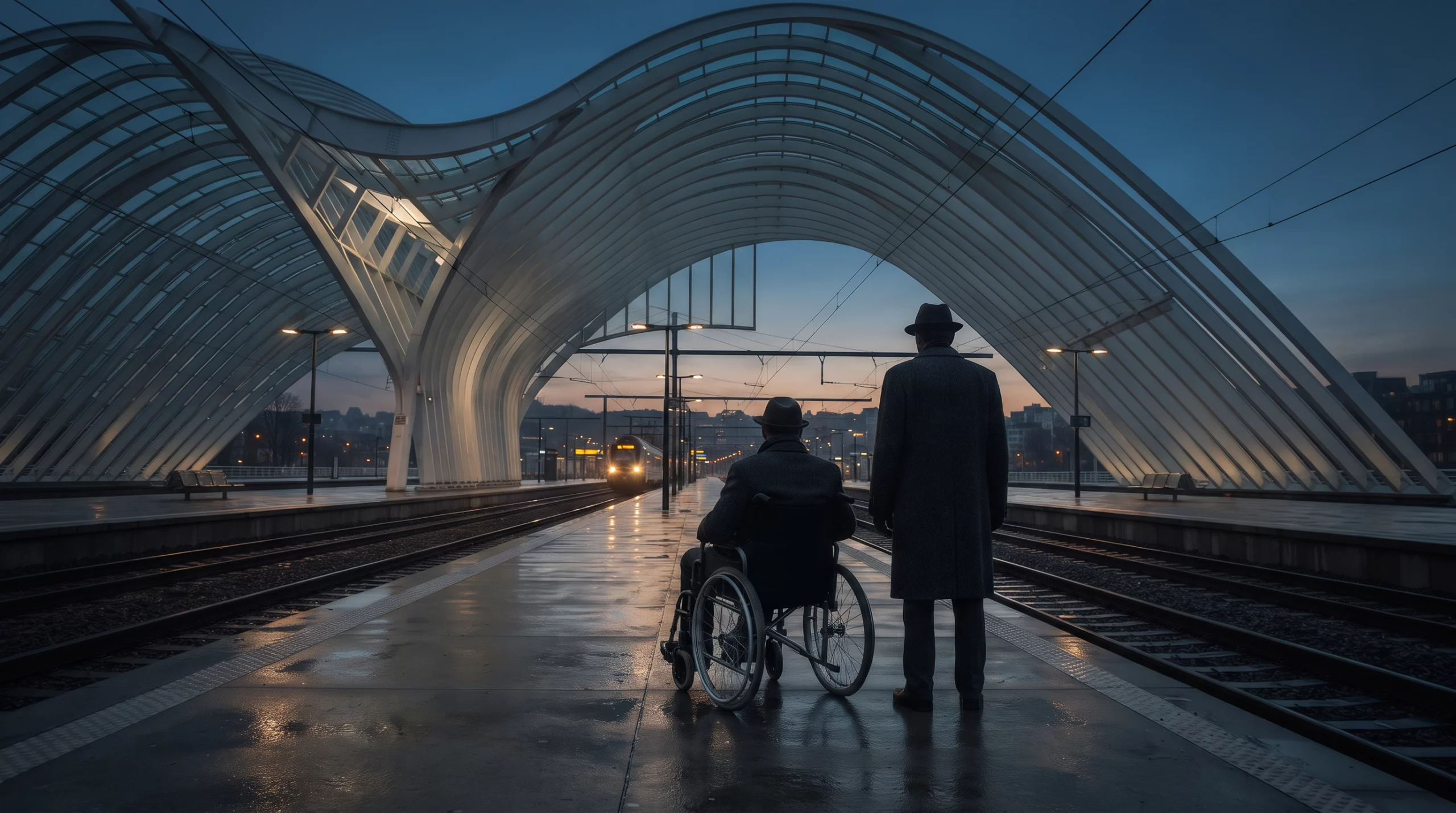
    Victor Lenoir meets Oscar at Liège-Guillemins station. Instead of depending on a spectacular revelation, the opening gives weight to ordinary actions and details. Coffee, clothing and reading become things worth examining. That is a meaningful introduction to detective fiction. The world contains clues before a formal case has even been presented, provided someone knows how to pay attention. A familiar public place becomes a scene of interpretation without needing to change its ordinary functions as a station.

    Victor does not require a lengthy declaration of exceptional intelligence. His observation demonstrates it. Readers can follow the reasoning and notice the distance between seeing and noticing. This offers a promise: appearances will matter, but so will connections between details. A fact alone may seem insignificant; placed beside another, it begins to raise a question. Would you have noticed the same thing, or would you have watched it happen without retaining any reason to look again a moment later?

    Two positions within the same city

    Victor is a former inspector who uses a wheelchair. The novel presents an active detective rather than reducing him to a symbol or medical explanation. Movement becomes part of the pair’s everyday organisation, as it does for Oscar. Each encounters the world from a particular position. Their differences do not have to disappear for the partnership to work. They can reveal possibilities and obstacles the other person does not immediately see, producing a relationship grounded in practical life as well as curiosity.

    An attentive reading preserves that balance. Victor is not interesting only because of his wheelchair, nor merely in spite of it. He observes, decides and organises his own work. Oscar is not simply an extraordinary resource assisting a human investigator. His way of looking has a value Victor recognises. Their association begins through complementary perspectives, concrete needs and the possibility of trust. That is richer than dividing the pair into one person who thinks and another whose only purpose is to perform actions on behalf of someone else.

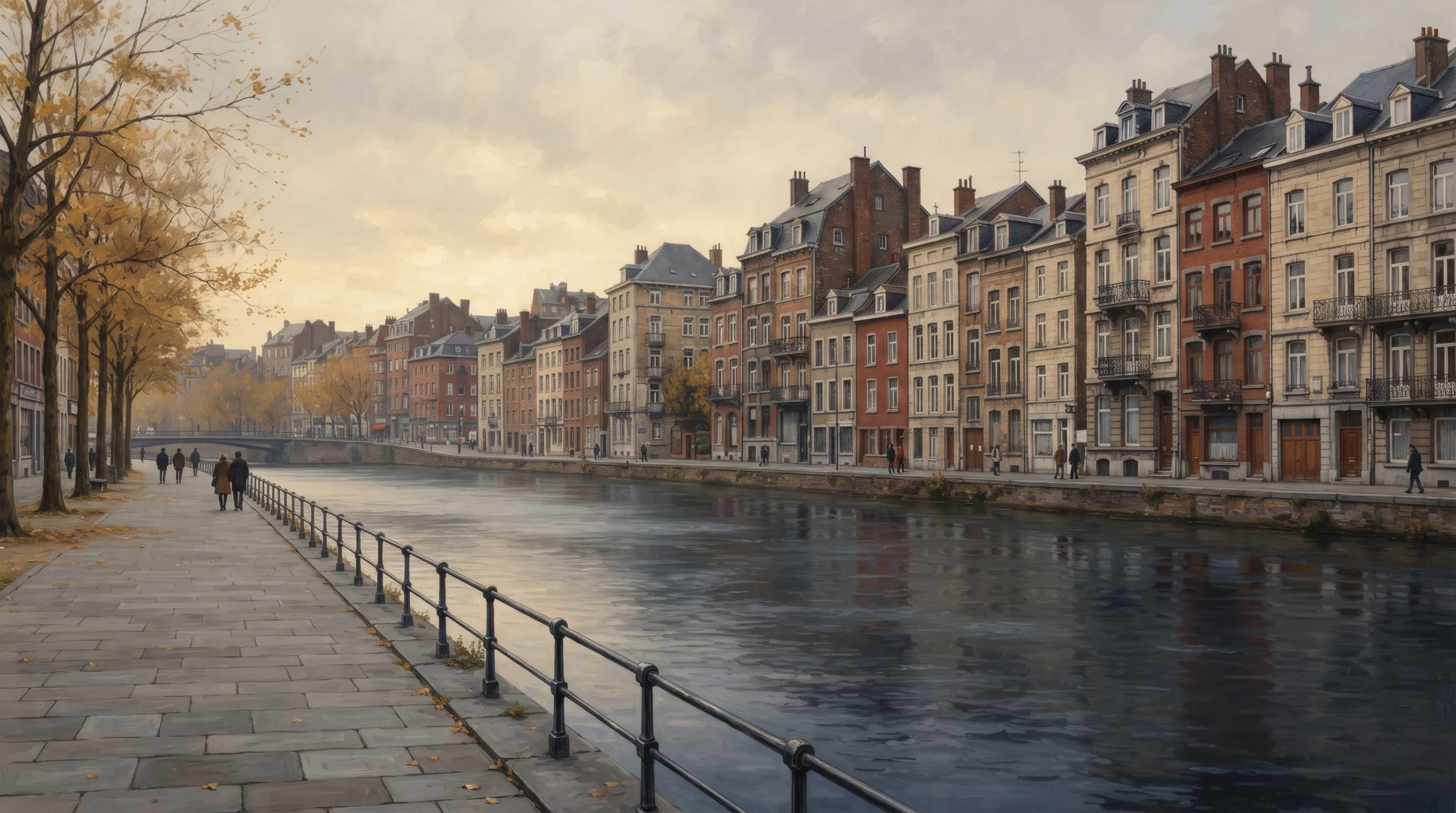
    AI-generated illustration accompanying the reading. An atmospheric image, not a documentary record or necessarily an exact scene from the book.

    A stranger’s gaze unsettles everyday rules

    The social conventions Oscar learns are often the ones explained least. Greeting frequency, a routine question or behaviour in a queue can feel natural because it is habitual. The narrator treats these as customs to decipher. Humour emerges, but so does the effort involved in social learning. Fitting in is not only a matter of having an acceptable face or knowing vocabulary. It also involves understanding expectations people may never state until somebody fails to meet them.

    Choose a moment when you immediately understand a rule Oscar is discovering. Then consider how you would explain it without assuming universal knowledge. This small experiment follows the novel’s pleasure without imposing a heavy theory. It shows what an outside character can change in perception. The text need not make all humans absurd. Sometimes suspending a single certainty is enough to restore strangeness to a familiar situation, making readers recognise both their own knowledge and the limits of the explanations they could offer for it.

    Liège takes shape through uses and places

    Sart-Tilman, Guillemins and Outremeuse belong to the opening of the story. They provide recognisable anchors, yet their purpose goes beyond pins on a map. They correspond to situations: hiding, watching trains depart and finding an address. Place connects with action and a way of feeling within the city. A setting gains substance through these relationships without turning the narrative into a tourist inventory that readers must memorise before understanding why the characters are there.

    Readers familiar with Liège may enjoy recognition. Those who do not know it need not verify every street to follow the pair. The novel can offer a felt geography of passages, waiting and relationships. Avoid turning every description into a guaranteed real-world itinerary. Fiction can select and arrange a city for its own purposes. That freedom belongs to reading, alongside the later pleasure of discovering actual places. A book’s use of a real name does not remove its ability to reshape the reader’s attention.

    #LeCarnetDOscar #CrimeFiction #Liege #MrSchaka

    Humour reveals character as well as tone

    The opening’s humour is not merely a removable joke. It operates through speech and the meeting of different kinds of reasoning. Oscar searches for acceptable answers; Victor hears what those answers betray. The mismatch tells us about both figures at once. Lightness can coexist with tension: who understands what, who knows what, and when does somebody decide to reveal that understanding? A witty exchange can therefore move the relationship forward rather than interrupt a serious story to supply a decorative moment of amusement.

    This combination may appeal to readers who enjoy investigation without wanting an entirely sombre atmosphere. It does not mean the narrative lacks gravity. The official presentation announces cases and someone taking an interest in Oscar. Their place is best discovered inside the book. Humour is an entrance and a rhythm, not a guarantee that every situation will become harmless once a character finds a good reply. Allowing those elements to coexist leaves the novel more room than deciding in advance that it must belong to one fixed emotional category.

    The strange does not make clues irrelevant

    An extraterrestrial might suggest that anything can happen and reasoning no longer matters. The opening offers another possibility: the unusual character is himself interpreted through observation. This places the reader in an active position. You can enjoy the speculative premise while continuing to examine how a conclusion develops. Combining genres does not require abandoning the satisfaction of understanding. It adds another source of distance from the familiar, while the pair’s encounter still depends on connecting visible details with a carefully formed question.

    Keep separate what you know, what a character supposes and what is actually verified. That helps you follow without trying to solve everything immediately. A light notebook is enough: one detail, one hypothesis and one unanswered question. Avoid gathering solutions from commercial descriptions or online conversations before reading. A first volume benefits from preserving the chance to be surprised by the relationships between elements. The point is not to prove you are quicker than the detective, but to enjoy how the story teaches you to pay attention.

    AI-generated illustration accompanying the reading. An atmospheric image, not a documentary record or necessarily an exact scene from the book.

    Partnership does not require sameness

    Oscar and Victor have different needs, yet their encounter makes a shared arrangement possible. An address, a room and a way of working give the alliance everyday dimensions. Trust is not presented solely as a generous idea. It also takes form through a practical arrangement in which each can find a place. Readers witness the beginning of a relationship rather than receiving a simple announcement that an effective detective pair will now exist for the convenience of the following investigations.

    You can consider that relationship without assigning it one final moral. Does professional interest, curiosity or recognition of loneliness bring them together? The opening allows several elements to remain in view. The rest of the novel has room to develop them. Keeping the question open respects fiction more than a premature explanation reducing both men to one wound or quality assumed to apply unchanged throughout. Their interest lies partly in what remains to be discovered after they have agreed to begin sharing a life and some work.

    Entering the series through its first notebook

    The series page describes complete investigations alongside a continuing thread. L’Homme au visage d’eau provides the initial encounter and the pair’s reference points, making it a straightforward place to begin even if another title first attracted you. You enter a way of telling and can later decide whether to return to the figures in subsequent volumes. You do not need to know the eventual destination before enjoying the movement of a relationship, a voice and an investigation as they first take shape.

    If preserving surprises matters, avoid reading every later volume’s presentation beforehand. A book page helps with selection; it does not replace narrative sequence. You can also read one notebook and let it settle. A series does not require immediate purchase or completion of every instalment. It offers the possibility of returning, whose value includes familiarity as well as new questions. Beginning at the first encounter lets you decide what you want from that return rather than committing to the whole journey before meeting its central characters.

    Discussing the book without giving it away

    To recommend it, the starting point is already enough: an outsider narrator, an attentive detective and a city becoming a field of observation. Explain the tone and the partnership without revealing solutions. In a reading group, first ask how far everyone has read. Discussing Oscar’s gaze or Victor’s attention can be rewarding without overtaking someone who has only just encountered them on the station platform. Curiosity can be shared while the discoveries themselves remain available to each new reader in their own time.

    Talking about the setting also need not turn fiction into claims about the author’s personal experiences. Real places do not make every imagined event biographical. The images accompanying this article are atmospheric illustrations, not recreated covers or evidence of an exact scene. This distinction leaves space for the text and each reader’s imagination to construct faces, voices and details. Visual accompaniment can invite someone into a book without prescribing every element they should picture once they begin following the narrator’s own account.

    A clear entrance into Mr Schaka’s fiction

    L’Homme au visage d’eau belongs to Mr Schaka’s fictional work. His travel guides answer other needs, while personal testimonies establish a different relationship with lived experience. Recognising those differences helps readers choose. If you want characters, questions and a Liège atmosphere, the first notebook offers a clear beginning. The official page supplies the current formats and access to the broader series presentation, allowing a practical choice without requiring a reader to know the author’s whole catalogue first.

    The opening’s appeal finally rests on a simple action: looking again at something thought familiar. Oscar does so while learning humanity; Victor does so because details are not automatically insignificant. Between them, Liège becomes a place where assumptions can shift. Readers need neither character’s abilities to enter the novel. They need only an unanswered question and the wish to see how this encounter learns to investigate together. What might you notice differently after spending time with a narrator who cannot rely on all the habits you usually take for granted?

    The book and this introduction

    Discover the book on Mr Schaka’s website.

    Prepared from the book or its opening and the official book page, checked on 4 November 2026. Interpretations are offered as reading suggestions. Check the book page for current formats and availability.

    French, English and Thai versions of this article do not imply that the book is sold in all three languages.

    Book cover

    The book

    The Empty Wall is the second book of Oscar’s Notebook, a series of crime novels set in Liège.
  • Château de Modave: rooms, gardens and the Hoyoux valley

    Château de Modave: rooms, gardens and the Hoyoux valley

    Château de Modave brings together several scales of discovery: a country residence, decorated rooms, gardens and a valley landscape. These elements become more interesting when allowed to answer one another rather than treated as separate boxes to tick. A window can explain a relationship with the outside; a terrace may prompt you to reconsider the arrangement of a room. The visit becomes a way of reading a place, accessible without specialist knowledge of architectural history or decorative art.

    In Belgium’s Liège province, within the Condroz region, Modave deserves an outing of its own. This guide suggests a way to look, practical choices and a flexible plan for November. It distinguishes visiting the château from hiking in the surrounding area. The two may complement each other, but they require different amounts of time, preparation and equipment. Keeping those choices clear makes it easier to enjoy the day instead of discovering too late that a short garden walk has become a much longer undertaking.

    Check the advertised season before setting off

    The official website advertises opening from 1 April to 15 November, between ten in the morning and six in the evening, with last admission at quarter to five. The usual Monday closure has specified exceptions. Friday 6 November therefore falls within the advertised season. Nevertheless, check the current agenda before travelling. An article appearing at four in the afternoon is not a recommendation to arrive at that hour: publication time and a suitable visiting time are separate matters to consider. Official source.

    An audio guide accompanies a circuit of more than twenty-five rooms, for which the operator suggests at least fifty minutes. Allowing longer gives room to look carefully and retain some time outside. Check the current price applicable to your circumstances rather than relying on an old figure. If you want a particular service or are travelling as a group, confirm arrangements with reception. A self-guided admission and a separately arranged guided experience need not have identical booking conditions or availability. Official source.

    Look at the whole before collecting details

    From the accessible arrival areas, take in the overall arrangement before focusing on individual ornaments. Notice the facade’s proportions, the placement of openings and its relationship with the gardens. You do not have to name an architectural style immediately. Start with visible rhythms: what repeats, and where does something change? These observations provide reference points to revisit after the interior, when uses and connections that were hidden from outside may have become easier to understand during the room sequence.

    The building has an older history, but its present appearance results from change. The château’s account describes restoration after seventeenth-century destruction that gave the residence a classical facade. This prevents an overly simple reading of the entire building as an untouched product of one moment. In your notes, separate dated information supplied by interpretation from your own observation. A seemingly unified appearance can contain several phases of work that cannot be reliably assigned just by looking at stone, windows or rooflines. Official source.

    Follow one question through the rooms

    Trying to retain every decorative detail can become tiring. Choose one question instead: how were guests received, how does daylight organise a room, or how do people move between spaces? A single question can hold the circuit together. It also permits you to spend longer in some rooms and move more quickly through others without feeling obliged to comment on every displayed object. Attention is more useful when directed towards something you can actually compare from one space to the next.

    Let the audio guide provide the framework while your eyes find a concrete example. After an explanation, pause over the feature that helps it make sense: an opening, a ceiling or the space between furniture and a doorway. Avoid starting the next commentary before looking. A device’s sequence does not require a fixed walking speed. If another visitor occupies the clearest viewpoint, observe something else and return calmly, leaving space for people who need to move past you through the room.

    Read decoration without inventing meanings

    Ceilings, woodwork and textiles call for different kinds of attention. First notice where a decorative feature sits within a room, then examine detail from the permitted viewing area. Something above a doorway addresses the visitor differently from an element at the centre of a ceiling. Placement can reveal how a space creates an impression even when you do not know the artist, the represented subject or the full visual conventions used at the time of its creation.

    Do not immediately identify a painted figure or assign meaning to a symbol. Use the interpretation provided and leave unresolved questions open. A cautious description is more valuable in a travel notebook than an attractive but mistaken attribution. You can write “raised decoration around the opening” before learning a precise term. Curiosity does not require expertise at every stop. It often begins with an observation clear enough to discuss, followed by the willingness to revise an interpretation when better information becomes available later.

    AI-generated illustration inspired by a historic residence interior.

    Connect the windows with the garden

    Where a room allows an outside view, notice how the setting enters the interior experience. A window frames a landscape, admits light and directs attention before you step outdoors. Compare this framing with the approach you saw on arrival. It makes the garden more than an additional activity after the rooms. The residence becomes a building placed within a landscape, rather than a sequence of decorated interiors whose surroundings have no influence on how they are understood or enjoyed.

    Keep the comparison practical. Record an axis, colour or contrast between shade and daylight, then look for it outside without demanding an exact match. Seasons change vegetation, while maintenance may alter a particular view. November is neither an incomplete version of summer nor a guarantee of what another day will show. It offers its own conditions, perhaps making a line or relationship easier to recognise. Treat the actual light and leaves as part of the visit rather than as a failure to resemble a brochure.

    Make room for the story of water

    Modave is not explained only through the decoration of a residence. The official circuit also introduces water, including information about Vivaqua’s abstraction activities. This invites a connection between heritage and present-day functions of the area. Instead of retaining only an organisation’s name, consider how water changes your reading of the estate. A landscape admired from a terrace may also be a managed space with purposes extending beyond the visitor’s enjoyment of a view or a pleasant afternoon outside.

    Approach a technical explanation using the same simple structure as the rooms: a problem, a means and an outcome. If water is being moved, establish where it begins, what produces the movement and where it goes. Do not invent a link between an older work and a current installation unless the interpretation actually makes that connection. Sharing a site does not establish continuity of engineering, identical operation or an unchanged purpose across several centuries of history and management.

    #Modave #Condroz #Hoyoux #LiegeProvince #MrSchaka

    Enter the gardens at a different pace

    The operator states that the gardens are free to access during the château’s opening hours. This does not mean that all paths in the surrounding area are permanently available. Stay in open sections and enquire if a barrier or sign changes your intended route. Outside, try a slower rhythm: one viewpoint, a short walk and a look back at the facade. A little distance can reveal proportions and relationships that were less obvious when standing close to the entrance on arrival. Official source.

    For a photograph, choose a relationship between vegetation and architecture instead of accumulating unrelated details. A path can provide direction, a hedge scale and a tree depth. Do not enter planting beds to manufacture symmetry or move objects for a better composition. Observation remains worthwhile when light becomes less convenient. A few written lines may capture something a picture cannot, especially when the experience involves moving between views rather than standing in one ideal position with every element aligned for the camera.

    Read the valley from authorised viewpoints

    The château overlooks the Hoyoux valley. From accessible viewpoints, the relief adds depth and places the residence within its terrain. Distinguish foreground, slopes and the more distant landscape. Avoid naming every settlement or watercourse from an uncertain glimpse. When identification is missing, describing a landform is more accurate than attaching a place name because it seems plausible on a map. The purpose is to understand what you can see, not to prove instant recognition of everything beyond the terrace.

    A good view never requires crossing a boundary, sitting on protective structures or moving onto unprepared ground. With children, choose a place where everyone can look without dispersing. Afterwards, compare the outdoor panorama with a view from the rooms. Asking what seems closer outside opens a straightforward discussion about perspective. It does not need to become an abstract lesson or a geographical quiz. The comparison can simply help everybody recognise how a change of position changes their experience of the same landscape.

    AI-generated illustration inspired by the Hoyoux valley.

    Keep a surrounding hike separate from the garden visit

    The château presents a seven-and-a-half-kilometre Petit Modave walk beginning at the estate. This is a distinct outing requiring preparation, rather than a minor extension of the gardens. Ask for the route information and check conditions before adding it. In autumn, the château recommends consulting hunting information, while the municipality also stresses local signs. A downloaded map does not override directions on the ground. Treat a restriction encountered during the walk as current information, even when your saved route suggests continuing ahead. Official source.

    Adjust the plan to weather, possible mud and the time needed to return in daylight. Not finding a restriction online does not prove a path will be open when you arrive. Respect closures and retain an alternative. If walking conditions make the longer route unsuitable, spending more time at the château and in open visitor areas is a coherent choice. A heritage day does not require a long circular walk to become complete, and a simpler plan may allow a much better experience for the whole group.

    Ask specific questions about access and transport

    Official information states that access for visitors with reduced mobility inside the château is limited to the ground floor. Before booking, explain your needs to reception and ask which sections are actually suitable. Do not infer accessibility across the entire estate from a level entrance or a garden photograph. Outdoor surfaces, distances and access to facilities may matter just as much as visible steps. A useful answer should concern your circumstances and the route you intend to follow, not merely the attraction’s general description. Official source.

    The address is Rue du Parc 4 in Modave. If using public transport, check the whole journey for the chosen day, including the final section and return. Huy railway station, mentioned by the château, is not immediately outside the estate. Groups should share a meeting point and a realistic departure time. Transport planning needs to leave space for the visit rather than reduce the interior to a hurried passage before the next connection. Save important details where they remain available without a dependable signal.

    Rest and select the photographs that tell your story

    A break between indoors and outdoors can restore attention. Ask about services available that day instead of assuming continuous catering. Bring what you need while respecting the areas where food may be consumed. Inside, follow photography rules and leave circulation space. If discussing an audio-guide explanation with companions, keep voices low enough for other visitors to hear their own commentary. Small adjustments help different people enjoy the same rooms without turning every pause into a competing group conversation.

    Three pictures can make a readable account: the overall residence, a permitted interior detail and the valley setting. Record their context during the visit. This article’s AI-generated illustrations are interpretations, not exact records of the château or its collections. Saying so avoids attributing an invented painting or architectural feature to Modave. Your own photographs, where permitted, have a different value: they record an actual encounter with the place. Keeping these categories clear makes a travel story more useful and more trustworthy for later readers.

    Leave with a residence connected to its surroundings

    At the end, connect three things you noticed instead of reciting room names. A window, a garden axis and a slope may together explain a way of inhabiting the landscape. Water adds a further dimension by introducing functions beyond the pleasure of looking. This exercise gives memory a clear structure and makes the visit easier to describe without retaining every date or proper name. A relationship understood well often lasts longer than several disconnected facts learned too quickly while moving on.

    For another Condroz or Liège province outing, explore Mr Schaka’s guides and choose a separate day that suits your interests. Modave already merits its own time: listening to an explanation, returning to a detail and allowing the view to open towards the valley. An attentive visit does not try to exhaust every possibility. It offers enough reference points for the place to remain meaningful afterwards, when an ordinary window, garden path or discussion of water unexpectedly recalls what you discovered there.

    Sources and planning

    Sources checked on 4 November 2026. Confirm practical arrangements with the operators before visiting.

    Book cover

    The book

    The Empty Wall is the second book of Oscar’s Notebook, a series of crime novels set in Liège.
  • Visiting Blegny-Mine: understanding mining heritage

    Visiting Blegny-Mine: understanding mining heritage

    Visiting Blegny-Mine offers a different way to understand the landscape of Belgium’s Liège province. Behind the headframe and industrial buildings lies a practical question: how did coal move from underground rock into the everyday life of towns? Answering it means connecting the galleries, surface installations and people who worked within the system. The visit becomes more rewarding when these elements form a sequence rather than a collection of impressive objects.

    This guide suggests how to prepare, what to observe and which questions can make the experience memorable. It separates confirmed visitor information from ideas for looking and learning. That distinction matters in November, when a place appearing on a map does not mean that every activity runs daily. Start by choosing an available programme, then leave enough room in the day to listen, rest and make sense of what you have seen together.

    Plan for an available visiting day

    The official individual visitor programme for 2026 runs at weekends and on public holidays through 15 November, with additional seasonal dates listed separately. Friday 6 November is not an ordinary opening day for the full programme. Use this article to prepare a visit on Saturday 7 or Sunday 8 November, for example, after checking availability. Group bookings have separate arrangements; do not assume that information for groups applies to an individual ticket. Official source.

    Published activity lengths are around one hour forty-five minutes for the mine, one hour for the museum and fifty minutes for the spoil heap habitat experience. Treat these as planning guides, then add arrival time, movement between activities, a meal and a buffer before travelling home. Confirm the language of the guided departure and what your ticket includes. Save the booking confirmation where you can open it without relying on a mobile connection at the entrance.

    Choose two questions before you begin

    Blegny-Mine is one of the four Major Mining Sites of Wallonia inscribed together on UNESCO’s World Heritage List in 2012. This designation concerns industrial heritage and the human history surrounding it. For a visitor, it is an invitation to look beyond the outline of a dramatic machine. An installation becomes understandable when its purpose, its operators and its relationship to other parts of production are considered together during the visit. Official source.

    Choose two simple lines of inquiry before setting off. One might follow the material: where did the coal go next? The other might follow people: how did workers move, communicate and organise tasks? These questions provide enough structure without turning the outing into an examination. There is no need to memorise every unfamiliar technical word. A few clearly understood relationships will be easier to remember and more useful when you explain the experience to somebody afterwards.

    Read the surface before going underground

    Take a moment in the authorised visitor areas to orient yourself. Notice differences in height, construction materials and the ways buildings connect. Ask where people might have entered and where materials travelled. Avoid deciding that a structure had a particular function simply because it resembles something familiar. The aim is to collect questions that the guide and interpretation can help answer. Industrial architecture often responds to requirements that cannot be understood from a facade alone.

    For a useful first photograph, include a relationship between elements: a vertical structure and the buildings beside it, or a doorway and the route approaching it. Context will help you understand the image later. Stay behind barriers and follow the marked visitor route; visibility does not imply permission to enter. If children are coming, offer a small observation task, such as finding three different materials, rather than asking them to absorb the whole history immediately on arrival.

    Pay attention to movement underground

    The guided mine visit uses the original shaft and includes the thirty- and sixty-metre levels described by the operator. Going underground changes the scale of what you are observing. Space affects how a group moves, stops and listens. Stay with the guide, use the equipment as instructed and keep your hands available whenever requested. Practical cooperation makes it easier for everyone to hear an explanation and understand the environment without unnecessary distraction. Official source.

    Instead of seeking a dramatic sensation, try to understand a working sequence. Which action had to happen first? How could a message reach another person? Where did tools and materials pass? Such questions make technical explanations concrete without pretending that a present-day tour reproduces an entire historical working shift. A heritage visit has its own adaptations and conditions. It provides evidence and interpretation, while leaving room to recognise what a short experience cannot fully convey about other people’s lives.

    AI-generated illustration inspired by an underground coal mine gallery.

    Follow the coal after it reaches daylight

    Coming back to the surface is not the end of the material’s story. The operator also presents the sorting and washing installations. This offers a chance to see why extracting a material is only one part of preparing it for use or sale. Try reducing the process to a short chain of ordinary verbs: raise, separate, treat, store, dispatch. Ask whether your sequence matches the equipment being shown, and correct any connection you have misunderstood.

    Following a flow helps prevent the machines from becoming isolated exhibits. Where the route allows, look for differences in level, entry points and exits. A photograph with a short note explaining a function will remain useful long after an unexplained close-up has become puzzling. If something is unclear, record a question rather than an invented answer. Curiosity is a better souvenir than false certainty, particularly when a complex installation is being encountered for the first time during a guided group visit.

    Keep people within the industrial story

    Mining heritage involves more than engineering. In the museum, look for material that helps you understand individual experiences, working conditions and changes in daily life. Read labels carefully enough to distinguish an object’s date, its use and the context in which it is presented. A photograph, an administrative record and a tool offer different kinds of evidence. Bringing them together can deepen a question, but treating them as interchangeable can produce an overly simple account.

    When a personal testimony is included, retain the person’s attribution rather than turning the words into an anonymous quotation. Avoid assuming that one experience represents every worker, period or mine. A useful family discussion might begin with this question: what did the museum tell us that the exterior buildings could not? It moves the conversation from visual impressions towards understanding. It also leaves room for emotion without expecting children to produce a complete historical explanation before they have had time to reflect.

    #BlegnyMine #LiegeProvince #IndustrialHeritage #Wallonia #MrSchaka

    Select a few museum objects carefully

    After a guided tour, it is tempting to move rapidly past the displays. Try selecting three objects or documents and spending longer with each. Note a material, a purpose and an unanswered question. If the label does not provide everything, accept the gap or ask a member of staff. This approach turns a potentially tiring museum circuit into a small investigation that you can describe accurately later, rather than a long sequence of things barely noticed.

    Compare a displayed document or diagram with something you saw underground. Ask what becomes clearer when the same subject appears in another form. A drawing may explain movement that was difficult to recognise in a gallery; an object may provide scale for a written account. Keep observation and interpretation separate in your notes. Beginning with “I can see” and then adding “I wonder whether” is a straightforward way to stop assumptions hardening into memories of facts that were never actually established.

    Understand the spoil heap as a changed landscape

    If your programme and local conditions allow this section, the spoil heap habitat experience offers another perspective. Attention shifts from technical interiors to landform, soil and vegetation. Do not treat the greenery as a picturesque cover that removes the earlier industrial story. Instead, consider how traces of activity and living systems share the same landscape. Follow the designated route and local instructions, even if an informal shortcut seems likely to provide a more attractive view or photograph.

    In November, adapt the outdoor section to daylight, ground conditions and the group’s energy. Suitable walking shoes and protection against rain are more useful than an ambitious schedule. Leave plants and material where they are. A sketch of the landform or a description of the difference between two visible areas can record the experience without taking anything away. This also encourages a slower kind of observation: describing what the ground looks like often reveals details that a quick photograph fails to register.

    AI-generated illustration inspired by a reclaimed spoil heap landscape.

    Build a comfortable day around the guided departure

    Your underground departure is the fixed appointment; arrange the other activities around it. Before committing to lunch or a second attraction, make sure the times genuinely fit together. A buffer accommodates a longer explanation, a necessary break or the ordinary movement of a group. If the museum holds your attention more than the outdoor route, adapt the day. A ticket offers possibilities; it does not require every member of the party to complete every activity regardless of comfort or interest.

    If you are travelling without a car, check the complete door-to-door journey using official transport information for your chosen date. The final connection and the return deserve as much attention as the outward trip. A service reaching the surrounding municipality is not automatically a service stopping at the visitor entrance. Agree a meeting point if your group separates, and keep the reception contact available. Sorting out these details beforehand frees your attention for the actual visit when you arrive.

    Discuss access needs before buying tickets

    The operator states a minimum height of one metre for the mine visit. That requirement does not answer every individual question. If someone has mobility limitations, concerns about underground spaces or another access need, describe the situation to the team before booking. Ask which parts are suitable and what arrangements are possible if one person does not go below ground. A specific answer about your circumstances is more useful than an assumption based on a photograph or a general accessibility symbol. Official source.

    Explain the sequence simply to children: equipment, group, listening to the guide and returning to the surface. Avoid presenting the outing as a test of bravery. Allow a break and take questions seriously, including questions that seem obvious to an adult. Choosing an appropriate alternative is also a reasonable decision for grown-ups. A successful heritage visit depends on what people can discover in good conditions, rather than on how many discomforts they are willing to ignore in order to follow the same route.

    Photograph selectively and preserve the context

    Ask what photography is permitted before taking out your camera. The guide’s instructions come before finding a perfect angle. Inside, avoid actions that delay the group, and put equipment away when it interferes with movement. A coherent set of pictures may need only an overview, an explained technical detail and an outdoor landscape. A small selection makes the story easier to follow and reduces the temptation to accumulate many nearly identical images without understanding the differences.

    When sharing the outing, add only information that you actually checked. Do not present an AI-generated illustration as a photograph taken at the attraction. The images accompanying this article are visual interpretations rather than documentary records of individual buildings or galleries. Making that clear supports readers’ trust and encourages them to encounter the real place. It matters especially where architectural and technical details carry a particular history, and where an attractive invented detail could otherwise be mistaken for evidence.

    Leave with one connection you can explain

    Before heading home, choose one idea that you could explain to somebody who has never visited a coal mine. It might connect an underground task with a surface installation, or show how a personal document changes your understanding of a machine. If your explanation feels vague, revisit one note and put the idea into everyday language. Understanding an important relationship does not require mastery of every machine, term and historical date encountered throughout the day.

    You can extend this approach through other heritage outings in Liège province, keeping the same attention to use, work and people. Explore Mr Schaka’s guides when planning another day, rather than trying to collect several destinations in one hurried trip. Blegny already offers enough to sustain a thoughtful visit: observing a material, following its route, listening to human experiences and recognising how work has shaped a landscape that might previously have seemed familiar from a distance.

    Sources and planning

    Sources checked on 4 November 2026. Confirm practical arrangements with the operators before visiting.

    Book cover

    The book

    The Empty Wall is the second book of Oscar’s Notebook, a series of crime novels set in Liège.
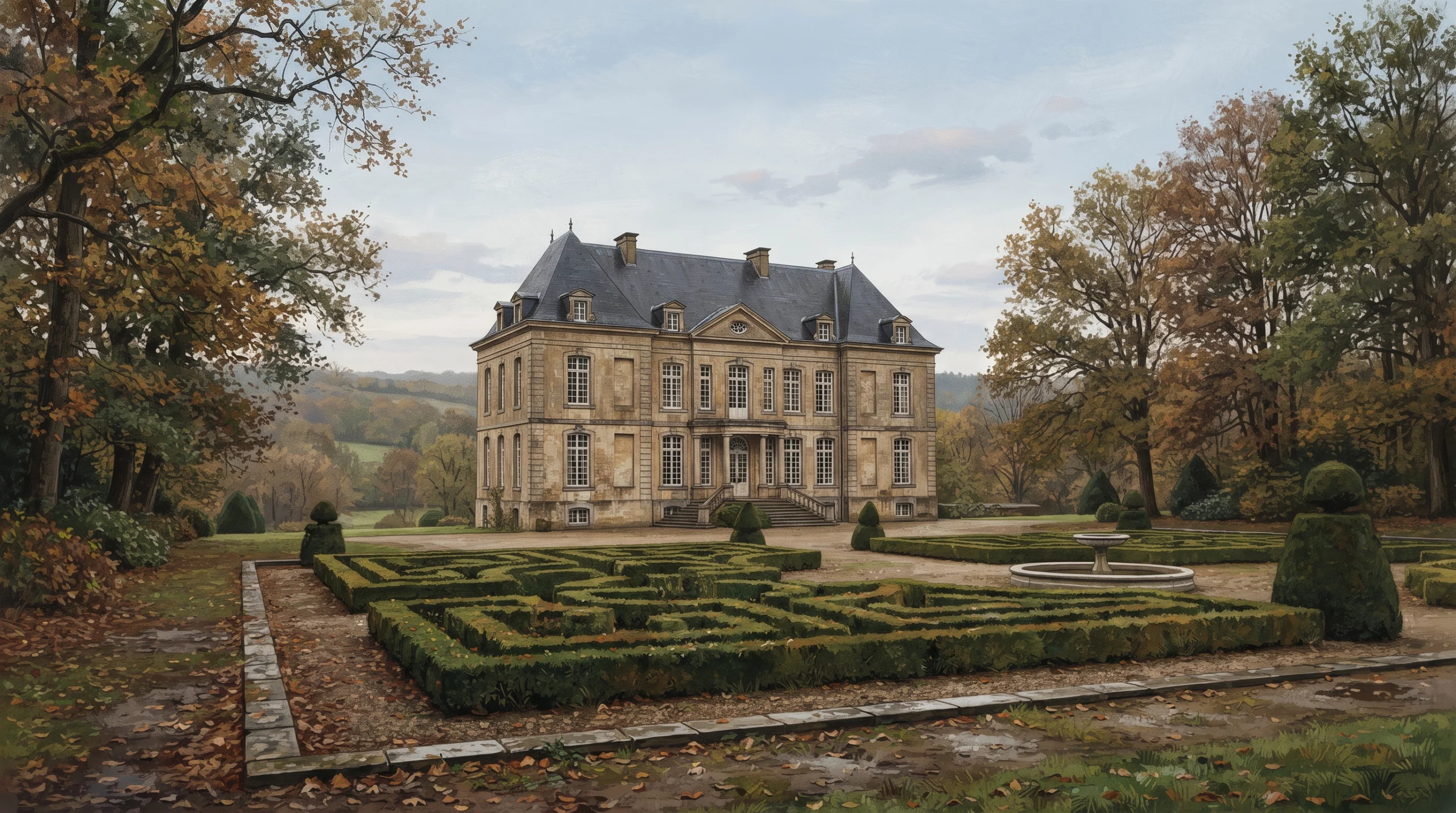
  • Chaudfontaine: water, parks and a valley landscape at an unhurried pace

    Chaudfontaine: water, parks and a valley landscape at an unhurried pace

    Read Chaudfontaine between the water and the slopes

    An outing in Chaudfontaine can begin with a simple question: how does water influence the way people inhabit and move through a valley? The river, places associated with thermal history, parks and hillsides offer different ways to read the landscape. Rather than adding every available walk to one programme, choose what you want to understand and how much time you want to spend outside. This suggestion gives particular attention to transitions: moving from buildings to a path, looking along a riverbank and then raising your eyes towards the slopes. It supports a discovery in the province of Liège without promising a continuous itinerary whose access is guaranteed at every point.

    Keep the river separate from thermal history

    Chaudfontaine’s name naturally invites thoughts about water, but not every kind of water in the landscape tells the same story. The Vesdre is the river you can see crossing the valley; thermal history concerns other movements and uses of water. A walk becomes more precise when it retains that distinction. Look at the riverbanks to understand an inhabited corridor, then use a local resource to explore the story of springs and bathing. You do not need to imagine steam rising from the river to make the place interesting. The character of a town is often clearer in differences that can be explained than in a dramatic image invented to summarise it.

    Choose an area before choosing a distance

    Visit Chaudfontaine’s walking catalogue presents separate proposals with different starting points and profiles. A municipal name does not mean every path begins in the same place or connects to the others without effort. Start with your actual arrival point, then choose an area you can realistically explore. A valley outing, a park visit and a climb towards higher ground do not ask the same things of your body. A suitable distance depends on slopes, surfaces and resting time as well as kilometres. Choosing one area often makes it easier to understand how its parts relate, instead of spending the whole day trying to connect places selected from different maps.

    Check access during a period of works

    For a visit around 5 November 2026, one practical local notice deserves attention. A municipal announcement about the connection between Fonds des Cris and Parc Hauster gives 5 November as the planned resumption of alternating traffic, following a junction and Avenue des Thermes closure through 4 November. That is an announced timetable, not an observation that the works have finished. Read any updated notice and follow information on site before travelling. This article therefore guarantees neither a particular pedestrian passage nor a continuous route through that area. A calmly planned detour is more useful than treating a projected reopening as an established condition on the ground.

    Begin where you actually arrive

    An outing starts at the bus stop, parking place or station where you arrive, not at the first attraction shown in a brochure. Locate that point on a current map and choose an initial destination you can recognise easily. When travelling together, make sure everyone understands the return point and means of transport. If using public transport, consult the operator’s timetable and any disruptions for your travel date. Do not construct a return journey around an assumed frequency. For a short discovery, preparation can remain light: a saved map, a reference address and a clear option for finishing early already make the walk much more relaxed.

    Look at the valley before following a path

    From a public position where you are not in anyone’s way, identify three layers: the valley floor, the buildings and the slopes. You do not need a complete panorama to see this arrangement. A street opening, a gap between trees or a view beside the water may be enough. Ask where movement is concentrated, where people stop and how the landform limits or opens the view. This first reading gives later stops some context. A bench, facade or tree no longer appears as an isolated object. The landscape becomes a set of relationships that you can observe without claiming to explain every historical process behind them.

    Follow the Vesdre with attention to scale

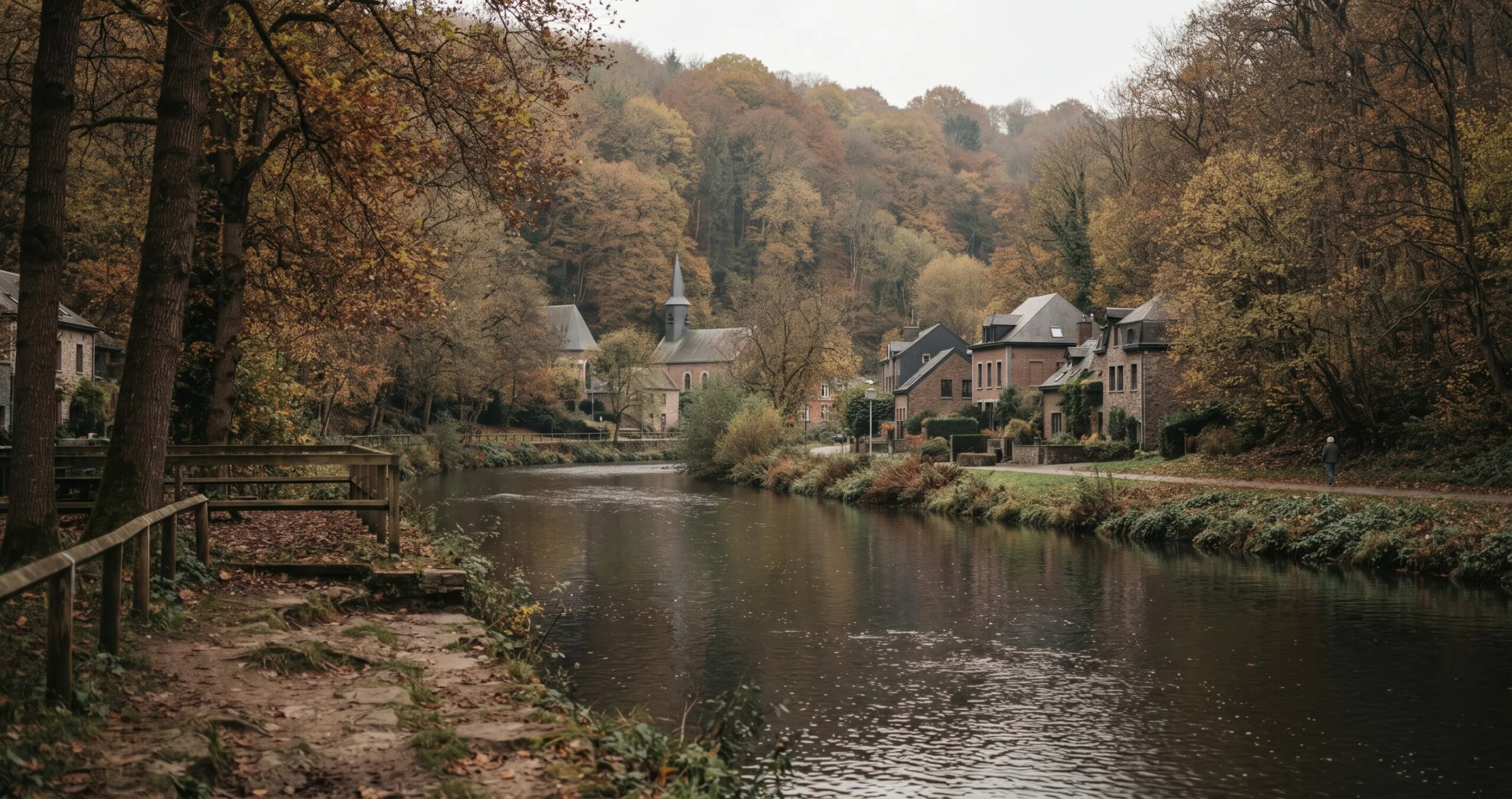
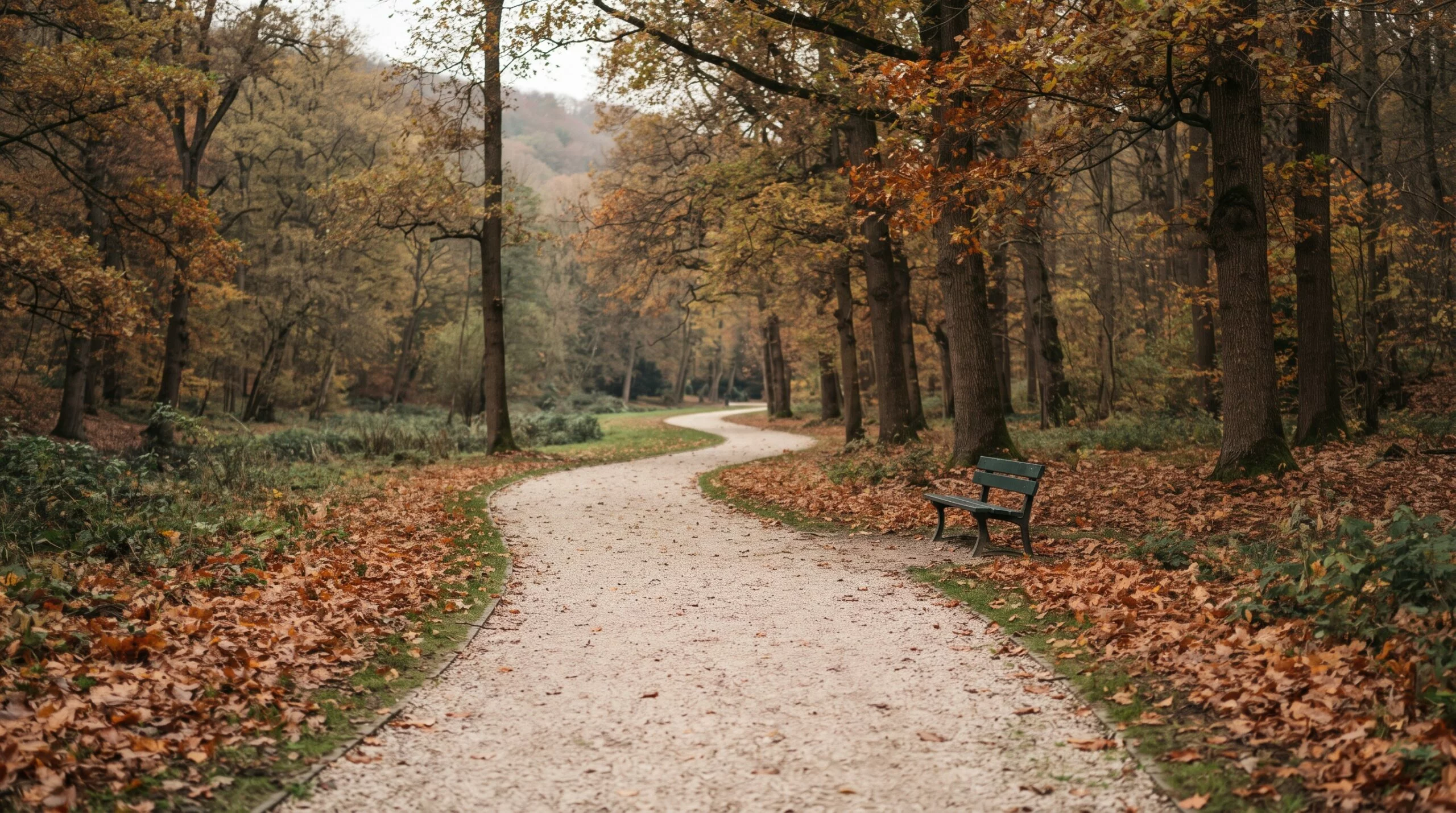
    AI illustration generated with Gemini: a park atmosphere inspired by Chaudfontaine, not an identified walking route.

    Local tourism information presents the Vesdre as an important thread through Chaudfontaine. On the ground, concentrate on what you can actually examine: visible width, reflections, vegetation and the relationship with nearby buildings. The same river has a different presence depending on where you stand. Avoid drawing a conclusion about its overall condition from one attractive scene, or about access from a photograph. An appealing bank may not be an authorised path. Stay in areas open to the public and follow local indications. Enjoying the water does not require getting as close as possible, climbing beyond a barrier or leaving a route merely to improve the angle of a picture.

    A park offers another scale of attention

    A park provides a different rhythm from a road or street. You can pause over a sequence of details: an alignment, an opening, a surface or a way of framing the view. Instead of heading immediately for the furthest point, select a short first sequence and see how it suits the group. A bench is more than a convenience; it can become an observation point. From a settled position, notice what walking made less obvious, such as the difference between a wooded background and a nearby branch. Slowing down becomes a tool for understanding rather than an instruction that everyone must move in a particular way.

    Hauster brings art into conversation with landscape

    Visit Chaudfontaine introduces Parc Hauster as the setting for the Festival of the Five Seasons, a route combining landscape and artistic creations. Obtain the available local information and check current access conditions before visiting. An outdoor work benefits from being considered within its surroundings: how does it use a perspective, a material or a change in the ground? You do not have to like every proposal. Describing what a creation makes you notice is already a way to begin a conversation. Avoid treating each installation as equipment to climb or rearrange. Its presence in a public setting does not mean that every possible use is appropriate.

    Compare observations instead of finding the right answer

    Different people may notice different things in the same work or arrangement. One might talk about colour, another about shade or the way a path continues behind it. That variety belongs to the visit. Try describing what is visible before deciding what it is supposed to mean. With children, ask which part of the landscape became more noticeable because the installation was there. There is no need to improvise a lecture or insist on a single interpretation. Conversation is more rewarding when observations can circulate and nobody feels required to prove expertise. An uncertain response can be the beginning of a useful exchange rather than a failure to understand.

    #Chaudfontaine #LiegeProvince #Vesdre #Walking #MrSchaka

    Use Source O Rama as an information reference

    Visit Chaudfontaine provides tourist information contact details at Source O Rama on Avenue des Thermes. It can therefore be a useful contact for planning the area, requesting a document or confirming a local situation. Check opening arrangements before relying on an in person welcome at your arrival time. A person with local knowledge may answer a precise question better than a broad search: which access makes sense today, where does the selected route begin, or what part fits your available time? Prepare two useful questions rather than asking how to see absolutely everything. You are more likely to receive an answer suited to the actual day you want to have.

    Decide between the valley floor and higher ground

    The surrounding slopes can soon make you want to climb. Before following an ascending path, consider what it adds to your outing: a view, another neighbourhood or a woodland atmosphere. Check an official route and its return rather than imagining that any path will join a convenient loop. Even a short climb can become tiring after a longer walk, particularly if the descent is slippery. Staying on the valley floor is a genuine way to discover the place, not a lesser achievement. A territory is not understood through the amount of elevation gained. What matters is the attention given to the part you have chosen.

    In November, read the ground as well as the trees

    Autumn changes colours, but it also changes walking conditions. Leaves may cover an uneven surface, and damp ground calls for a different level of attention from a dry path. Without predicting the weather on a particular day, prepare suitable outdoor clothing and check conditions before leaving. A landscape does not lose its interest under cloud: materials, reflections and subtle differences in colour can become easier to see. Keep the freedom to shorten the outing, however. A walk selected for pleasure does not have to turn into a test when rain, difficult footing or discomfort changes the character of the experience for someone in the group.

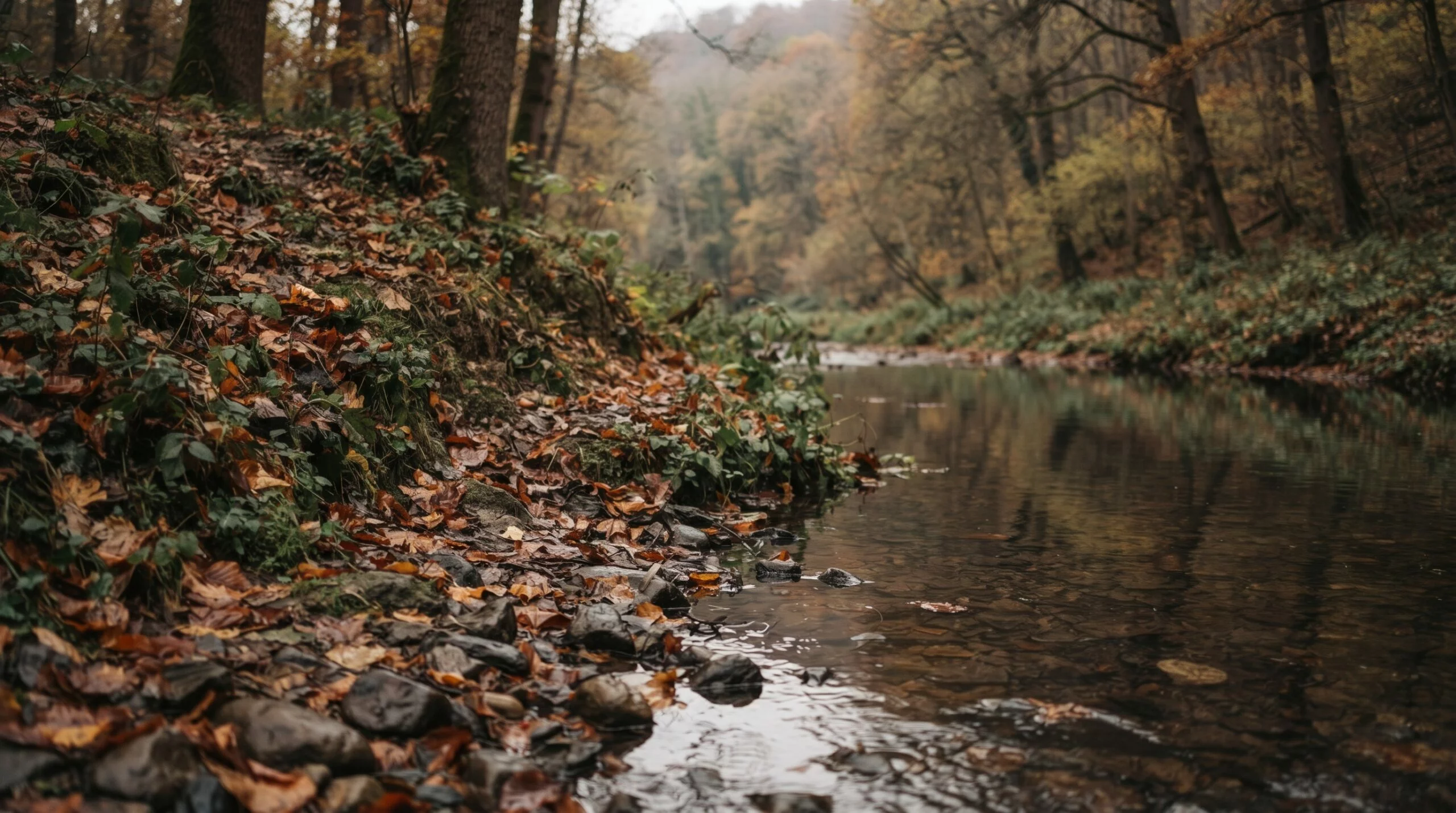
    AI illustration generated with Gemini: a riverside detail, not evidence of current path conditions.

    Build an outing that leaves room for breaks

    Try arranging the visit around three moments instead of ten destinations: an observation of the valley, a park area and a warm pause if an open establishment welcomes you. This structure does not require linking places through an unverified crossing. It also leaves room for conversations and unexpected discoveries. Plan a break before everyone is exhausted, not as a reward reserved for completing the final effort. If the group includes different walking speeds, agree when you will decide whether to continue or return. A collective choice is easier when it has a place in the day, rather than arriving as an awkward interruption of an inflexible plan.

    Ask specific questions about accessibility

    A path described as pleasant does not automatically suit every visitor. For a wheelchair, pushchair or walking aid, ask about slopes, surfaces, steps, works and places to turn around. Seek an answer about the precise section you are considering, rather than a general judgement about the entire municipality. This guide does not certify a fully accessible circuit. A shorter distance with reliable resting possibilities may be preferable to a longer route with unclear conditions. The needs of a participant are information to use during planning, not a problem to discover only after the group has committed itself to a section that is difficult to leave.

    A family walk can remain a walk

    When exploring with children, offer one open activity: find two ways a tree appears in the water, choose an interesting texture or sketch the slope behind a row of houses. Then allow each person to look in their own way. There is no need to fill every available minute with instructions. Questions that arise spontaneously can give a better direction than a prepared exercise. Leave room to eat, warm up and return without rushing. A shared memory may develop through a conversation on a bench, an accepted detour or the decision to stop sooner. None of those choices has to turn the day into an unsuccessful attempt to finish a programme.

    The illustrations evoke a setting, not current access

    The three images accompanying this article were generated with Gemini and supplied to support the text. They suggest a valley landscape, a park path and a riverside detail. They do not show an identified itinerary and are not photographs taken in Chaudfontaine during the publication period. Their role is editorial: conveying an atmosphere without proving an opening, water level or path condition. To decide where to walk, use current local information and the indications you encounter. The beauty of an illustration should never become a shortcut around a practical check. A convincing imagined scene and a verified route are different kinds of information, with different uses for a visitor.

    Record a transition rather than every object

    In a notebook, retain one change that struck you: from traffic sound to the quiet of a park, from an open river view to a wooded passage, or from an artwork to the surroundings it reveals. Describe what changes instead of writing only that the landscape is beautiful. That precision gives a more personal memory afterwards. You can add the name of a source consulted or a question to investigate at home. There is no requirement to record everything or publish every image. The notebook helps preserve a relationship while leaving the walk enough time and attention to be an experience rather than a documentation task.

    Revise the plan using the place in front of you

    On arrival, your programme may meet a sign, a work site, tiredness or simply somewhere you want to stay longer. Accepting that information is not losing control of the day. It is making the day more appropriate. Consult the route and return options before moving into another area; do not follow a shortcut simply because it appears to point in the right direction. If the planned stop no longer fits, choose a nearby alternative that you understand or return towards the arrival point. Flexibility works best with a few secure references, rather than unlimited improvisation that passes uncertainty from one person to the next.

    Leave with a more precise reading of the valley

    Before heading home, name something that Chaudfontaine helped you distinguish: river and springs, places of movement and places of pause, the slope you observed and the path you actually walked. You do not have to enter every attraction to retain something particular. Check the return journey, keep useful documents and leave a later visit to hold what you did not choose today. The valley remains a living place with uses, changes and constraints. Discovering it attentively means relating those realities to the pleasure of walking, rather than replacing them with an ideal route designed far away from the conditions of the ground.

    Sources for planning your visit

    Book cover

    The book

    The Empty Wall is the second book of Oscar’s Notebook, a series of crime novels set in Liège.
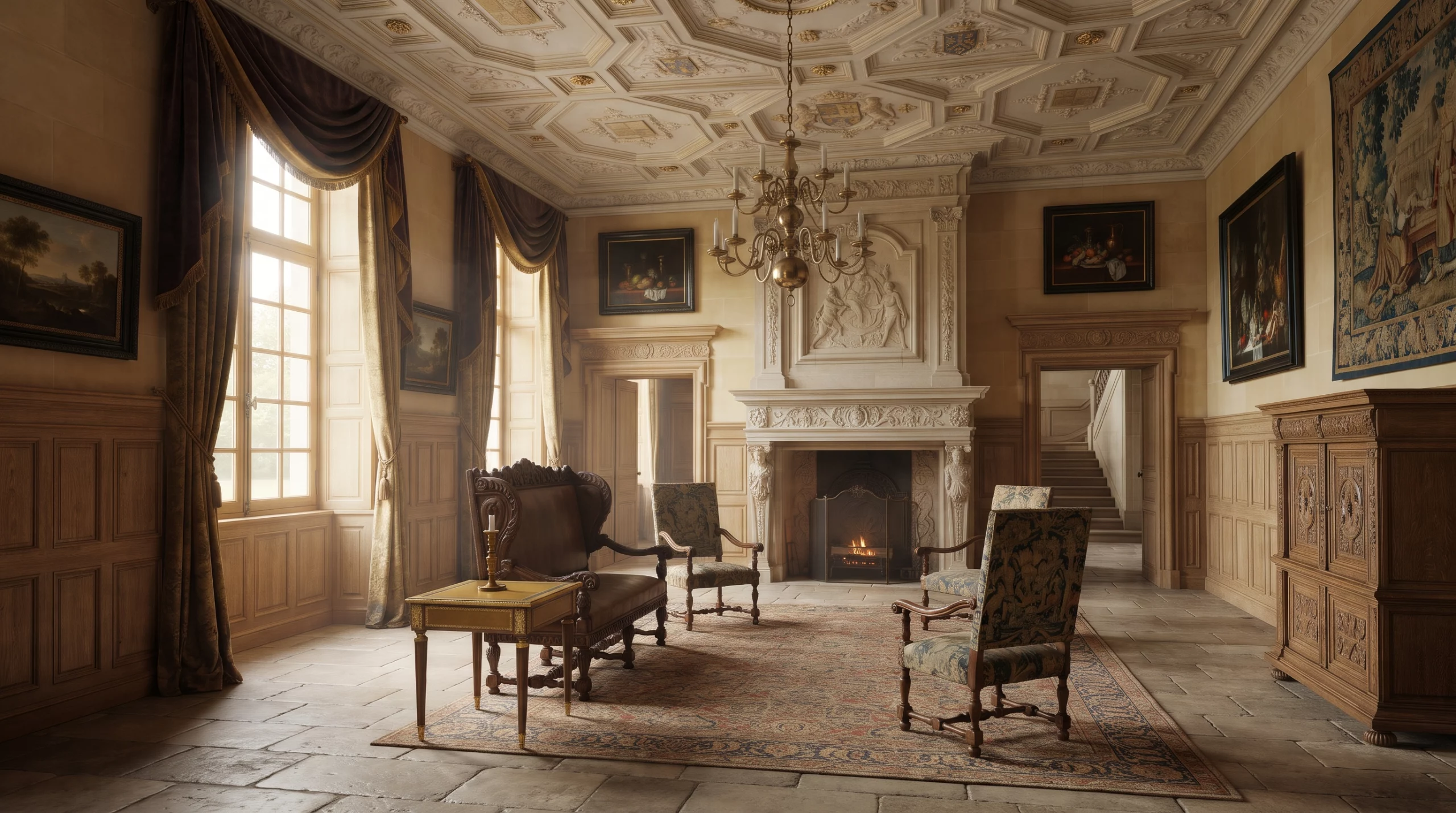
  • Waremme: reading a Hesbaye town between streets and open landscapes

    Waremme: reading a Hesbaye town between streets and open landscapes

    Discover a town without asking it to be somewhere else

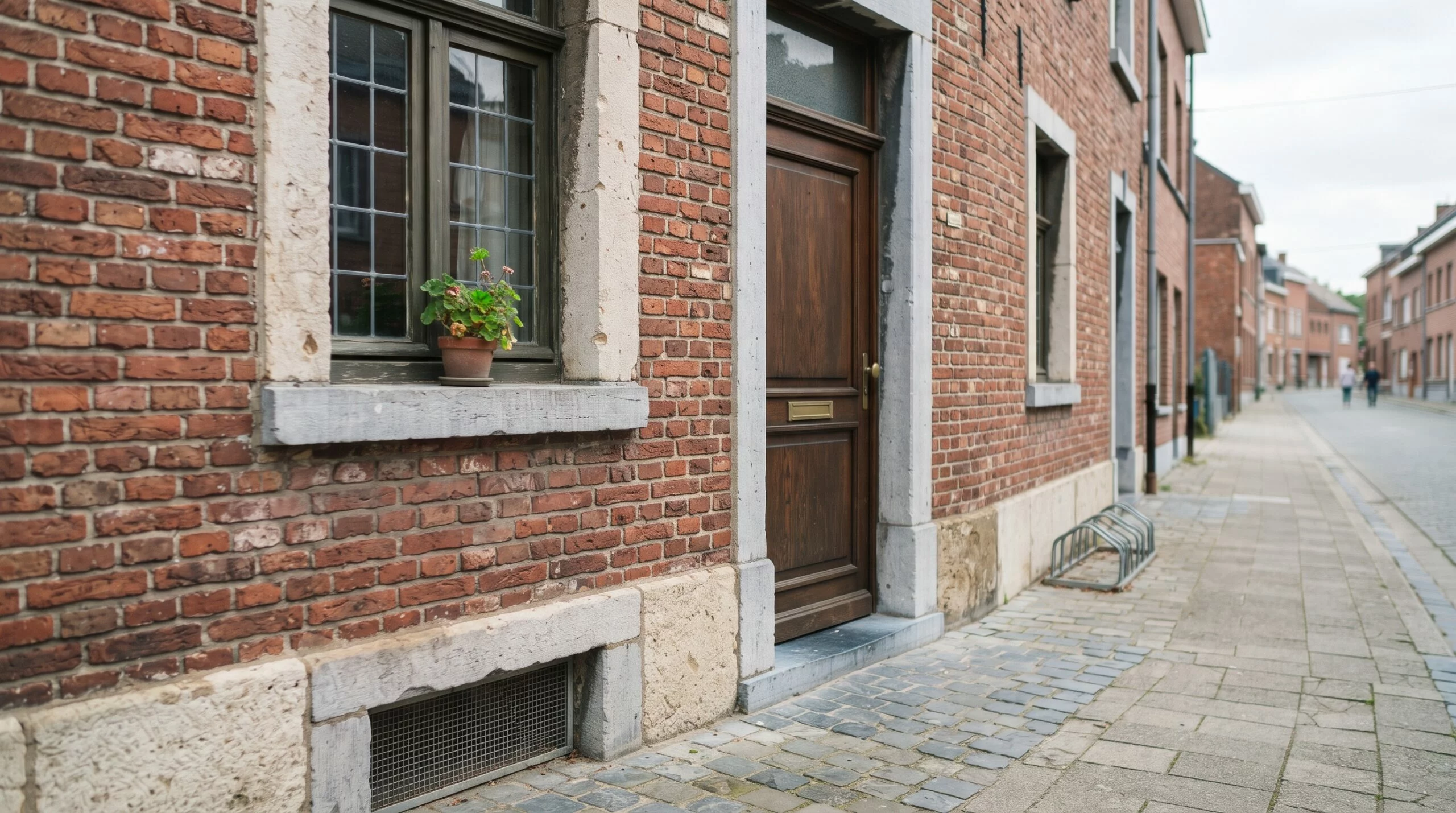
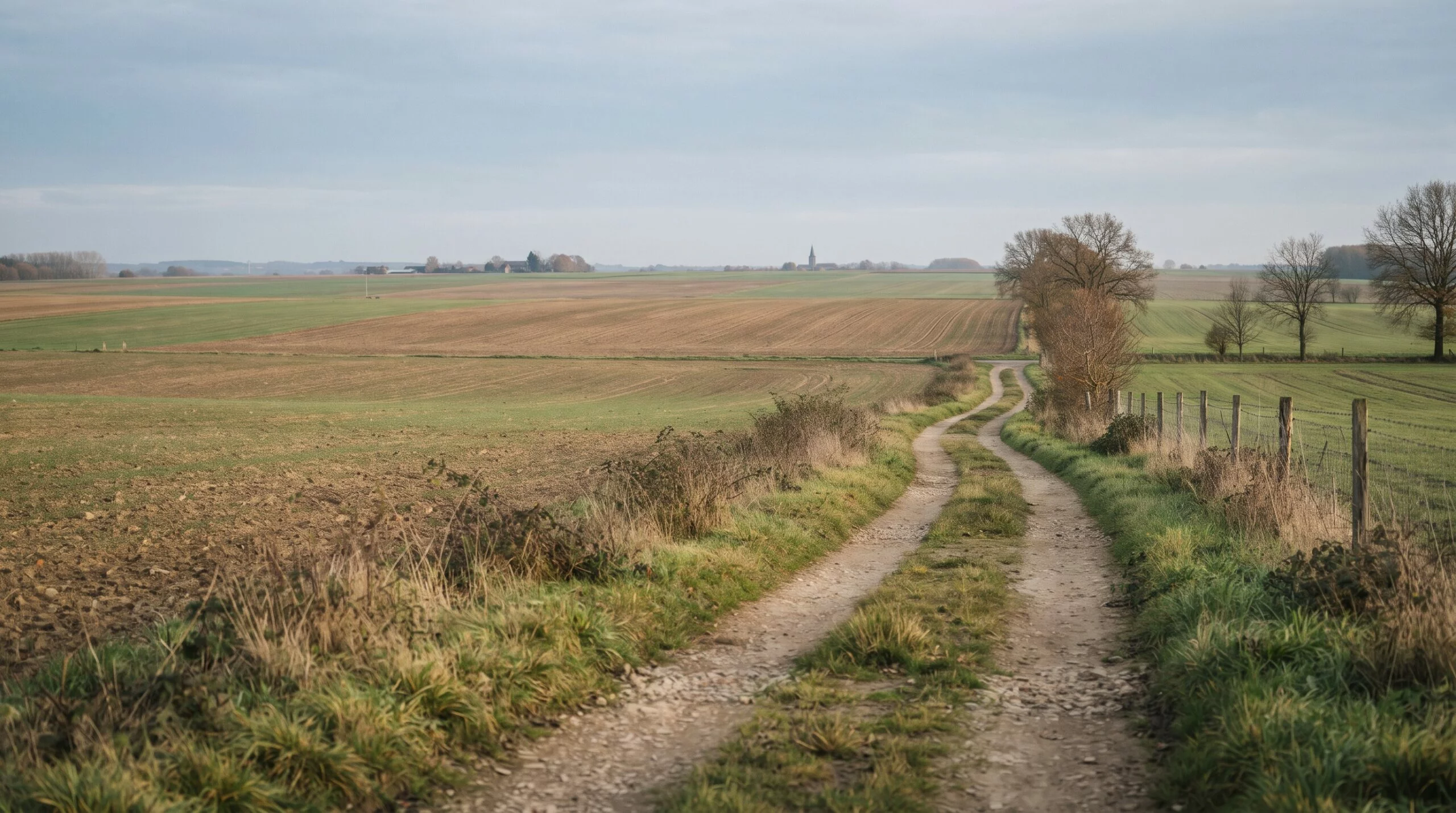
    Waremme invites a modest starting question: what connects an urban centre with a countryside landscape? You may arrive accustomed to seeking a spectacular old town, a river in the foreground or a mountain panorama. Here, setting those expectations aside makes room for everyday forms: house alignments, passages, businesses, openings between buildings and a horizon that becomes more visible as the setting changes. This is not an attempt to beautify the town artificially. It recognises that a lived-in place deserves to be understood through its own workings. An outing can become a reading of transitions rather than a search for monuments meeting a model borrowed from elsewhere. The approach also makes a short visit worthwhile, because attention is directed towards relationships available in the actual setting rather than towards a missing spectacle.

    Place Waremme within its territory

    The Terres-de-Meuse tourist office places Waremme within Hesbaye and presents both its centre and localities in the municipality, including Bleret and Oleye. These points remind us that a municipal name does not describe one uniform setting. The centre, villages and agricultural spaces require different approaches and do not necessarily belong in a single walk. A map helps choose the project’s scale before fixing stops. Selecting a coherent portion is more useful than mechanically connecting several names without understanding distance and passage conditions. The territory then becomes visible through relationships rather than a checklist that makes the spaces between destinations disappear. Knowing what scale you have chosen also makes it easier to explain the visit afterwards without allowing a brief encounter with the centre to stand for the whole municipality.

    Begin with the centre’s present uses

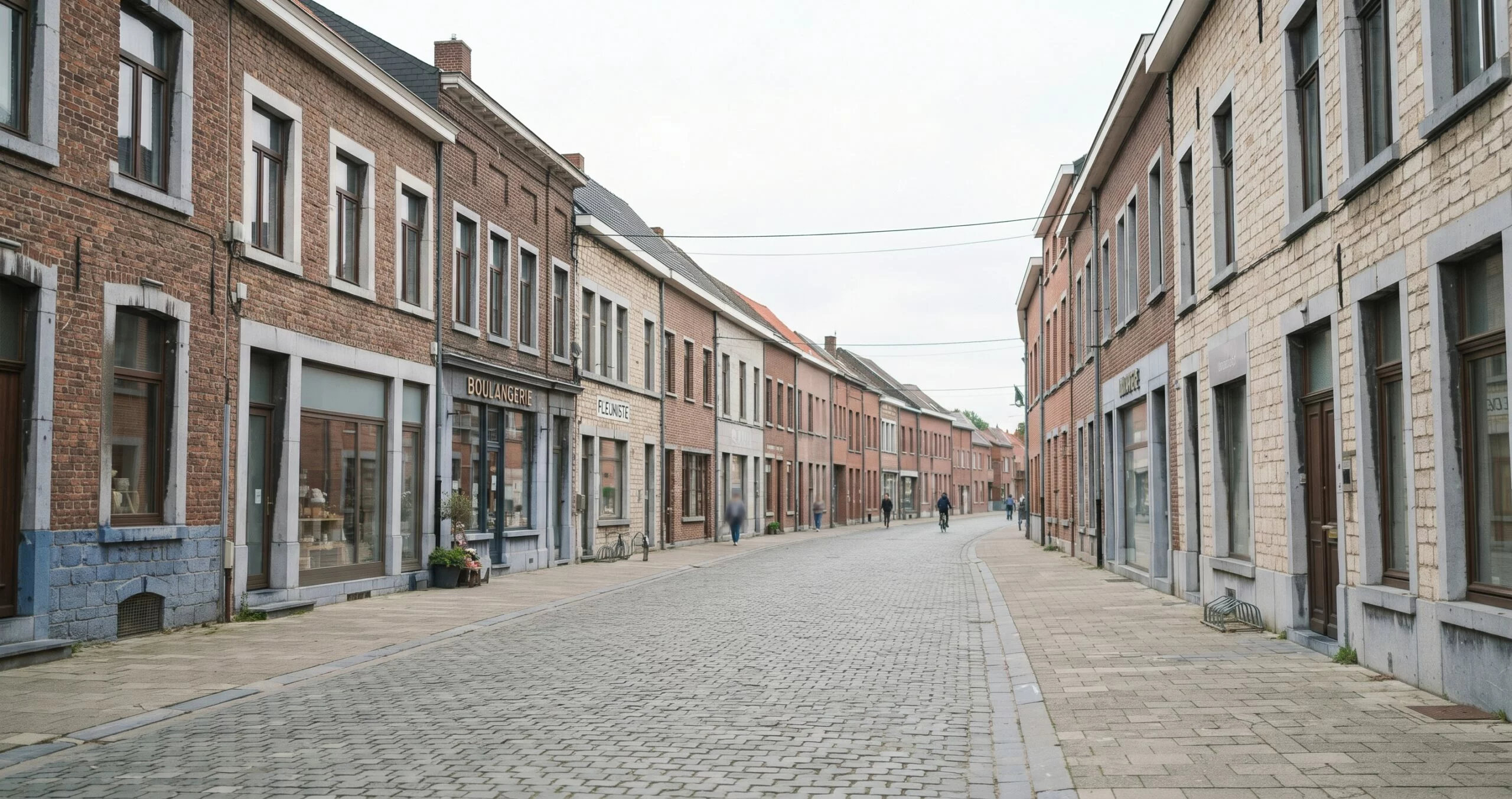
    In an unfamiliar town, the centre offers practical orientation before it offers a historical narrative. Finding a shopping street, somewhere to pause and a return point creates the freedom to observe. You can then notice how ground floors meet the pavement, how a shop window fits inside a façade and how entrances give rhythm to a row of buildings. Businesses are not merely visual components. They involve working hours and everyday needs. Avoiding the idea of a decorative street produces a more accurate reading. A delivery, a used doorway or a brief movement can reveal the present organisation of a place without turning each scene into an anecdote about its inhabitants. Ordinary activity is enough to make the street interesting when you consider how it occupies and connects the available spaces.

    Read brick and stone together

    A façade combining brick and pale stone encourages attention to relationships between materials. The base, a window frame, a threshold and the courses of brick do not play identical roles in the composition. Compare their proportions and how they receive light, then notice how those elements vary on the neighbouring house. This does not immediately establish a building’s age. Repair, replacement and transformation may complicate a rapid reading. Describing differences is therefore more dependable than assigning periods with confidence. Looking becomes sharper when it recognises these limits. A façade can be interesting for its balance, maintenance or current use even when information needed for a precise history remains unavailable. Not every pause must result in a date or style label; sometimes understanding how the visible elements work together is already a useful outcome.

    Follow openings rather than a style catalogue

    Windows and doors shape a street as much as its materials. Their alignment, dimensions and the way one floor differs from another offer an accessible thread for exploration. Choose two or three façades and consider what changes, rather than attempting an endless survey. A frame may emphasise an opening, a level change may alter a threshold and a shop window may transform the ground floor’s appearance. The aim is not to rank houses by authenticity. It is to observe how different needs occupy an urban fabric. This leaves room for modest buildings that would be overlooked if attention were reserved only for the most decorative features. It also gives companions something concrete to discuss, without requiring everyone to recognise specialist terms before being allowed to contribute an observation about what is in front of them.

    Respect the boundary between public looking and private space

    Ordinary streets can bring visitors close to doors, gardens and sometimes interiors. A photograph of a façade may include more than intended: somebody behind glass, a readable address or a family scene. Before sharing an image, inspect these elements as carefully as the composition. It is possible to show a material or an alignment without exposing someone’s life. Do not enter a courtyard because it looks old, and ask before photographing an interior. Such basic care does not diminish curiosity. It provides a respectful frame in which discovering a place does not require all its spaces to be available to the passing stranger. A detail chosen well can preserve the impression that prompted the photograph while avoiding private information that contributes nothing necessary to understanding the architecture or the street.

    AI-generated illustration: an ordinary façade inspired by Waremme, without identifying a verified address.

    Notice the transition from town to countryside

    The change towards open landscapes does not always occur at a clear boundary. Façades may become more widely spaced, a garden more visible, a building larger or a view deeper between plots. These clues gradually show how the centre sits within its surroundings. There is no need to declare that every gap marks a historical phase of expansion. That story requires specific evidence. You can instead record where the horizon appears and how viewing depth changes. Landscape becomes a relationship between what is close and what opens in the distance. This gives interest to transitional spaces commonly crossed while waiting for the next named destination on a map. It also makes the journey itself part of the discovery, rather than treating all movement between selected points as empty time to be completed quickly.

    Do not confuse proximity with a usable path

    A field visible from a street may look close without being connected by a public route. A plot boundary, agricultural access or apparent track is not automatically an authorised walking path. Before linking the centre with a rural area, consult a route offered by a competent organisation and check its current conditions. A general map may not show changed surfaces, works or sections requiring particular attention to traffic. If you want a specific itinerary, prepare it as such instead of improvising continuity from a photograph. This article proposes an angle of discovery, not a guaranteed route. The distinction prevents an attractive visual suggestion from becoming unchecked travel instructions. It also supports a more satisfying outing, because a manageable path with understood conditions is preferable to an ambitious connection whose practical details remain unresolved until arrival.

    Read an open horizon without calling it empty

    An open landscape can appear simple because few objects interrupt the view. Yet plot width, a hedge, a vegetation line and a cluster of buildings all organise space. Begin by distinguishing planes: what borders the path, what occupies the middle distance and what closes the horizon. A photograph taken from an authorised point can help revisit that reading later. It cannot identify every crop or agricultural practice by itself. Soil colour and visible forms vary with work and season. Describing dark earth, vegetation or a boundary is more accurate than naming a crop you do not recognise. The horizon gains complexity when those distinctions become visible. Its apparent openness no longer means an absence of structure, but a different scale at which relationships need to be noticed before being explained.

    #Waremme #Hesbaye #LiegeProvince #Wallonia #MrSchaka

    Take agricultural work seriously

    Countryside is not a park whose uses disappear when a walker arrives. Machinery, service routes and occupied plots belong to an activity. Avoid blocking access for a photograph and leave working spaces available for their purpose. A passing machine need not be interpreted as an intrusion upon the visit; it can remind you what the landscape actually does. To understand a practice, an agricultural source or an available knowledgeable person offers more than a guess from the field edge. The visitor’s perspective remains partial. Recognising that position helps appreciate forms and rhythms without reducing farming to decorative scenery. It also avoids making assumptions about a particular operator from one observed action. Looking at a working landscape responsibly means allowing its work to matter, even when that work does not match the quiet picture imagined before setting out.

    Try another scale with Hexapoda

    Waremme’s official tourism presentation mentions Hexapoda, devoted to insects. That possibility offers a contrast with reading a broad horizon: moving from expansiveness to small forms of life. It should not automatically be added to an already crowded outing. If the visit interests your group, verify conditions, hours and relevant arrangements before including it. The connection between landscape and close observation can nevertheless provide a useful idea even if the venue is saved for another day. What looks uniform at a distance reveals differences when the scale changes. The same principle applies to a façade, a field edge or an object. It reminds us that a place’s richness depends partly on the precision of the question brought to it, rather than only on the number of attractions included in a programme.

    Approach older traces through evidence

    The SPW heritage register identifies the Bois des Tombes tumuli at Waremme as protected heritage. This reminds visitors that traces of the past do not all take the form of a spectacular façade. The listing alone does not establish unrestricted access or provide a route to the site. For a visit focused on that heritage, consult relevant documentation and practical information. Distinguish a site’s documented existence from the conditions for approaching it. That separation makes curiosity more useful. You can recognise several historical layers within a territory without inventing a possible visit from a name found in an inventory. The source begins research; it does not replace preparation on the ground, nor does its official status turn every surrounding access into a public path available under all conditions.

    AI-generated illustration: a Hesbaye farming landscape near Waremme, not a guaranteed walking route.

    Allow villages a place of their own

    Names such as Bleret and Oleye should not become mere extensions of the town centre in an account. A village has its own relationship between buildings, routes and open space. If you choose to explore one, take time to locate it and understand the starting point rather than presenting it as an effortless detour. A separate outing with a different question may be more rewarding than accumulating stops in a single day. That choice also respects different group rhythms. Discovering a territory is not measured by the number of localities mentioned. It becomes more precise when you know why a place has been chosen and what you hope to observe there, without imposing the centre’s urban model on a setting that may invite another scale and another kind of attention.

    Pause in a way that helps reread the outing

    A break in the centre can organise observations rather than merely interrupt effort. Recalling a façade, an opening towards fields and a material detail helps identify what connects them. Note a question for later research without trying to answer everything immediately. In a group, each person can choose a detail to share, making different perspectives visible: somebody noticed a doorway, somebody an activity and somebody the changing horizon. None of those choices needs to dominate. Together they create a more nuanced discovery than a list followed unanimously without discussion. The pause also protects attention for the return, when familiar places may appear in another order. Seeing a street again after understanding its relationship with the wider setting can make previously overlooked transitions more apparent, even without adding any new destination.

    Use images without promising an exact place

    This article’s illustrations were generated with artificial intelligence. They evoke a Hesbaye town centre, a façade and late-autumn fields around Waremme. They do not depict an identified address or a path whose access has been verified. Transparency allows imagery to fulfil its role without becoming false evidence. With a personal photograph, naming a location when known and avoiding uncertain identification are equally important. Appealing light and tight framing may alter the perception of distance. A restrained caption lets readers distinguish atmosphere, observation and practical information. Those functions do not replace one another even when they appear on the same page. An image can encourage a thoughtful visit without pretending to provide a map, a current weather report or a guarantee that the pictured arrangement can be reached as shown.

    Prepare for November without inventing its weather

    Publication in early November does not establish the weather that will accompany a reader’s outing. Seasonal illustrations guarantee neither the sky, the condition of paths nor the precise colour of trees. Check current information and choose a project compatible with actual conditions. An alternative or shorter visit avoids dependence on a single scenario. Where accessibility matters, surface, resting and movement details need individual verification. An image of a rural track cannot establish suitability for everyone. Preparation is less about predicting every minute than retaining enough margin for a reasonable decision on arrival. That flexibility also keeps disappointment in proportion: a changed route need not mean a failed day when the purpose was to understand relationships, rather than to reproduce a photograph or complete an itinerary whose conditions were never assured.

    What remains between street and fields

    Waremme may leave a sense of continuity rather than an absolute contrast between town and countryside. Central uses, house materials, villages and open landscapes are not separate worlds. They form a territory discovered gradually through knowledge that remains partial. An attentive outing does not have to summarise it definitively. Three precise observations and a question inviting a return can be enough. That is already a way of seeing more without travelling further. The experience continues when the attention practised here becomes useful elsewhere: recognising a threshold, reading a boundary, noticing depth and understanding that an apparently ordinary landscape contains relationships deserving time. The memory then rests not on having covered everything, but on having learned how to make a limited encounter more accurate, more curious and more generous to the place itself.

    Sources for planning the visit

    Book cover

    The book

    The Empty Wall is the second book of Oscar’s Notebook, a series of crime novels set in Liège.
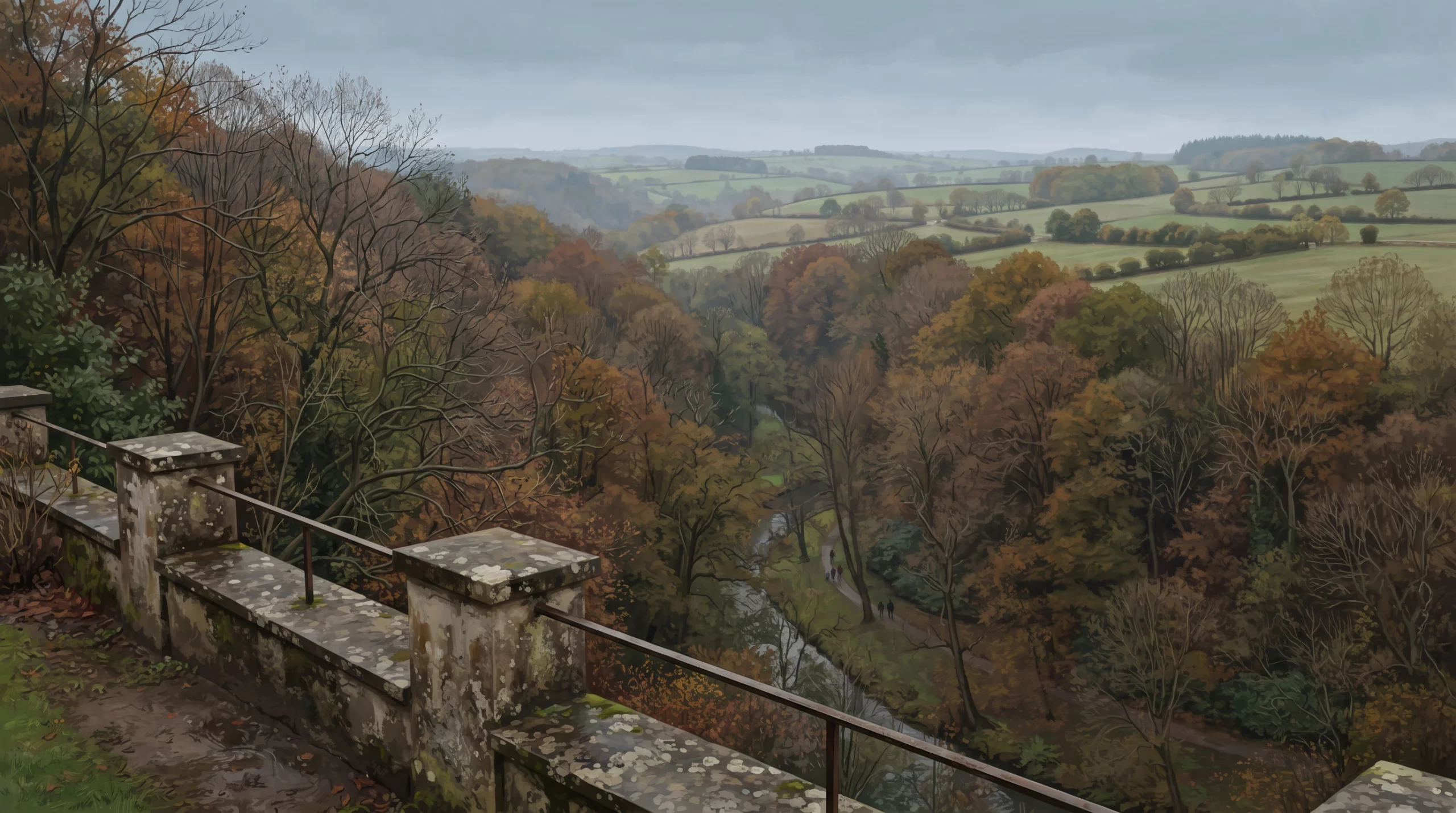
  • Limbourg: taking time with the cobbles and relief of the upper town

    Limbourg: taking time with the cobbles and relief of the upper town

    In Limbourg, relief is more than an attractive line behind a photograph. It shapes arrival, movement and the way the upper town can be understood. A descending street, a change of level or a glimpse towards the valley already says something about the relationship between buildings and their site. This walk begins with those tangible clues. It does not require an immediate search for a spectacular panorama or an attempt to follow every surrounding path. A few public spaces, considered at different scales, can provide a coherent reading of a place where history and topography remain closely connected, while leaving enough time to notice how the spaces are actually used today.

    Choose the right Limbourg in the province of Liège

    The name can cause confusion with other territories. This article concerns the town of Limbourg in the province of Liège, not an entire Belgian or Dutch province bearing a related name. That distinction matters when searching for a map, accommodation or transport. Check the complete destination and the actual point of arrival. A broad search can easily produce information unrelated to the intended visit. Once the framework is clear, the historic centre becomes easier to approach. You know which place you are looking for and can devote attention to its streets, rather than spending the opening part of the day correcting a destination mistake that could have been avoided.

    Understand the site before collecting monuments

    The Walloon heritage description places the former stronghold on a rocky spur within a bend of the Vesdre. This relationship explains why the eye moves between higher and lower ground, and between the built environment and its landscape. There is no need to turn the information into a complete military history lesson. It already supplies a useful question: how have people and activities adapted to that position? On arrival, distinguish what the visible relief tells you from what requires a map. The two readings support each other, but a particular viewpoint cannot reveal the whole geography of the municipality simply because it offers an attractive view.

    Separate an upper-town visit from a larger walk

    Tourist information for the Pays de Vesdre also introduces villages, landscapes and walking possibilities around Limbourg. Combining everything in one outing risks spreading attention too thinly while increasing practical demands. For a first visit, choose the scale clearly: a few spaces in the historic centre, or a more extensive walk prepared as such. Gradients, access and the return journey cannot be inferred from the apparent length of a line on a map. Choosing a shorter programme does not mean seeing less carefully. It often gives you permission to return to a detail rather than passing it once on the way to an increasingly distant objective.

    Read Place Saint-Georges as an ensemble

    Place Saint-Georges is recognised as a heritage architectural ensemble. That word encourages a slight shift in attention. Instead of searching only for the most impressive house, consider the relationships between frontages, the width of the space and the ground beneath them. A quiet building may contribute as much to the place’s coherence as a more prominent feature. Look in one direction, then turn around from somewhere that leaves movement unobstructed. A simple change of position reveals other alignments. The square becomes a composition that people inhabit and cross, rather than a general façade that must somehow be squeezed into a single photographic frame.

    Cobbles also describe an experience of moving

    Paving attracts cameras, but it should also be considered as the surface on which people walk. Texture, irregularity and present conditions affect comfort. Wear footwear suited to your needs and take particular care when surfaces are wet or covered by leaves. Attractive material does not remove practical requirements. To examine a threshold or frame a detail, find a stable position without closing the passage to others. This double reading, aesthetic and practical, does greater justice to the place. It avoids presenting a historic centre as a flat picture that can be crossed without experiencing the physical reality of the ground or adapting to the way different people move.

    Move from broad lines towards material

    After taking in the overall arrangement, bring attention closer to a section of wall from public space. Stone, brick, joints and window surrounds do not all produce the same continuity. Look for a meeting of materials or a visible repair. Avoid assigning dates without evidence: a frontage may retain an older design while having undergone successive interventions. Material deserves more than an invented age. It can prompt a question about construction, maintenance or use. In a notebook, a description such as different pointing below the window is often more precise than naming an historical period that has not been checked against a reliable local source.

    Doors remind us that the town remains inhabited

    A doorway, curtain, plant or letterbox indicates that frontages are not simply heritage objects. The historic centre remains a living environment. Avoid close views through windows, prolonged photographic sessions outside an entrance and moving objects to improve a composition. A visible porch does not become public because it appears picturesque. The quality of the visit partly depends on recognising this. Residents should not have to pause their everyday lives so that a visitor can imagine a town without contemporary presence. Noticing signs of use can make heritage easier to understand, connecting the attractive surface with the ordinary needs that continue behind it.

    AI-generated illustration made with Gemini: an evocation of materials in a Walloon historic centre, without a specific address.

    From stronghold to surviving urban ensemble

    The Connaître la Wallonie description recalls Limbourg’s military past and its decommissioning by Joseph II in 1781. That is enough to open a reading of transformation without rushing through a sequence of battles. A place may lose a strategic function while retaining urban organisation and architectural value. During the walk, distinguish what history explains from what is genuinely visible. Do not invent a continuous defensive circuit, a castle available to visit or fortifications from an ordinary wall. Sources help make sense of absence as well as survival. They allow a visitor to recognise that the present arrangement is the result of change, not an untouched military scene.

    The Arvô suggests another change of scale

    Local tourist information mentions the former town hall, known as the Arvô, and an historical scale model. A reduced representation can help connect what has been encountered on foot: arrangements, boundaries and relationships between parts of the town. If this kind of visit interests you, check current conditions directly with the relevant organisations. Information on a tourism website does not guarantee that every interior will be available in November. Even without entering, the principle of moving between a detail and an overall representation remains useful. A walk becomes more understandable when it alternates several viewing distances rather than treating close observation and the bigger picture as competing ways of seeing.

    The church is more than a background feature

    Saint-Georges church belongs to the visual reading of the old centre, but a church is not merely a photographic landmark. Access may depend on uses, works or temporary conditions. Check on-site instructions and current information before making an interior visit a necessary part of the programme. From public space, it is already possible to consider how a building organises a perspective and attracts the eye. If entry is available, behave in a way compatible with the place’s purpose. Cultural discovery benefits from acknowledging that buildings may carry several meanings for the people who use them, none of which has to disappear when visitors become interested in their appearance.

    #Limbourg #LiegeProvince #Vesdre #Heritage #MrSchaka

    Look towards the valley without demanding a total panorama

    Views of the surroundings add another dimension to the upper town. They reveal a difference in height, a more open area or a direction previously hidden by buildings. There is no need, however, to name every settlement that might be visible. A reliable map or orientation panel can supplement observation where one is available. Otherwise, record what can actually be distinguished: landforms, tree lines, roofs and the valley. A landscape does not become less interesting because some elements remain unidentified. Modest precision is more useful than a confident caption that assigns names to features the view does not clearly show or claims a breadth of knowledge the visitor has not established.

    Consider a sloping lane in both directions

    Before descending out of curiosity, think about coming back. The advice sounds obvious, yet an attractive route can feel very different when the group is tired or needs to reach transport at a fixed time. A short out-and-back section already helps explain the slope’s role without continuing towards an uncertain objective. Assess the surface, light and remaining energy. You can also look into a street from its entrance and decide not to take it. This is not a defeat for the visit. It simply recognises relief as a real element of movement, rather than a decorative feature forgotten as soon as the first picture has been taken.

    Let returning become a second reading

    Passing a square or frontage again creates an opportunity to notice what the first encounter left aside. A surround makes more sense after comparing materials; an opening takes on another role when the direction of the valley is clearer. To benefit from this second reading, resist filling every minute with a new point. Leave some unallocated time. It may allow a return to a question or a few quiet moments where changing light makes a texture easier to see. A walk can progress through greater understanding. It does not always need to demonstrate progress by increasing distance or adding another place to a growing list of completed stops.

    November calls for a margin of daylight

    When preparing a November outing, consider the day’s conditions and the return time rather than inventing ideal weather. Arriving later may reduce the time available to read the terrain, especially if you plan to go beyond the centre. Keep a shorter version of the route and the practical information needed for departure. Leaves and damp surfaces may also require a slower pace. This is not a reason to dramatise an urban visit. It is simply a way of giving practical choices the same attention as attractive ideas. A reasonable margin lets you stop and look without every pause feeling like a threat to the remainder of the programme.

    AI-generated illustration made with Gemini: a street variation inspired by Limbourg, not a documentary record of an actual location.

    Water belongs to geography, not only to pictures

    The Vesdre helps locate Limbourg within a landscape and a wider territory. It is important, however, not to reduce the whole municipality to one river view or a single narrative. Higher ground, residential places and areas of activity have rhythms of their own. When mentioning water, specify the relationship you are trying to understand: terrain, settlement, passage or landscape. That precision also protects against easy associations between images made in different parts of the valley. A photograph of a watercourse cannot tell every story or represent every experience of a territory. Geography becomes more useful when its different scales are kept visible rather than merged into one convenient illustration.

    With a child, compare simple forms

    For a family visit, propose a limited search: two kinds of paving, a doorway wider than its neighbour, a changing roofline or a street whose slope can be recognised. These observations allow several responses and do not require a complete heritage vocabulary. Let children also decide which detail they want to remember. The activity must remain compatible with circulation and residents’ lives: no running through passages and no handling objects without permission. A well-chosen question can hold attention longer than numerous instructions designed to teach too much at once. It leaves space for the child to contribute an interpretation, rather than merely trying to guess the adult’s expected answer.

    Prepare mobility needs without relying on general labels

    For some visitors, cobbles and gradients matter more than total distance. Ask for precise information about where you intend to arrive, the sections to be covered and the possibility of resting. A broad accessibility label cannot replace a description of a threshold or slope. Explain what is required and verify possible arrangements with the relevant people. Adapt the programme on arrival rather than feeling obliged to complete a planned circuit. A carefully chosen observation point can reveal the ensemble, materials and relief without imposing a succession of unnecessary difficulties. The visit is not diminished when its design takes actual needs seriously and allows everybody a meaningful way to participate.

    Rest or buy without taking over the space

    A break in a business can complement the walk when its welcome suits the needs of the moment. Check conditions, current hours and available room; do not treat an old listing as a guarantee. If you remain outside, choose a place where doors and movement stay clear. In a compact historic centre, a stationary group can quickly become noticeable to others. A discreet pause leaves more room for ordinary uses. It can also provide a moment to gather thoughts: what connection has become clearer between a material, an urban form and a landscape situation? Rest then belongs to the interpretation of the place, rather than interrupting it with another demand for activity.

    Two similar views can invite comparison

    The illustrations in this article include two street evocations with closely related compositions. They should not be treated as measured records of one actual location. They can instead be read as atmospheric variations, considering the role of the ground, frontages and the opening of a perspective. Both were generated using artificial intelligence and cannot establish the condition of a surface or the position of a building. Captions need to keep that distinction clear. Official resources and current information are still necessary for a precise visit. The pictures accompany the written article without replacing practical preparation or claiming that somebody recorded these scenes during a documented walk.

    Take photographs without turning the place into a studio

    For your own pictures, seek a clear relationship rather than a staged effect: a door with its threshold, a slope with its horizon, or paving beside a frontage. Do not block a street to obtain an empty perspective, and wait when someone uses the entrance you are considering. If a person appears recognisably, obtain the appropriate agreement before sharing the image. A heritage photograph often gains by showing how elements coexist rather than removing every sign of life. Discretion is more than courtesy. It helps reveal that the old town continues in the present, with uses and boundaries that a picture should recognise instead of temporarily erasing.

    Leave with a set of relationships

    Limbourg may be remembered most clearly through relationships rather than a collection of monuments: higher and lower ground, paving and frontage, opening and landscape, military memory and current uses. Before leaving, choose two or three connections that the walk has made more understandable. Separate personal observations from confirmed information and retain the questions still open. Then check the return journey and allow the place the possibility of another visit. There is no need to summarise everything today. An attentive interpretation, aware of its setting and incompleteness, can be more faithful than a description that claims to exhaust a historic centre within a few hours of walking through it.

    Sources for preparing your visit

    Book cover

    The book

    The Empty Wall is the second book of Oscar’s Notebook, a series of crime novels set in Liège.
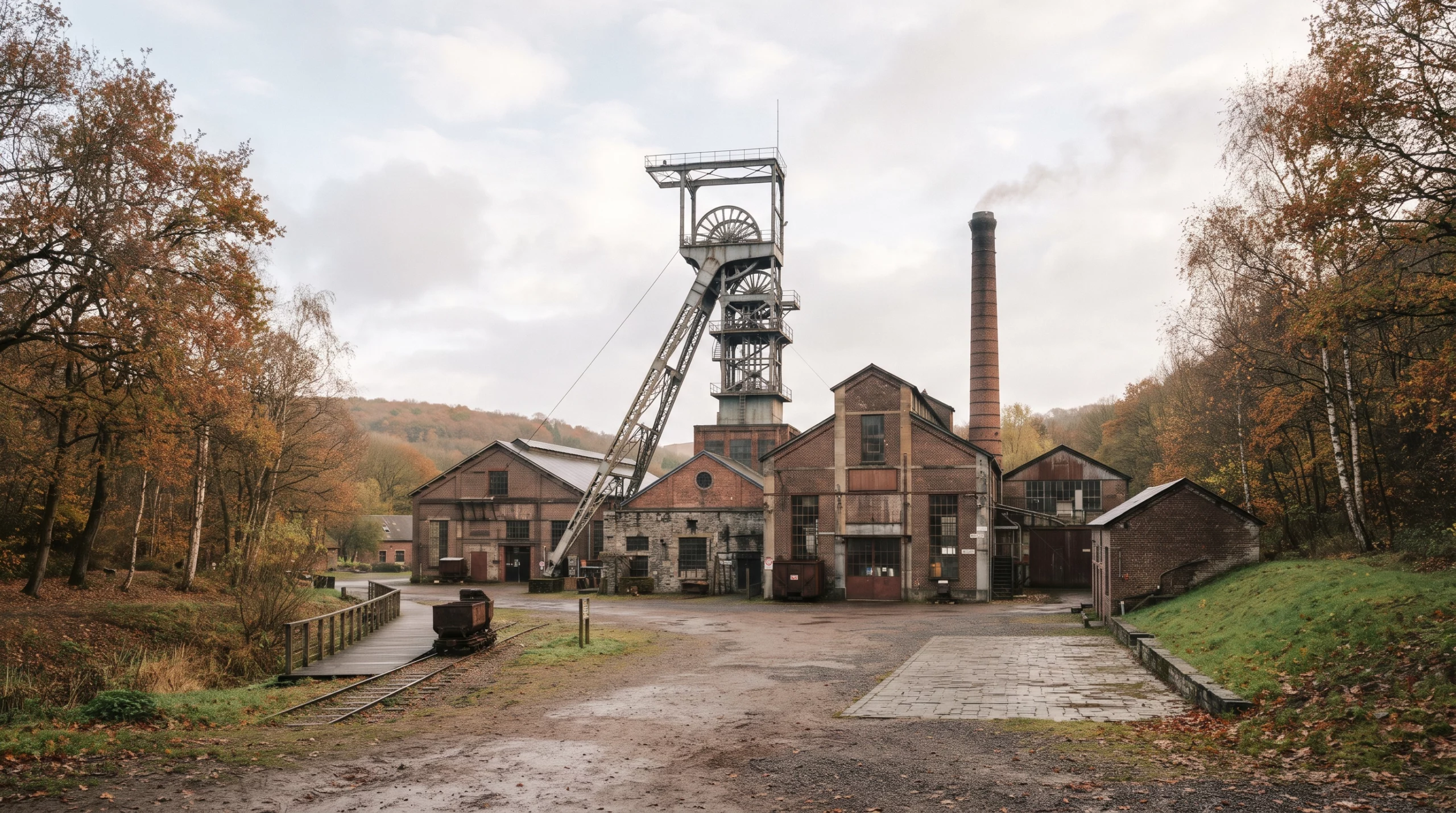
  • Malmedy: reading the centre through squares, frontages and passages

    Malmedy: reading the centre through squares, frontages and passages

    Malmedy can be approached through a simple question: how does a small town arrange encounters? A square gives people room to stop, a street leads towards another activity, a frontage announces a use, and a narrow opening suggests a quieter layer behind it. This provides a thread for a walk without requiring a complete knowledge of local history. It also works when time is limited. Choose a few public spaces and consider their relationships instead of collecting photographic stops. The centre then becomes more than attractive scenery. It emerges as a place where everyday needs, collective memories and continuing uses share the same setting.

    Place Malmedy within the province of Liège

    Malmedy is in the province of Liège, in eastern Belgium. Keeping that basic location in mind helps distinguish an urban visit from a separate outing into the High Fens. Nearby landscapes may tempt you to extend the day, but they deserve their own preparation. For this first approach, let the town centre remain the main subject. A square, a sequence of frontages and a cultural venue can provide a substantial visit. Mark your arrival and departure points on a map before adding further ambitions. A clear framework leaves more attention available for the town itself and less for repeatedly working out where you are meant to go next.

    Use an open space to understand distance

    After arriving, look at an open space from a position that does not interrupt people moving through it. Where does a shopping street begin? Where do pedestrians change direction? Which buildings draw the eye, and which remain useful as landmarks when you turn around? These are not questions requiring specialist answers. They help establish a first mental map. A tree, a window or a corner can be more dependable than a business that may be closed. The value of this first pause lies in what it clarifies: orientation, possible places to rest and the actual relationship between the things you hope to bring together.

    Look at Place Albert Ier as a working space

    Place Albert Ier is a useful reference when preparing an exploration of the centre. On arrival, replace your expected atmosphere with the one that is actually there: businesses opening or closing, deliveries, residents, visitors and changing light. A square does not become motionless because it appears in a guide. A good walk makes room for this everyday movement. If an area is occupied or difficult to cross, begin with an adjoining street and return later. The purpose is not to recreate an ideal photograph. It is to understand how an open space participates in the life of Malmedy and how its surroundings connect.

    Move from an overall view to a single detail

    Once you have taken in a square, deliberately reduce your field of vision. Choose a frontage and examine the relationship between door and windows, the way the ground floor meets the pavement, or the materials gathered around a threshold. Do not date a whole building from the colour of its stone. Restoration can retain an older arrangement while replacing parts of the fabric. A detail becomes useful because it produces a precise question, not because it gives an immediate historical answer. Record what can genuinely be seen, then look for interpretation in a reliable source, a museum explanation or a properly informed guided visit.

    Read frontages as relationships with the street

    A frontage is not simply the outer face of a building. It also manages a relationship: a shop window invites attention, a step marks a transition, and a shutter protects privacy. Comparing neighbouring buildings shows how a continuous street can support different activities. Notice a repeated window pattern, then identify where that pattern changes. This is a small, practical exercise in looking, rather than an examination in architectural terminology. There is no need to photograph every property or seek admission to private interiors. The public street already offers plenty to consider, provided that observation remains curious about the people and uses behind the visible surfaces.

    Use the Malmundarium as a cultural anchor

    The Malmundarium occupies Malmedy’s former Benedictine monastery. That change of use makes it a helpful cultural anchor for the walk, rather than merely another attraction to complete. A building can keep a strong presence in a town while taking on different functions. If an indoor visit matters to your plans, consult current visitor information before travelling. You can then choose between looking at the surrounding public area and allowing time for the spaces that are accessible. Match that decision to the time and attention you actually have. Understanding the importance of a place does not require claiming to have seen every room inside it.

    Let materials suggest questions about work

    The Malmundarium’s educational resources include leather, paper, carnival and local history. Each offers a different way into the town. Paper raises questions about the transformation of material; leather directs attention towards tools and skill; carnival connects objects to collective practice. Returning outside, you may find yourself asking what kind of work once occupied a building and what evidence remains. Keep the question separate from its answer. An apparently industrial frontage does not establish a former workshop by itself. The interest lies in using cultural knowledge to sharpen observation, then checking any historical interpretation rather than assigning an occupation to every building that looks old.

    AI-generated illustration made with Gemini: an evocation of eastern Belgian frontages, without a specific address.

    Understand Cwarmê without expecting a parade

    Malmedy’s carnival, known as Cwarmê, forms part of its local cultural heritage. Discovering its significance does not require the celebration to be taking place on the day of your walk. Outside the festival period, interpretation can explore the passing on of characters, objects and shared references. A heritage resource or an appropriate museum display provides context that the street alone may not supply. Understanding a tradition and watching it happen are different experiences. A November article should not promise costumes around every corner. It can instead encourage a closer interest in the meanings that make a public celebration recognisably local and important to its participants.

    Keep announced projects in the future tense

    Cultural announcements may describe preparations, intended changes or spaces that are not yet available to visitors. Read their wording carefully before building a day’s programme around them. An announced project is not automatically an open attraction, and an online presentation is not enough to confirm admission. Contact the venue directly if a particular development matters to you. The walk suggested here remains useful without relying on a new opening. Squares, street frontages and passages already provide a framework. That independence makes changes easier to accommodate and prevents a whole day from resting on an assumption that was never actually checked with the organisation concerned.

    An opening is not necessarily a public invitation

    The spaces between buildings can attract more attention than a broad view. They hint at a courtyard, another layer of the town or a possible shortcut. Yet an opening visible from the street is not necessarily a public passage. Keep to authorised routes and seek clarification when the status of a space is uncertain. A sequence of doorways and courtyards can be appreciated from outside without walking into a residential setting. This restraint does not diminish the pleasure of looking. It recognises that a town continues to contain ordinary lives, and that visitors gain more by understanding boundaries than by treating every doorway as tourist access.

    #Malmedy #LiegeProvince #Heritage #TownWalk #MrSchaka

    Give the walk two complementary movements

    One flexible method is to begin with open spaces, then turn towards streets and details. In the first part, look for relationships: a square leads towards a cultural building, a street continues an axis, or a change in width introduces another pace. In the second part, return to something that caught your attention. Going back is not a failure of route planning. It lets you reconsider an element with more context. End this second movement when concentration begins to fade, rather than treating the visit as unfinished. A few relationships understood properly can provide more satisfaction than a long sequence of locations passed without much attention.

    November changes the way you look

    A November day may be bright, overcast or wet. There is no reason to invent its weather in advance. Prepare options instead: an extra layer, a shorter version of the walk and a verified possibility for shelter. Low light can emphasise the relief of stone, while a cloudy sky can make differences in colour easier to compare. If the surface underfoot becomes slippery, wait until you reach a stable place before studying a detail. Seasonal atmosphere should be discovered on arrival. It should never force the group to maintain a route that no longer suits the conditions, the available light or the people taking part.

    Choose a pause that leaves room for others

    A pause can help gather impressions as well as restore energy. Find an appropriate place and record three things: a shape, a material and a question. If you enter a business, respect its purpose and the conditions under which it welcomes customers. A table is not an unlimited observation station merely because it offers a good view. In public space, avoid blocking a doorway or occupying the narrowest part of a passage. These small choices make a visitor’s presence less intrusive. They also allow you to continue with a clearer sense of what the walk has already offered, without immediately demanding another attraction to make the day worthwhile.

    Photograph a relationship, not a collection

    For a personal record, try showing how elements connect: threshold and pavement, a street opening and its square, or a frontage and the activity it accommodates. Such a photograph can say more than numerous isolated details whose locations become impossible to remember. Wait when someone is entering a home, avoid close portraits without agreement and leave objects where they belong. Windows and reflections may reveal private information, so examine what is actually in the frame before sharing it. Photography should extend the attention you bring to a place. It should not require residents to perform a role, move aside or become an unrequested part of your story.

    AI-generated illustration made with Gemini: a street scene inspired by Malmedy, not a documentary photograph.

    Let children begin with visible differences

    For a family visit, suggest a limited comparison: two different doors, a rough material beside a smooth one, or reasons why a square feels easier to cross than a narrow street. The aim is not to teach a complete urban history during one outing. It is to share an observation that can have several reasonable answers. Let children choose a detail and ask what they would like to understand about it. A question that cannot be answered immediately can become a small investigation afterwards. Above all, allow a pace in which stopping is possible without everybody feeling late for an overfilled programme of compulsory highlights.

    Prepare specific mobility questions

    A centre that looks compact on a map is not necessarily straightforward for every visitor. Thresholds, slopes, surfaces, temporary works and places to rest may matter as much as distance. Before travelling, ask the relevant organisations about the actual sections you intend to use, rather than relying on an overall description such as accessible. Explain the requirement: a route without steps, enough clear width or a suitable place to drop someone off. Adapt the walk on arrival without feeling that the experience has failed. A small number of well-chosen public spaces can still produce a rich visit when there is time to observe them and connect their meanings.

    Do not add every nearby possibility

    Surrounding landscapes and neighbouring places can make an outing expand almost without notice. An urban visit and a walk in the countryside, however, do not require identical preparation. Moving from one programme to another should take account of transport, daylight, equipment and the group’s remaining energy. An idea for a return visit need not become an immediate obligation. Malmedy also deserves time spent within its centre. Declining an extra stop can make room for conversation, a cultural visit or a second look at a street already passed. The pleasure of being somewhere is often easier to recognise when the next destination is not constantly calling for departure.

    Read names without inventing their origins

    Street names offer another possible thread. Record a name that catches your attention and see whether a local source explains it. Do not infer a former trade from a single word: a name may have changed, refer to a person or preserve a form whose meaning is no longer obvious. In a notebook, separate the copied name from your own hypothesis. This modest discipline prevents an appealing guess from turning into a confidently stated history. It also supplies a precise reason to consult the tourist office or a heritage publication afterwards, allowing a question raised by the walk to lead towards a better grounded understanding of the town.

    Put information in a useful order

    Begin preparation with what genuinely shapes the day: travel, the return time, walking capacity and any intended indoor visit. Then add the material that may enrich what you notice. This order avoids two common extremes: collecting so much information that it hides direct observation, or improvising so completely that every practical decision has to be solved on arrival. A short page of notes is often enough. Include a starting point, a cultural resource and the questions that still need checking. Between decisions, the phone can remain out of sight while the useful details are still close enough to consult when they are actually required.

    What the illustrations can and cannot show

    The images accompanying this article are AI-generated illustrations. They evoke a square, a frontage and a street within a plausible eastern Belgian atmosphere; they are not photographs taken in Malmedy on a stated date. They therefore cannot establish an opening, the present condition of a pavement or the exact appearance of a particular house. Clear captions keep their role understandable, and the written article should not give them a documentary authority they do not possess. For a precise visit, official resources and current information remain the appropriate references. An evocative picture may support a reading mood without becoming evidence for a factual promise about the town.

    Leave with an interpretation that knows its limits

    Before returning, choose something to take away: a relationship between a square and a street, a question about a material, or an idea learned in a cultural setting. There is no need to summarise the whole of Malmedy in order for the outing to matter. A personal interpretation becomes stronger when it distinguishes what was observed, what was learned and what still needs checking. Look at your map again, confirm the return journey and leave a sensible margin. Another visit can follow a different thread. For today, a few spaces understood together are enough to produce a precise impression that remains after the immediate photographs have been put away.

    Sources for preparing your visit

    Book cover

    The book

    The Empty Wall is the second book of Oscar’s Notebook, a series of crime novels set in Liège.
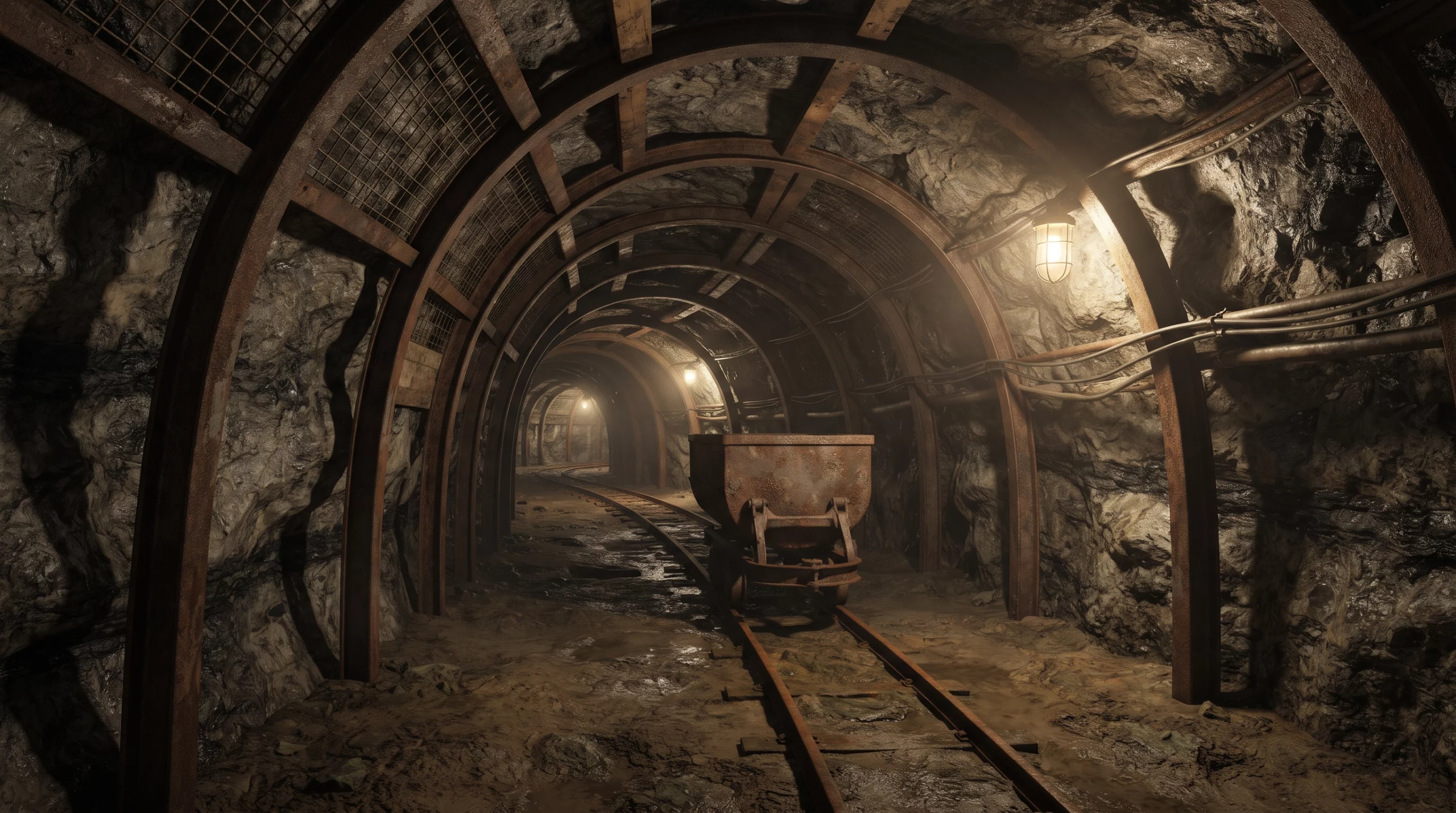
  • Verviers: reading the textile city between the Vesdre and its facades

    Verviers: reading the textile city between the Vesdre and its facades

    Look at the city on more than one scale

    You can begin a visit to Verviers with a question rather than a ranking of monuments: how do you look at a city whose textile history remains important without reducing every building to that history? The Pays de Vesdre tourism office connects the river, wool working and local skills in its introduction to the city. That thread is a starting point, rather than an automatic explanation for every street. An interesting walk also leaves room for present uses, residents and details that do not fit a quick interpretation. The city is something to explore, not an illustration of a conclusion already written.

    This guide moves from a broad view towards a detail: a relationship with the Vesdre, a facade, an opening, then a question about work. It does not define an official circuit or guarantee access to buildings or a continuous riverside path. Prepare a small area using a reliable map and adapt the outing to what you find. The aim is not to identify a former factory at every corner. It is to distinguish a visible clue, documented information and a possibility that should remain a question until there is evidence to support it. Leaving with a more precise question can itself be a worthwhile result.

    Start with one precise question

    Before leaving, choose a question short enough to fit in your notebook. You might ask how buildings organise light, how streets lead towards the river, or how several periods coexist within a facade. One question can guide attention better than a long collection list. It also helps you choose a limited part of the city rather than adding journeys simply to cover more ground. In a group, people can choose different angles and share one observation afterwards. There is no need to insist that everyone approaches the city in exactly the same way. Different interests can make the discussion at a break more rewarding.

    Write down what you will not attempt to decide from the street as well. A facade cannot, by itself, identify an owner, a profession or an exact period. A large window alone does not prove industrial use. These limits do not make the outing less interesting; they prevent an impression from becoming an unsupported fact. Three notebook columns are useful: what I see, what a source establishes, and what I want to check. Over the course of a walk, this distinction helps you understand more while making fewer confident claims about things you cannot yet know. It also gives later reading a definite purpose.

    Use the Vesdre as a reference point

    Locate the river on your map and select a public place where you can look without obstructing others. Observe the visible relationships between water, bridges, streets and buildings. Where does the view open? Where does a building form a screen? What journey is actually required to reach the other bank? These questions concern the place in front of you. They give the city a first structure before any historical explanation. They also help distinguish a short distance drawn on a map from an easy or suitable passage on the ground. An actual usable detour is more helpful than an imagined direct line on a screen.

    The broad connection between Verviers, wool and the Vesdre invites research rather than an invented explanation for each detail. Avoid presenting every waterside building as a factory or each structure as textile equipment. A particular function requires a particular source, an explanatory plaque or relevant heritage documentation. If you cannot find confirmation, simply describe the building’s position and the question it raises. The landscape keeps its visual interest without having to prove more than it shows. An honest uncertainty can give a reader a better starting point than an attractive story presented as established history. A hypothesis clearly named as such can remain a useful research lead.

    Read a facade as an arrangement

    Choose a facade you can view from a comfortable position. Before taking a photograph, look at its proportions and the repetition of openings. Do the windows follow the same rhythm? Is one entrance wider? Does a material change between sections? Ordinary vocabulary is enough: tall, narrow, regular, altered, filled in. You do not need to assign an architectural style to write a precise description. A concrete sentence often helps more than an impressive adjective intended to communicate that something is old. Describe the feature before deciding what larger interpretation it can support, and allow a modest observation to stand on its own.

    AI-generated illustration inspired by Verviers; not a documentary photograph.

    Then change your position slightly, if doing so is safe and does not inconvenience anyone. A projection may become clearer from an angle; a difference in depth may appear; two apparently identical parts may separate visually. Note how the movement changes your reading. This shows that observation depends on where you stand as well as what you look at. Do not enter private doorways or move into a road to obtain a better picture. A building is not scenery reserved for visitors. It belongs to a functioning street whose ordinary users still need access and space. Another framing is always possible if the first would obstruct someone.

    Treat light as a question to investigate

    Openings can suggest questions about light and the organisation of working spaces when looking at industrial heritage. Compare what different facades allow you to notice: repetition, apparent orientation, window depth or obstructions nearby. This remains an observational exercise. Establishing a room’s former function or the working conditions within it requires additional documentation. An appealing deduction should not be presented as a certain reconstruction of an activity. You can be curious about the connection between architecture and work without pretending that the outside of a building answers every question about its inside. Being clear about that distinction makes the enquiry stronger.

    Try writing two versions of a sentence. The first describes: a row of tall windows occupies this floor. The second asks: what use might have required this arrangement? Keeping them separate lets you tell the story of a walk without exaggerating what you know. With children, ask which detail they would like someone familiar with the place to explain. The value of the exercise is the quality of the question, rather than how quickly an adult supplies an answer. Several different questions may arise from the same window, and none has to be resolved immediately. Save a useful question rather than rushing to produce a convenient explanation.

    Notice materials, repairs and present uses

    Brick, stone, metal and wood offer other ways into the streetscape. Look at joints, thresholds and changes in surface rather than touching fragile elements or equipment. A visible repair can be described without dating it. A recent door in an older facade does not disclose the complete history of a conversion. Your notebook can record the coexistence of materials and ask how it developed. Caution does not remove the detail; it preserves it accurately. Later documentation may clarify the sequence, but you do not need to settle it while standing on the pavement. An accurately recorded question is easier to investigate than an embellished impression.

    Look for indications of present use as well: visible activity, an entrance open to the public, a shopfront or residential access. A building associated with the past does not need to be empty or available to enter to deserve attention. The people living and working there are part of the city now. Avoid photographing through windows or blocking a door while composing an image. You can discuss a changing environment without turning occupants’ private lives into a visitor attraction. Respect for current use is part of reading a place carefully, rather than a separate interruption to the subject. The present deserves as much attention as the past.

    #Verviers #LiegeProvince #IndustrialHeritage #MrSchaka

    Think about work without inventing workers

    The textile theme invites attention to work, but a picture of a wall cannot reconstruct an individual’s day. Organise questions around actions: preparing a material, transforming it, checking a result or moving a product. These are research categories, not assertions that all those operations occurred in the building you are observing. They can help prepare a cultural visit or further reading. A precise question is more likely to find an answer in a suitable resource than a whole story invented from architectural appearance. Your task is to notice a useful line of enquiry, not to manufacture a complete reconstruction from insufficient evidence.

    Leave room for what an introductory source does not immediately cover. A working city cannot be reduced to machines, facades or its most familiar names. To explore living conditions, occupations or social change, find documents that address those subjects. Do not assign feelings, dialogue or memories to anonymous workers simply to make a travel article more vivid. Curiosity can be warm without producing fictional biographies. Saying what you would like to understand already gives the subject of work a presence. It also gives a future museum visit or reading session a clear purpose beyond collecting additional facts. Real testimony should be approached as testimony, not replaced by an imagined voice.

    Examine a cultural resource before arranging a visit

    AI-generated illustration inspired by Verviers; not a documentary photograph.

    The website of the Centre Touristique de la Laine et de la Mode introduces wool and fashion experiences in former spinning and weaving premises. That focus makes it a resource to examine when preparing a textile-themed visit. Check current practical information before making arrangements, including the spaces actually accessible, booking conditions and arrangements for your date. A venue’s presence in cultural documentation does not guarantee that a particular activity will be available on a particular day. Treat its website as a starting point for preparation rather than an invitation to assume every interior is accessible. Preparing a stop includes identifying what still needs confirmation.

    Keep three questions from the street ready for this possible visit. What is the relationship between a material and the objects used to work it? How does an activity shape a space? What evidence distinguishes a technical function from an architectural appearance? If a visit is possible, the questions give your attention a direction. Otherwise they can guide later research. An exterior walk remains worthwhile in itself, provided you do not describe rooms you have not seen or experiences you have not had. It is entirely possible to leave with a better question instead of a completed explanation. That question may become the most valuable part of a later return.

    Make the outing workable for your group

    Choose a starting point, a limited area and a return journey you understand. Total distance is only part of the picture: crossings, slopes, surfaces and opportunities to sit matter too. For a specific mobility requirement, check the route and venues with appropriate local contacts. A broad label such as easy walk does not replace details about the person and the journey concerned. Prepare a shorter version so that the same theme can remain interesting if weather or energy requires less walking. Removing a section need not remove the reason for going. A clear aim can survive changes to the shape of the day.

    In November, look at actual conditions rather than assuming the character of the day from the month. Low light may make a detail harder to read; rain may affect the comfort of a stop; cold wind may shorten observation. Plan a break and a place to check your map without obstructing others. Do not assume a business is open because it appears on a map. The programme should accommodate a change in order or an omitted stop while keeping its central interest. A small, coherent outing can offer more attention than a longer one spent managing discomfort. Let the conditions inform the plan rather than treating the original plan as an obligation.

    Photograph relationships rather than proof

    Three carefully chosen images can be enough to tell the story of a visit: a view that places a feature in its surroundings, an architectural detail and a moment of making notes. Not every photograph needs to function as historical evidence. A caption can identify what is visible and the question that interests you. Apply the same restraint to your own photographs. A picture shows a frame, a moment and a viewpoint; it does not summarise a city. A note can complement the image without giving it the power to confirm an interpretation that cannot actually be established from what it shows.

    Ask permission when an identifiable person becomes the main subject and accept refusal without argument. Avoid seeking supposedly typical scenes to confirm a story already drafted. A contemporary city does not have to perform the role a visitor assigns to it. A modest detail observed accurately can provide richer material than a spectacular image obtained by forcing a situation. If you choose an illustration rather than a documentary photograph, make that role clear. It can accompany the discussion, but it does not prove the condition of a real building or the existence of particular equipment at a specific address. The subject gains clarity when the limits of the image remain visible.

    Build a story that separates its levels

    When reviewing the notebook, arrange a short account in three stages: a concrete observation, checked information, then an open question. You might describe a rhythm of windows, recall that the city has a documented textile history and ask about this particular building’s function. This avoids attaching a general explanation to an unidentified example. It helps readers distinguish what they could notice themselves from what requires further research. A story does not become less engaging because its writer shows the boundary between knowledge and uncertainty. That boundary can be part of what makes the account trustworthy, and it gives readers room to explore rather than merely repeat an assertion.

    End with a decision for another visit: examine a cultural resource, return to an area in different light or seek documented information about a specific building. This does not justify what you failed to complete; it shows where curiosity leads next. Verviers can remain a present, inhabited and changing city rather than becoming only an image of an industrial past. The textile thread gives attention a direction. It should not imprison everything you encounter within a single story. A good walk leaves both a clearer impression and enough freedom to discover something unexpected another time. The return visit can begin with a new question rather than an unfinished checklist.

    Preparation sources consulted on 31 October 2026: Pays de Vesdre Tourism Office, https://www.paysdevesdre.be/decouvrir/pays-de-vesdre/verviers/ ; Centre Touristique de la Laine et de la Mode, https://ctlm-verviers.be/index.php/fr/le-ctlm/histoire-ctlm ; City of Verviers, https://www.verviers.be/. Check practical arrangements for the actual date of your visit.

    #Verviers #LiegeProvince #IndustrialHeritage #MrSchaka

    Book cover

    The book

    The Empty Wall is the second book of Oscar’s Notebook, a series of crime novels set in Liège.
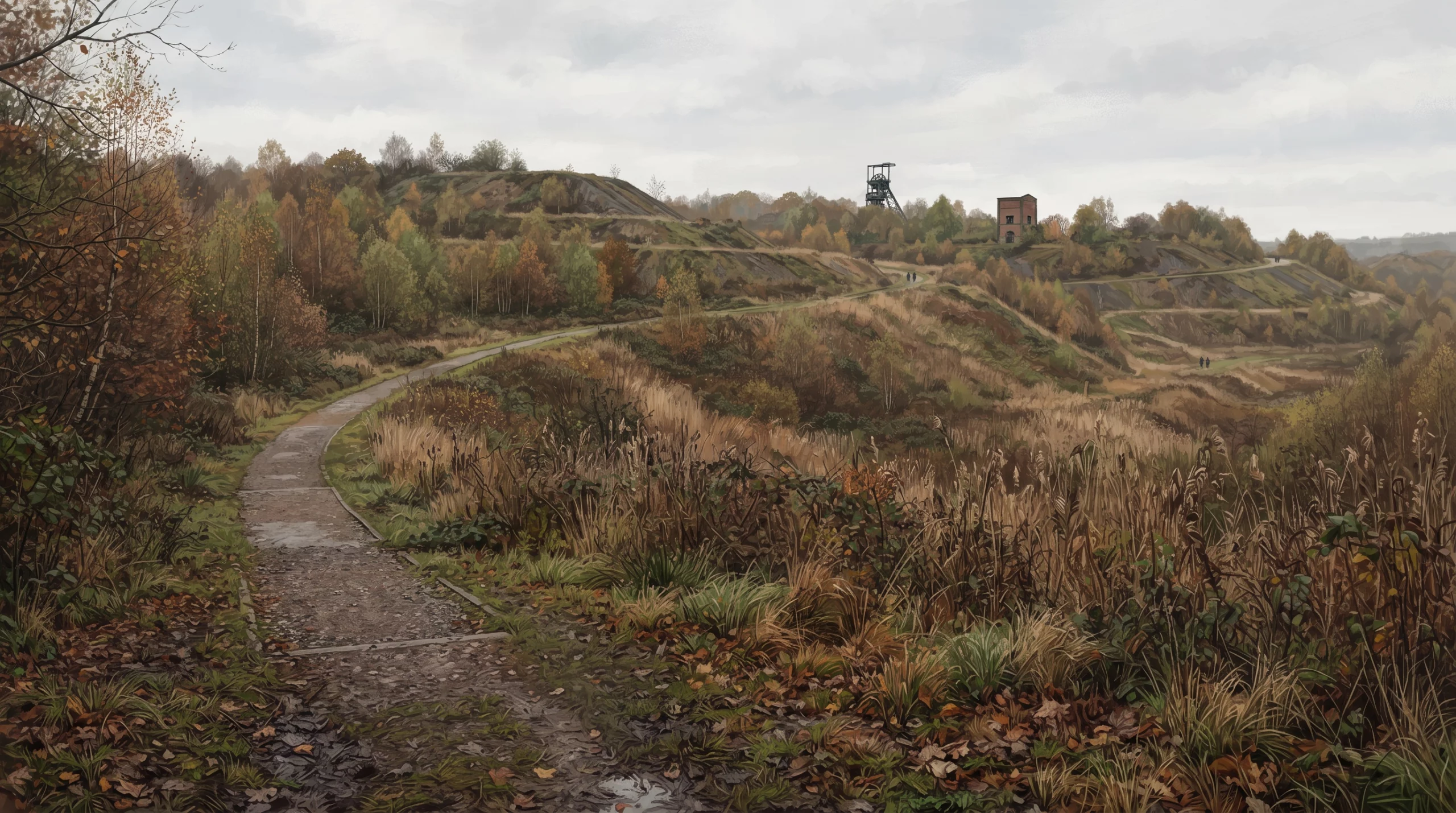
  • Esneux or Tilff: choose an Ourthe walk and a clear starting base

    Esneux or Tilff: choose an Ourthe walk and a clear starting base

    Esneux or Tilff: choose your day beside the Ourthe

    The Ourthe connects landscapes within the municipality of Esneux, but it does not turn every walk into one continuous itinerary. For a first outing, the best choice may be one base: Esneux or Tilff. You can then discover a centre, a relationship with the river and a few nearby references, instead of spending the day joining two lists of places. Heights, hamlets and woodland offer other experiences requiring different preparation. This guide distinguishes those wishes through specific local references. It promises neither permanent access to every bank, continuity of a path, nor availability of an activity on its publication date. A clear choice can make a partial visit more satisfying than an uncertain attempt to combine everything.

    Begin with a question about gradients

    Would you mainly like to remain in the valley bottom, or do you want a route climbing towards the surrounding landscapes? That question is more useful than the phrase “a little walk.” A modest distance may contain steps, an ascent or surfaces requiring attention. The municipality's walking page presents routes at different levels. Read a full description: starting point, route, profile and conditions. An attractive panorama alone says nothing about the effort needed to reach it. If abilities vary within the party, first select something everyone can appreciate. Keep an extension as a distinct possibility rather than an obligation announced at the last moment. Preparing that choice prevents a seemingly small addition becoming an uncomfortable commitment.

    Choose an arrival that matches the base

    When preparing transport, check exactly where you will arrive, then the pedestrian connection to the selected sector. A municipality name on a ticket or map is not enough to establish where the walk begins. For public transport, consult the useful outward and return journeys with the operator, including changes. If driving, find permitted parking rather than using a riverbank approach as an improvised space. Save a short return option too. Selecting one base preserves the same logic throughout the day: you know where you start, what you add and when you decide to return. The convenient arrival point and your preferred first viewpoint may differ, so prepare the connection instead of assuming it will be obvious.

    Read the river before following a bank

    From a suitable public position, take time to locate both sides of the Ourthe and visible crossings. Identify your own side on the map. A bend may make two points seem close while the public journey between them is more complicated. Do not draw a walking loop simply because the water suggests one in the landscape. A bridge in view is not necessarily the next crossing on your route, and a path section shown in a photograph proves no continuity. For a short visit, an out-and-back on a checked section may be more agreeable than a circuit assembled at random. The river remains the subject of the visit, rather than an instruction for navigation.

    In Esneux, use the bridge to understand the setting

    Municipal information locates walking departures and information boards near Esneux bridge. Use this area to establish orientation without stopping in a passage. Notice relationships between centre, approaches and slopes. A view from the valley reveals how settlement sits within the relief before you decide to climb. If you simply want the river and a break in the centre, that observation already gives the day substance. It need not be presented as the incomplete beginning of a hike. Check current information before relying on a particular reception point or equipment mentioned in an older brochure. You can use a landmark for orientation while separately confirming whether any service associated with it is available.

    Vieux-Thier shows that the town has levels

    The municipality's “Art et nature” description mentions Vieux-Thier and its staircase in an ascent towards higher ground. The name is a useful reminder: discovering Esneux is not always a horizontal walk. To follow that suggestion, inspect the complete route rather than a single apparently nearby stage. If steps are unsuitable for your party, choose another programme instead of seeking an unchecked diversion to preserve the same objective. The outing's quality also depends on such adaptation. You can observe the relationship between centre and heights without reproducing every connection suggested in a walking document. A route that works comfortably is more useful than a list of landmarks retained while the connections between them remain uncertain.

    Château Le Fy: a silhouette, not an admission ticket

    Municipal documentation presents Le Fy as a strong element in Esneux's landscape. Its silhouette can provide an interesting subject from a public position where it is visible. Notice how a building attracts attention when standing out against a slope, and distinguish that reading from visiting property. The tourism description identifies a private estate that cannot be visited. Do not therefore infer from a picture, park name or isolated timetable that the castle interior is open to the public. Seek the corresponding information for any particular access. Observation at a distance remains a complete experience, preserving the difference between a landscape reference and a tourism service. Enjoying the view does not create a requirement to approach the building.

    AI-generated illustration inspired by the Ourthe valley; not a documentary photograph.

    Parc du Mary is not simply a small square to add

    Parc du Mary appears in municipal resources covering walks and Esneux's larger woodland setting. Before adding it, choose an entrance and route suitable for your time and equipment. The word park can suggest a few paths immediately beside a café; it cannot describe every possible variant. Consult the selected route document, then check conditions on arrival. An older map may explain sectors without replacing present information. If you prefer a day around centre and riverbank, keep woodland for another outing. You then have a precise reason to return, rather than an extension walked without genuinely choosing it. The place's name can start preparation, but should not be treated as proof of a particular scale or level of effort.

    Read the entire Boucle de l'Ourthe route

    VisitOVA's “Esneux P05 | Boucle de l'Ourthe” publishes a route and profile, listing 6.61 kilometres and 126 metres of ascent. These references explain why a title alone is insufficient. The word loop does not mean a short turn beside a bridge. Study the starting point and route elements, then consider your pace, breaks and conditions. A duration estimate in a description is not a commitment for your party. Likewise, a general symbol cannot explain every constraint for a wheelchair user or pushchair. Ask for necessary details about passages relevant to you. The useful decision comes from combining the description with actual needs, rather than choosing the most reassuring label while ignoring the terrain it accompanies.

    Ham: look at an inhabited hamlet

    The municipal page for Ham presents an architectural ensemble protected in 1991. This invites looking at relationships between buildings instead of isolating a house as an available attraction. If your route leads there, remain in public spaces and respect private approaches. A village is not a silent set reserved for walking; residents may enter, work or circulate while you pass. Observe sequences of volumes, visible materials and adaptation to the slope without photographing an occupied window. To understand a building's history, use a description or ask an appropriate person instead of inventing a function from appearance. The ensemble can be appreciated without turning private lives into material for a visitor's account or assuming every entrance belongs to the route.

    #Esneux #Tilff #Ourthe #ProvinceDeLiege #MrSchaka

    Beaumont and the memory of landscapes

    The municipal “Art et nature” walk connects the Ourthe bend, Beaumont plateau and Ham. It proposes a reading in which landscape and memories of artists meet. To appreciate it, distinguish what the document recounts from what you observe today. A commemorative monument may prompt research into how a landscape was defended or described; it does not mean every literary scene mentioned happened exactly in front of you. Do not manufacture a quotation or encounter to enliven the account. A place can support personal reflection without receiving a history absent from the sources. If a reference interests you, retain its name for later reading, allowing the walk and documentary investigation to complement rather than impersonate one another.

    Roche-aux-Faucons is not a casual extra

    Municipal pages place some Roche-aux-Faucons circuits among difficult routes. That should change preparation: wanting a panorama is not the same project as a riverbank stroll. If selecting the option, choose the exact description and examine the complete route, conditions and return. Do not follow an improvised ascent because a cliff appears in a picture or a familiar name seems essential. You can also understand the relief from another public position included in your itinerary. Declining an unsuitable extension removes nothing from discovering Esneux; it allows enjoyment of what is actually manageable. A well-known viewpoint is a reason to prepare a suitable visit, not a reason to ignore differences between today's plan and a more demanding outing.

    Tilff as another starting point

    If organising the outing around Tilff, prepare it as a base in its own right. The municipality's current walking page identifies the communal tourism office there, on Esplanade de l'Abeille. Check contact and reception information before travelling to collect a map. Details may differ between a recent page and an old leaflet. Then select the walk matching your wish rather than assuming every municipal suggestion begins in the same place. Tilff can be appreciated without walking to Esneux that day. This choice simplifies decisions and leaves time for a break, observation or an actually confirmed activity. The two names can belong to one municipal landscape without becoming two compulsory stops in every visitor's programme.

    Île du Moulin and Deux Rives: select the right document

    VisitOVA presents a small Île du Moulin loop and a Deux Rives promenade around Tilff among modular suggestions. Their names help locate appropriate documents, but should not be mixed into a new route without checking. Compare outlines and starting points, then choose a version. If accessibility is decisive, inspect specific passages and ask about present conditions: a general category cannot replace that information. The point of a modular suggestion is precisely to allow selection. There is no requirement to combine variants to feel you have discovered the river, and the return should be understood as clearly as departure. Keeping one coherent description is often more practical than assembling attractive fragments whose connections have not been established.

    AI-generated illustration inspired by the Ourthe valley; not a documentary photograph.

    A riverside walk is also a route for movement

    On a shared path, notice uses before stopping. Walkers, cyclists and people simply reaching another point may move at different paces. Keep the party together without occupying the full width, then choose a clear side for photographs or discussion. If a child observes water, stay close and retain a suitable distance from the edge. The intention is not to make the path a place of anxiety, but to preserve attention that makes the outing comfortable. A good composition can be found from a stable position. It justifies neither stepping backwards without looking nor abruptly crossing someone's trajectory to capture a reflection. Looking at the river and remaining aware of the path are compatible parts of the same visit.

    Water deserves current information

    An inhabited valley is more than an image of a quiet river. Before departure, consult useful weather information and official instructions, then respect restrictions and signs encountered. This text describes no water level for your visiting day and announces no closure. It simply recalls that a bank accessible in an old image guarantees nothing about current conditions. Do not bypass a barrier to preserve a prepared itinerary. A town-centre activity, a genuinely available indoor break or an early return can replace a bank section. The programme must follow the place's situation, rather than imposing on the river a role imagined in a photograph. Preparation is useful partly because it supplies alternatives when the preferred section is not appropriate.

    For woodland, check dates and notices

    The municipality asks walkers to consult information about organised hunts before woodland outings and explains the role of regulatory notices on affected paths. If your project includes woodland, prepare that check as you prepare transport. An app or downloaded route cannot replace instructions at a path entrance. Nor should you assume private access becomes usable because it bypasses a closed passage. If conditions do not suit, choose another outing. A day based in Esneux or Tilff remains interesting without woodland, and a clear choice is better than multiplying improvised variants around obstacles. Checking conditions does not require treating every landscape as unavailable; it means connecting a particular plan with information relevant to its actual location and date.

    Use the break to decide what follows

    Choose a pause according to the party's needs: sitting, eating, drinking or having somewhere to discuss the return. Check places actually open, prices and reception possibilities. No business or terrace is guaranteed here. Use the interval to decide whether to retain the programme, shorten it or take a prepared extension that remains suitable. The decision is easier when nobody must make it standing in the middle of a passage. A day beside the Ourthe can have a meal and a short, well-selected walk as its highlights. Its value needs no justification through a high distance or the number of places added afterwards. A calm pause can clarify which part of the initial plan still matters to everyone.

    Two understandable programmes without a promised connection

    One formula selects Esneux as base: orientation near the bridge, observation of centre and river, then a break and return by a checked connection. Another selects Tilff and an identified circuit chosen after reading its description. The heights form a third project, prepared separately if you genuinely want more walking. These suggestions guarantee neither duration nor a continuous route between the centres. This article's images are AI-generated illustrations evoking the Ourthe and an outing, not documents of a particular path's condition. If sharing your own photographs, use accurate captions and respect recognisable people and private places. The images support the theme without establishing that the exact surface or viewpoint shown will be available to the reader.

    Leave with a clearer geography

    At day's end, ask what became clearer: differences between valley bottom and heights, a hamlet's position, the organisation of a bank or the choice between two bases. These are more precise memories than claiming to have “done the Ourthe.” Keep the name of the route used and remaining questions, then check the return. Esneux and Tilff do not demand combination at any cost. A partial visit, prepared with a starting point and room for decisions, can provide more pleasure and understanding. It also leaves another visit available for different relief, another neighbourhood or a walk now selected with better information. Clarity about one part of the valley is a useful outcome, without needing to claim a complete account of the whole.

    Sources for preparing and checking the outing

    Book cover

    The book

    The Empty Wall is the second book of Oscar’s Notebook, a series of crime novels set in Liège.