A secret marriage, a much-coveted young woman, a burned-down mill… and forty years of vendetta. Between 1298 and 1335, the Hesbaye region around Liège tore itself apart in a private war between two great lineages: the Awans and the Waroux. A true story that wiped out a good part of the nobility of the Liège region, and to which Waroux Castle, in Alleur, still bears witness.
Hesbaye at the end of the 13th century
We are in the Prince-Bishopric of Liège, ruled by a prince-bishop. On the fertile Hesbaye plateau, northwest of the city, live many families of knights, bound to one another by blood, marriage and friendship. These are known as lineages. Awans and Waroux are two neighboring villages, today in the municipalities of Awans and Ans, just a few kilometers apart.
At the time, private vengeance between nobles is not a crime like any other. Custom, traced back to a so-called “law of Charlemagne,” grants them wide impunity, and a simple oath of innocence can be enough to clear one’s name. The stage is set for escalation.
It all starts with a secret marriage
At the root of the war is a young woman: Adèle Poret, an orphan from the village of Awans. According to a chronicler of the time, she is of servile status, but rich in property and inheritances. Quite a catch.
Humbert Corbeau, Lord of Awans, has promised her to one of his friends. But Adèle secretly marries another man: Hanneceau de Waroux. Furious, Humbert Corbeau claims her by virtue of his feudal rights from the head of the Waroux lineage, William the Younger. The answer comes back: Adèle is free, and she may marry whomever she pleases.
Mills in flames, Hesbaye put to fire and sword
The Awans then try to abduct the young woman. Hanneceau and Adèle take refuge behind the walls of Waroux Castle. Unable to reach them, the Awans turn on the estate: they set fire to the mills and breweries of Waroux and lay waste to its lands. The Waroux windmill, mentioned in 1323, would also be destroyed during the conflict.
Every blow calls for retaliation. Allied families join the fray, and ambushes and battles follow one after another. Among the victims, Raes de Warfusée, of the Waroux line, is killed in 1327. The war lasts thirty-seven years and wipes out a large part of the Hesbaye nobility.
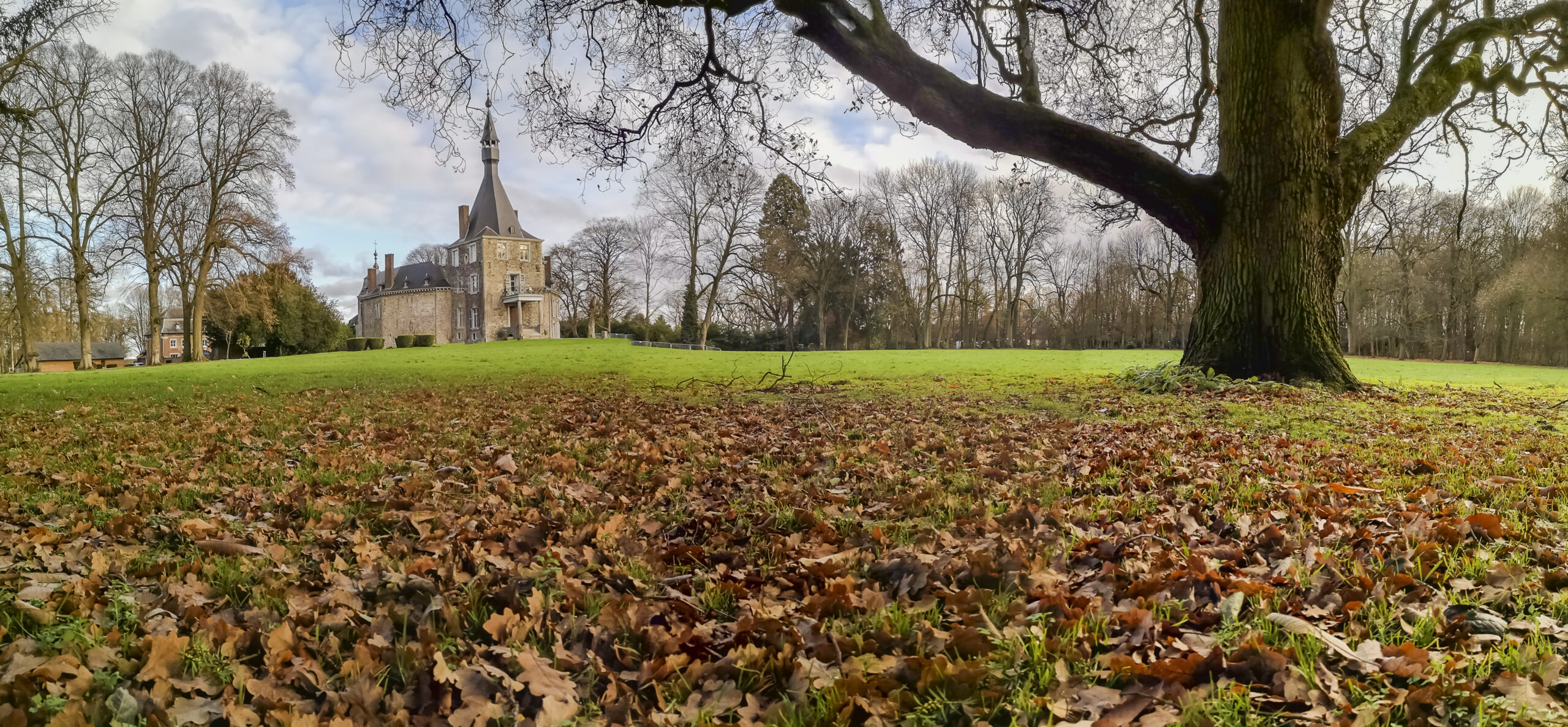
The castle in the storm: it was probably around 1300, in the thick of the war, that Waroux Castle received its circular curtain wall of flint and sandstone, tall and pierced only by arrow slits. A fortress designed to withstand a siege.
1335: peace at last
It was not until 1335 that the weapons fell silent. Exhausted, robbed of many heads of family, the lineages finally made peace. The war left a deep mark on Liège’s memory: at the end of the 14th century, the chronicler Jacques de Hemricourt wrote an account of it, and it is largely thanks to him that we know this story today.
What remains of the war today?
- Waroux Castle, in Alleur, with its square keep and its round curtain wall of medieval origin.
- The memory of the war in place names and in the local history of Ans and Awans.
- A story that still fascinates historians and lovers of medieval tales.
For the rest of the castle’s story, from the Counts of Merode to the municipality of Ans, read Waroux Castle: seven centuries of history. And to get there, see our guide Visiting Waroux Castle.
A story worthy of a crime novel
A neighborly rivalry that gets out of hand, a woman everyone wants, fires, a chain of revenge: the War of the Awans and the Waroux has all the ingredients of a noir novel. Seven centuries later, it is in these same Hesbaye landscapes, between Ans, Alleur and Fort Loncin, that the investigation of The Empty Wall unfolds, the second volume of Oscar’s Notebook.
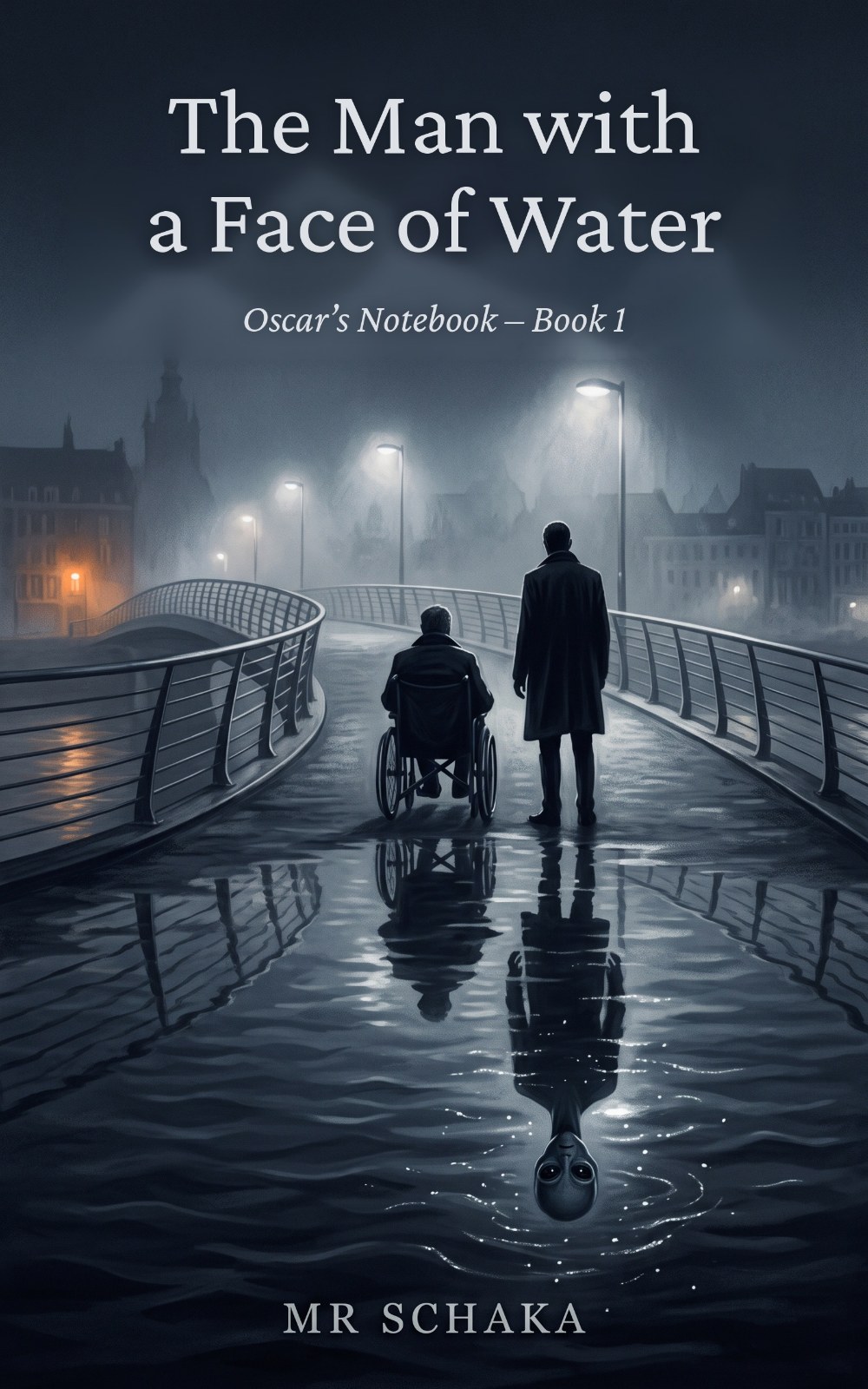
Oscar’s Notebook
In Oscar’s Notebook, Victor Lenoir, a former Liège police inspector, and Oscar Blanc, an extraterrestrial who has learned to live among us, solve the cases the Liège police can’t make sense of. The series is published in English.