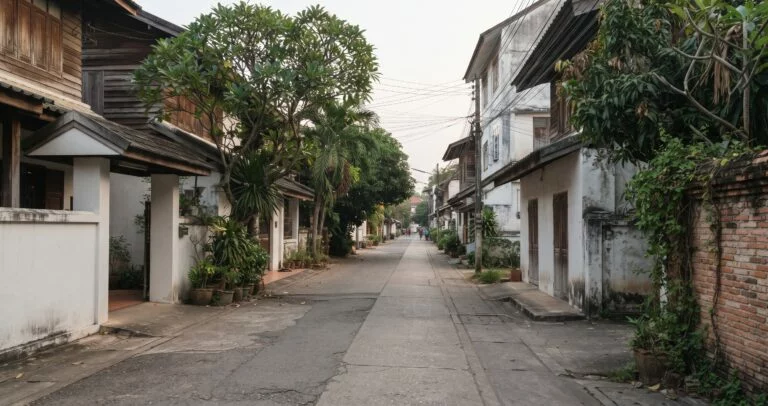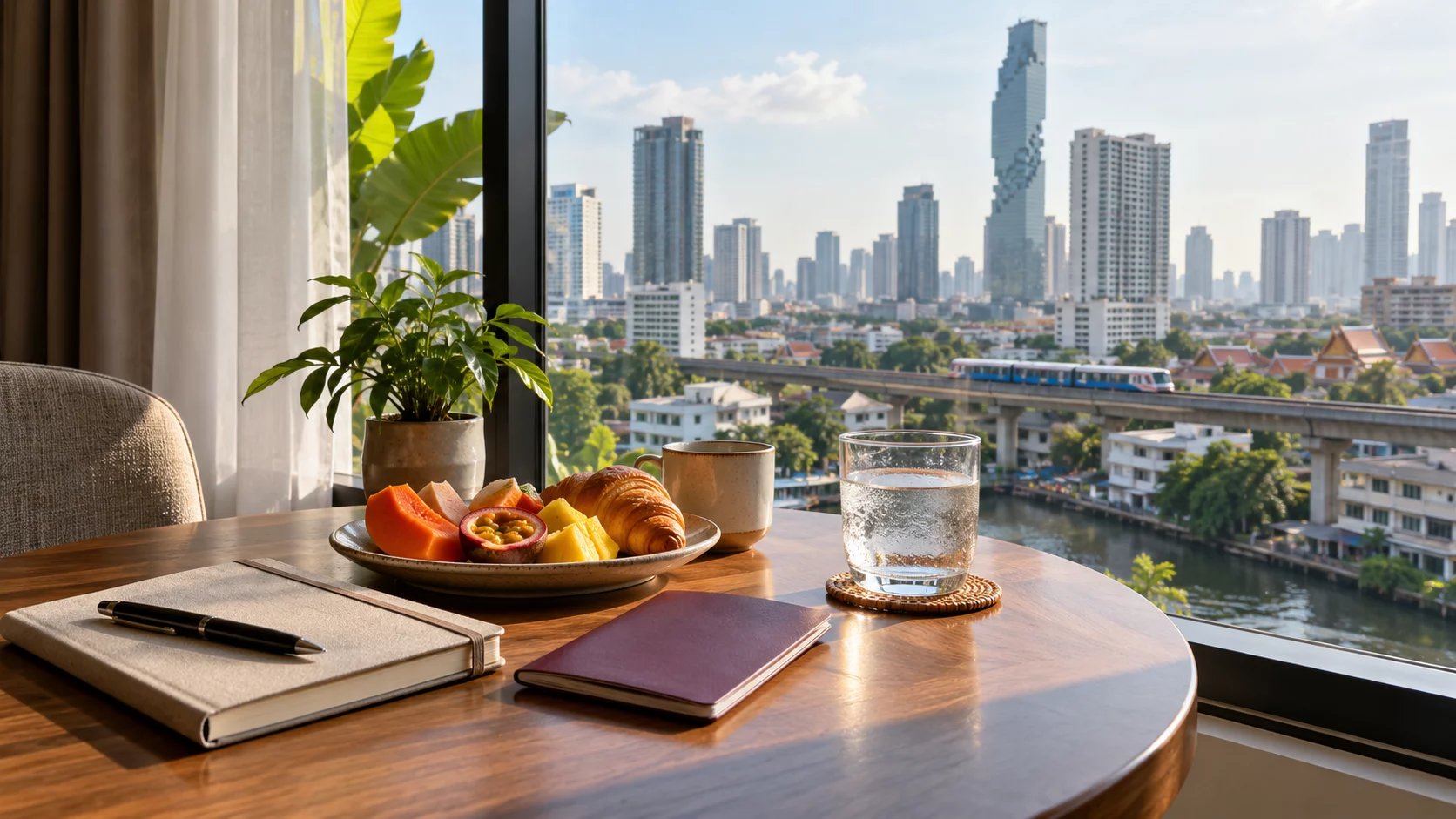
It is easy to imagine a first morning in Bangkok as the start of a long checklist: a temple, a market, a river journey, a neighbourhood to cross and a terrace to discover. After a journey, however, exploration often begins with smaller decisions. You need to understand where you are, know how to return, recognise how much energy you have and choose an outing that fits. This guide offers a flexible way to enter the city without treating the first few hours as a test of sightseeing performance.
The suggestions are an editorial planning exercise, rather than an account of the author’s personal experience. They do not promise particular weather or guaranteed journey times. Adapt them to your accommodation, your companions and conditions on the day. On Saturday 31 October 2026, as on any other morning, a good start is one that leaves you free to change your mind. One satisfying stop can be enough to give your stay a direction.
Start with whatever makes an outing possible
Before looking for an attraction, consider what you actually need. Have you been able to leave your luggage somewhere? Is your room available? Are you hungry, or do you mainly need to sit down? These questions can prevent a programme from depending on energy or facilities you do not yet have. If the room is not ready, ask the accommodation what it can offer: luggage storage, somewhere to wait or possible access to certain facilities. Do not assume that any particular service is included.
Pack a small day bag instead of carrying everything. Take what you need for this first outing, keep payment options sensibly separated and protect sensitive documents. A bag that closes securely and is comfortable to carry makes stopping and walking easier. You do not need equipment for every imaginable event. You need to be able to move, pause and return without reorganising your belongings in the middle of a pavement. Decide where important items belong so that checking for them does not require emptying the whole bag.
Save an address that remains understandable
Record the exact name of your accommodation, its address and a nearby visual landmark. Ask for a Thai version of the address if one is available. A screenshot of its position on a map and a photograph of the entrance can help. Keep a copy that you can open without a connection. A commercial name by itself may not be enough: similar names can belong to different properties, and one building may have several entrances that lead to different places.
Check which entrance you will use when you return. An open reception area, a side door and an internal passage are not necessarily interchangeable. If you expect to come back late, ask about access now. For this first morning, concentrate on a landmark you can recognise: a frontage, a sign, a junction or a station entrance. Avoid leaving personal documents visible on an unlocked screen. A useful return note is short, readable and precise enough to make sense when you are tired or distracted.
Choose one intention
An intention is often more useful than a list of places. You might choose to have a relaxed breakfast, locate a convenient station entrance or walk around the surrounding streets. Each is already a way of discovering the city. What becomes tiring is often the stream of decisions: where to go, how to pay, which platform to use and where to eat afterwards. One intention reduces that background noise and leaves more attention for what is around you.
Put it into a concrete sentence: “We will find somewhere to eat, then return to the hotel.” Another possibility is: “We will walk to the station entrance and decide there whether to take a train.” The second half matters as much as the first. It creates a decision point instead of an automatic chain of activities. If someone prefers to stay nearby, their preference can become an ordinary variation of the plan. Nobody needs to feel that a smaller outing has spoiled the morning or wasted an opportunity.
Draw a small loop
A short loop helps you understand the immediate surroundings without collecting unnecessary detours. Identify a starting point, one stop and a return, then look at the actual passages between them. A short distance on a map can include a major road crossing, a footbridge, a closed access or an awkward pavement. A route suggested by an application remains a useful aid; what you can see on the ground should guide the final decision about whether to continue.
Leave time to study a junction before crossing and use suitable crossing points. Do not extend the loop only because another interesting point looks close on a screen. Every addition on foot also affects the journey back. If you notice an appealing café or a street you would like to explore, save it for another outing. Building a small reserve of ideas can be more useful than trying to use every discovery immediately. Your first walk can prepare the second, and the second can benefit from having a much clearer purpose.
Let breakfast become an anchor
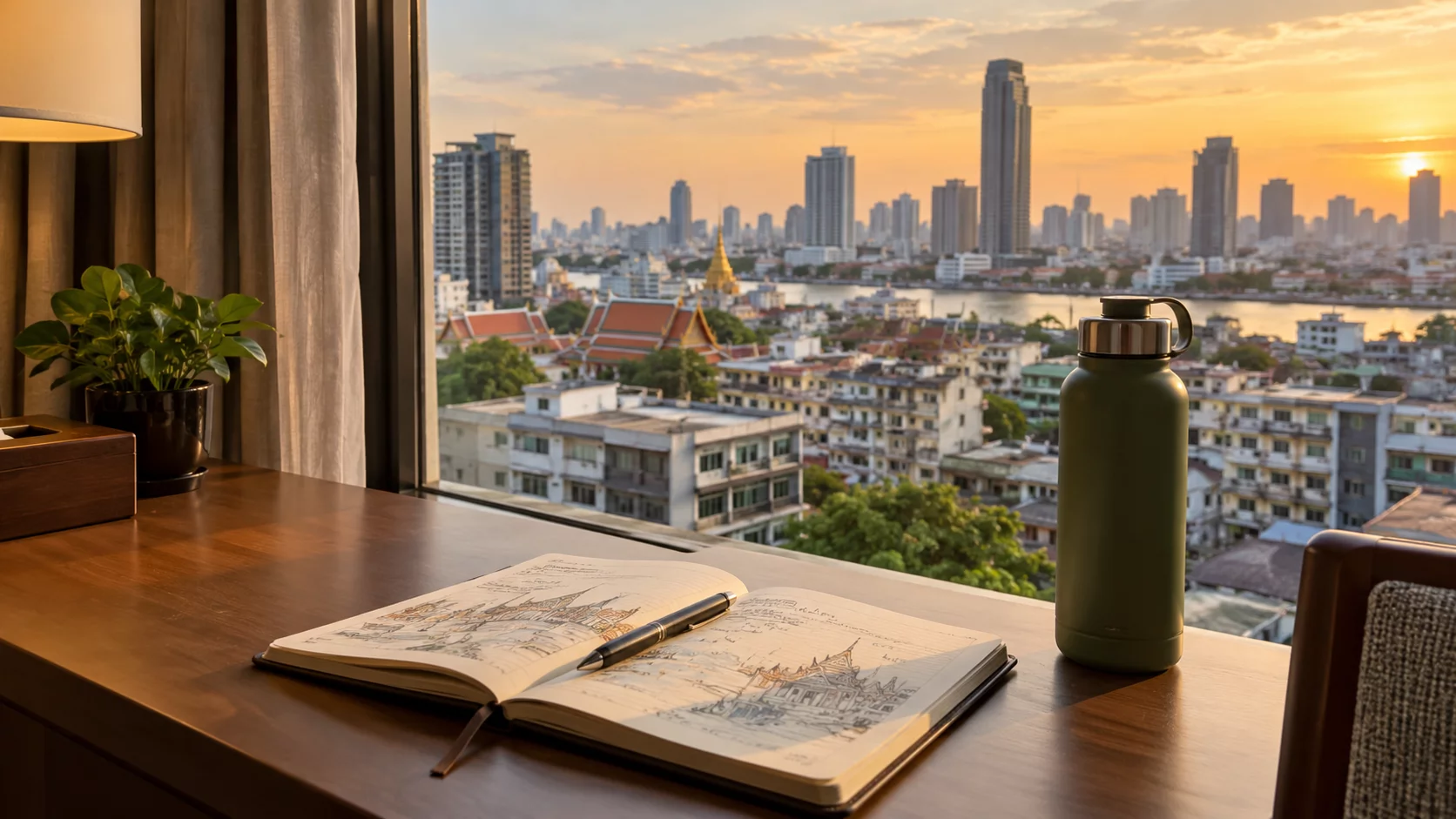
For the first meal, choose somewhere where you understand what you are ordering and the price being quoted. Look at a menu or ask before sitting down if information is missing. You do not need the most famous address, nor do you need to demonstrate adventurous eating as soon as you arrive. A simple meal and a seated pause can make everything afterwards more enjoyable. The preferences of the people actually sharing the table matter more than an idealised picture of what a traveller should do.
If you have particular dietary needs, prepare a clear explanation and check that it has been understood. A translation on a phone may help communication, but it cannot guarantee how food has been prepared. If you cannot obtain a sufficiently clear answer, choose another option. In a group, agree whether you are sharing dishes or ordering and paying individually. Small decisions made before the bill arrives avoid confusion. They also allow everyone to relax during the meal instead of trying to infer what somebody else expected.
Approach transport without mastering everything
You do not need to understand every Bangkok transport system before your first outing. Start with one useful connection between your accommodation and a chosen stop. Identify the departure name, the arrival name and any necessary interchange. The official BTS and BEM websites provide network information and planning tools. Consult current information rather than relying on an old screenshot attached to somebody’s travel story. A familiar-looking diagram is not proof that its practical details still apply to your trip.
If a journey feels too complicated that morning, keep it for another time. You can simply inspect a station entrance and return. If using a booked car, check the pickup point and displayed destination before getting in. Whatever the mode, consider the return before departing. Success does not depend on using as many forms of transport as possible. It means understanding where you are heading, how to stop and what you will do if you choose to turn back before reaching the original destination.
Keep a shorter version and a sheltered version
A flexible plan includes a minimum outing that would still feel worthwhile. It might mean eating near the accommodation, making a few observations and returning. An extension remains possible if everyone wants one, but it is not a hidden obligation. Say that at the beginning. It then becomes easier to decide “that is enough for us” before tiredness becomes irritation or disagreement. A shorter version should feel like a complete choice, rather than an abandoned larger plan that everyone must apologise for.
Think of a covered place where you could wait if conditions change. It should be genuinely accessible and suitable for your circumstances, rather than merely visible on a map. If rain begins, reassess the route instead of only protecting the phone. Access points, crossings and surfaces may become less comfortable. Do not walk through a flooded area to preserve the original programme. Returning, waiting or choosing another activity are legitimate travel decisions. The point of preparing alternatives is to make those decisions easier when you need them.
Allow different people to have different rhythms
In a couple, family or group, the first hours can feel very different to each person. One wants to walk, another wants to sit and someone else wants to resolve practical matters. Briefly discuss those needs before choosing a route. Ask what matters now and what can wait until later. That turns a vague disagreement about the programme into a concrete choice. It is easier to find a useful compromise when people know which need the next step is intended to meet.
If you may separate, agree on a precise meeting place, a time and an alternative if somebody loses their connection. A district name or “near the entrance” may be too vague. For children, choose a stop with something clearly interesting to see and a straightforward return. For someone with limited mobility, check actual access before suggesting a loop. Short distance does not guarantee step-free access or easy movement. Ask about the particular entrance you intend to use, rather than assuming that a general description covers every approach.
Protect your attention as well as your belongings
A phone can become a permanent service desk at the start of a trip: maps, messages, photographs, translations, bookings and searches. Prepare useful information before going out, then try to consult the screen while standing still somewhere appropriate. You will notice crossings, pedestrians and changes of direction more clearly. Two people can share the task: one checks the map while the other watches the surroundings, then they exchange roles. Neither has to spend the entire outing navigating for everybody else.
The same approach helps with unsolicited offers. You do not have to accept something simply because it is presented confidently. Take time to understand the service, its cost and whether it actually suits you. If unsure, thank the person and continue. Avoid handing your phone or documents to an unfamiliar person to solve a difficulty that you can address at your own pace. A pause away from the flow of pedestrians is often more useful than a decision made under pressure. Giving yourself time is a practical resource.
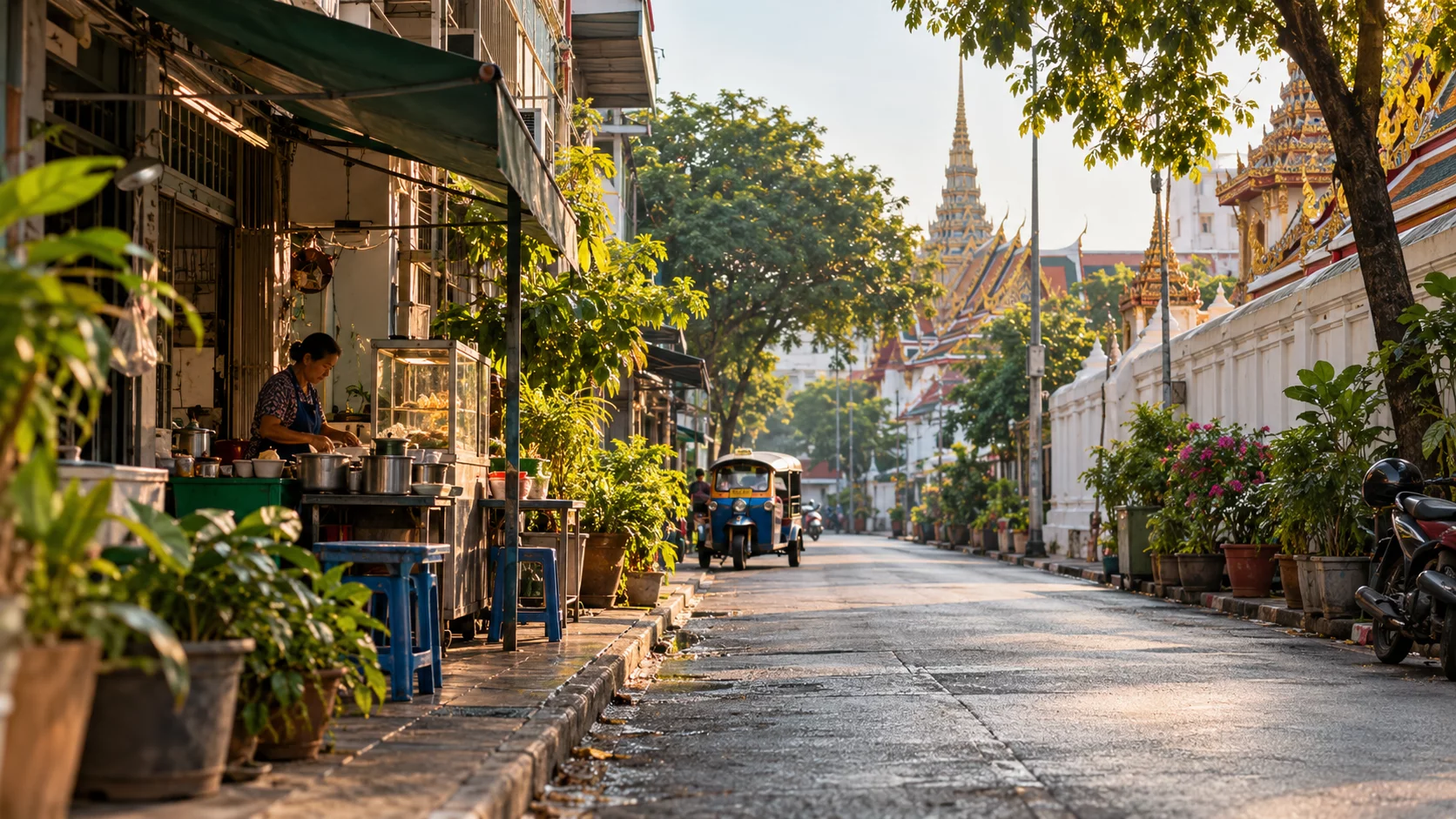
Observe a city where other people are living
A first walk can be rich without producing many photographs. Notice everyday actions: how people wait, pass one another, work, put things away or begin their day. These details give a place depth. Keep a distinction, however, between something visible from public space and something that belongs to a private life. An interesting scene does not automatically make it appropriate to approach, enter a space or ask somebody to interrupt their work and pose.
For a close, recognisable photograph of a person, ask permission. Respect a refusal without bargaining. In religious spaces or other places with particular rules, follow posted guidance and the staff’s instructions. You can record a colour, a smell or a question in a notebook instead of taking an image. That kind of attention can leave a more personal memory than a hurried series of frames. It also respects the people who are continuing an ordinary morning while you are discovering the setting around them.
Keep a budget that preserves choice
The first morning does not need to become an exercise in extreme saving. Set a simple allowance for the meal, transport and some return flexibility. When comparing two options, consider the total cost and the effort required. A cheaper option may be less appealing if it introduces several changes or a walk the group does not want. Equally, a short outing near your accommodation can be entirely satisfying without significant spending. Price is one part of a decision, alongside comfort, clarity and what people actually want to do.
Record spending after the pause instead of using the whole meal to enter figures. This gives you a first reference for later days: what suits you, what felt unnecessary and what you would like to make more room for. Avoid making a major purchase merely to fill the waiting time before your room is available. It can wait until you have compared options, understood the terms and regained some attention. A purchase that remains attractive later will be easier to assess calmly.
Return before all your reserves are gone
Do not begin the return only when nobody wants to take another step. Choose a point when there is still enough attention to find the way, identify the entrance and deal with a small surprise. At the accommodation, put the information you collected in order: saved address, enjoyable stop, understood route and a question for reception. These few practical items will save effort the next time you leave. The walk has then improved the rest of your stay, even if it covered very little distance.
Have a brief conversation about what worked, what was too complicated and what you want to save for tomorrow. You need not rewrite the entire holiday on the evidence of one morning. Treat it as a useful trial. You have begun recognising an environment and understanding your own pace. The next outing can be built on something concrete, with more freedom and fewer imagined obligations. A quiet return can be part of a successful start, leaving room for a different experience later in the day.
Three questions before going out again
Should you book a major visit for the first morning? Only if it fits your actual availability and terms you understand. An open space in the schedule can be more useful than a reservation that is difficult to change.
Must you use a train? No. The right journey depends on the chosen stop, the available access and your group. A neighbourhood walk remains a valid way of discovering Bangkok.
What if nothing goes to plan? Return to the original need: food, orientation, a seat or getting back to your accommodation. Meeting that need gives you a sufficient direction. The value of a stay cannot be judged by how many places you reach before midday.
Official reference points
For transport planning, consult BTS — routes and information and BEM — MRT network. These links are for checking current transport information; the suggestions about pace and organisation above are original editorial advice.
#Bangkok #Thailand #Travel #MrSchaka

To go further
Mr Schaka’s guidebook, Bangkok – The Practical Guide, covers the essentials: transport, neighbourhoods, addresses, food, etiquette and safety, updated for 2026–2027.