Eupen: what the facades reveal about a cloth-making town
A first encounter with Eupen can centre on three Upper Town references: the market square, Saint Nicholas Church and Gospert street. Together they offer a concrete approach to the history of cloth, architecture and the German-speaking Community of Belgium. This proposal favours a connected urban area over an accumulation of distant destinations. The Lower Town and its Vesdre-related landscapes can extend the day, but should not be added without considering gradients and the return. The aim is to recognise several layers of one town, rather than reduce Eupen to a language, an era or the flattering image of a few houses. Leaving something for another visit can make the first discovery more coherent.
Keep useful names on the map
Prepare your arrival by retaining German street and square names when they appear on the map: Marktplatz, Gospertstraße and Rathausplatz become references easily compared with local information. Translation can explain a word without erasing the address you must find. Identify your arrival point first, then the first space where you want to pause. For transport, check the outward and return journey with the operator. Do not invent a pedestrian connection from an impression of proximity. The best plan is not the most elegant-looking one, but the one everyone can actually follow in present conditions. Keeping the local spelling also makes it easier to show someone precisely what information you need.
Upper and Lower Town: a practical distinction
Oberstadt and Unterstadt mean Upper Town and Lower Town. Tourism documents relate these areas to Eupen's development, particularly its textile history. For visitors, the distinction first has a simple consequence: connecting two sectors is not the same as passing from one facade to its neighbour. Examine the route profile, chosen passages and way back before descending. A day concentrated on the Upper Town can be complete, allowing more attention to buildings and a confirmed visit. The second sector then becomes an explained option rather than an obligation that leaves a tired person following without a choice. Decide while there is still time to select comfortably, rather than treating the first change of level as a commitment to continue.
Read the market square as an ensemble
On Marktplatz, begin with relationships between open spaces and buildings. A church and houses have different effects when viewed individually and through their surroundings. Notice what organises your attention: a line of facades, a dominant height, a change of scale between a doorway and a square. You are not required to reconstruct the neighbourhood's entire history immediately. Observation supplies questions a local description can address. The square also retains present uses: choose a stopping position that does not obstruct movement, and regard neither terraces nor entrances as a stage emptied for your photograph. The composition becomes more interesting when you recognise that everyday use is part of it, rather than an unwanted interruption.
Saint Nicholas: one building, several periods
Ostbelgien's description dates the construction of the present Saint Nicholas Church to 1721–1729 and discusses elements from different periods. For an initial visit, that is more useful than a single stylistic label: a building is not always the result of one construction campaign. From an accessible exterior position, notice volumes and the way different parts meet. If the interior is open, follow current instructions and activities. Look for a distinction between architectural space and furnishings without claiming to recognise everything. A virtual visit or official documentation can extend the observation afterwards; it does not prove you saw those details on location. Keeping the two experiences separate makes both the visit and later reading easier to describe accurately.
Pews and the question of patrons
The same official presentation explains that some church pews bear names of donors and tenants. This detail opens a question about social history: furnishings can communicate more than a decorative preference. If you can observe them, notice how an inscription fits into the object and gives someone's memory a place. Do not infer an entire biography from a name. Information about a patron should come from an identified source, rather than an intuition about status or personality. Attention to visible contributions also prepares you to read town houses: architecture expresses a position, but does not independently reveal every human journey that made it possible. A useful question can emerge without being answered completely during the visit.
Gospert and houses connected with cloth
Tourism agency documents associate Eupen's patrician houses with the prosperity of the cloth trade. In Gospert street, use that context to examine facades rather than assign the same story automatically to every house. Compare the ordering of windows, an entrance's position and relationships between width and height. A building may have changed use and been altered. An impressive appearance does not establish exactly what was made, stored or negotiated on each floor. Record a few precise references, then consult descriptions of buildings that interest you. The street becomes a documented investigation of an economic landscape, rather than a sequence of guesses in which every detail turns into historical certainty. Its individual differences deserve as much attention as the broad context connecting them.
Visible wealth cannot summarise all the work
Large houses are easy to photograph; manufacturing gestures and working conditions are harder to see on a present-day walk. To avoid reducing textile history to prestigious facades, keep one question: which people and activities are absent from this view? You need not invent a workshop scene to answer. A museum, historical resource or guided visit can introduce occupations, exchanges and technical changes. In your notebook, distinguish the house observed from what you learned about a wider economy. The distinction does the place justice without suggesting that an attractive entrance explains an entire industry. You can also identify what remains unknown instead of replacing missing evidence with a scene that merely sounds plausible to a modern visitor.
Look at thresholds without looking into homes
Architectural curiosity must remain compatible with private uses. Observe a gateway, frame or courtyard only from places where you may stand. An opening is not an invitation to enter, and an interesting window does not authorise photographing life behind the glass. Record a rhythm of lines, a material transition or a contrast of light without moving closer. If taking pictures, inspect the frame's sides too: a recognisable person, plate or document may appear unintentionally. The most precise observation is not necessarily the most intrusive. Precision may lie in how you maintain a distance and state what that distance allows you to know. A respectful boundary can remain visible in the writing rather than be concealed by a claim to exhaustive access.
The former town hall prevents a useful confusion
Eupen Lives presents the building at Rathausplatz 14 as the former town hall, now used for Tourist Info and town promotion. This succession of functions offers a practical reference and a subject for observation. Do not confuse a building's historical name with its present administrative purpose. For a map, route details or visiting arrangements, look for recent reception information before travelling there. The exterior remains interesting when a service is closed. It also shows that preservation need not mean freezing a place: a building can accommodate other functions while keeping a name recalling one stage of municipal history. The name becomes a clue to investigate, rather than a complete description of what currently happens inside.
A German-speaking town in Belgium
Eupen is connected with the institutions of Belgium's German-speaking Community. This helps explain linguistic and institutional information encountered; it does not reveal each resident's personal identity. Avoid describing the day as though you had left Belgium for a neighbouring national setting. Language, political history, cultural practices and individual lives are not interchangeable. If an institutional term interests you, consult an official explanation instead of interpreting it from a sign. This precision enriches the discovery: Eupen's distinctiveness emerges through relationships and history, rather than traits supposedly shared by an entire population. A visitor can acknowledge the linguistic setting without turning every interaction into evidence for a general cultural character.
A few words to ease a meeting
A “Guten Tag” or “Danke” can accompany an interaction simply, without demonstrating expertise. For precise information, ask which language you can use and show the address or name sought. Nobody is obliged to become a language guide. A hesitant answer cannot reveal every language a person speaks or prefers. With heritage signs, keep a photograph when appropriate or note a term to check later. Separate proper names from words you translate: finding a building may require retaining its local name even when its translation is perfectly clear. Practical communication matters more than a flawless performance, and a polite question can leave the other person free to choose the easiest way of helping or to say they do not know.
The town museum: give the streets more depth
Eupen's town museum, identified at Gospertstraße 52–54 in tourism resources, offers a way to investigate local history further. Check its programme, conditions and opening before including a visit in the schedule. A museum address on a map is not a reservation. If choosing it, connect what you learn with a question raised outside: a facade, an occupation or a use of the town. The exchange between objects and streets often offers more meaning than a visit undertaken only to have completed the museum. If admission is not possible, retain the question and look for a publication or another identified resource. Preparation remains useful even when it leads to a different choice than initially expected.
IKOB and a town that continues beyond its past
The tourism agency presents IKOB as a contemporary art museum in Eupen. Keeping it as a possibility avoids limiting the town to old heritage. It does not mean every museum must be combined in one day. Consult the exhibition actually offered and its arrangements, then choose according to interest. A contemporary work may pose a different question from a historic house; the difference is a reason for attention, not a contradiction needing resolution. Do not promise companions a work seen in an old publication, because exhibitions and displays change. Decide on a checked offer rather than an image that has become familiar through searching. A cultural visit should reflect what is currently proposed, not what a previous photograph seems to guarantee.
Moorenhöhe: prepare the option
Ostbelgien's panoramic presentation identifies Moorenhöhe as a way to read the Lower Town and its industrial past. The viewpoint is an interesting option after checking a suitable route. Do not make it obligatory merely because it offers an overview. Examine access, gradients, conditions and return. From a permitted position, distinguish large complexes, circulation lines and the place of watercourses without spontaneously assigning a name or function to every roof. The orientation panel exists to connect the view with documented information. If the extension does not fit your day, the resource can already explain the contrast between sectors. An overview is useful when it clarifies geography; it need not become another destination to reach regardless of the effort involved.
The Lower Town and the rivers' history
Tourism resources connect the Lower Town's industrial development with the Vesdre and Helle. This relationship between activity and water opens a different chapter from the large residences. If exploring the area, choose a suitable current route and distinguish public space, workplaces and private property. An old industrial building may have several lives; appearance alone cannot identify its present use. Likewise, proximity to water does not establish that a public path continues everywhere beside the bank. Use checked connections instead of constructing a continuous promenade from photographs taken in separate locations. The relationship can be understood through a few well-chosen views, while recognising that buildings and routes remain subject to uses and conditions beyond the visitor's programme.
Keep the dam and woodland as a separate choice
Eupen presentations also propose destinations associated with the Vesdre dam and surrounding natural landscapes. Appearing in one brochure does not make them interchangeable with a town-centre visit. An outing to these places needs its own journey, duration, conditions and return. After a morning with facades and a chosen museum, there is no requirement to add a nature excursion to make the day complete. Note what might interest you another time instead. The distinction particularly helps groups with different wishes: discuss a real choice, rather than presenting each new suggestion as a small extra without a cost in time or energy. An appealing photograph can begin planning a future outing without silently extending the one already under way.
A meal in a working town
Choose the break according to need: sitting, eating, drinking or talking quietly. Look at places actually open and ask useful questions before settling in. No particular cuisine or price is guaranteed here. A bilingual menu, decoration or name cannot independently represent Eupen's identity. The meal may be ordinary without losing its place in the day. Use it to decide what follows: remain in the Upper Town, take a confirmed visit or consider a connection to another sector. A decision made seated, before fatigue, is better than a discussion in the middle of a passage. It gives companions room to express what they would enjoy, rather than simply agreeing to the fastest person's next suggestion.
Two possible compositions for a visit
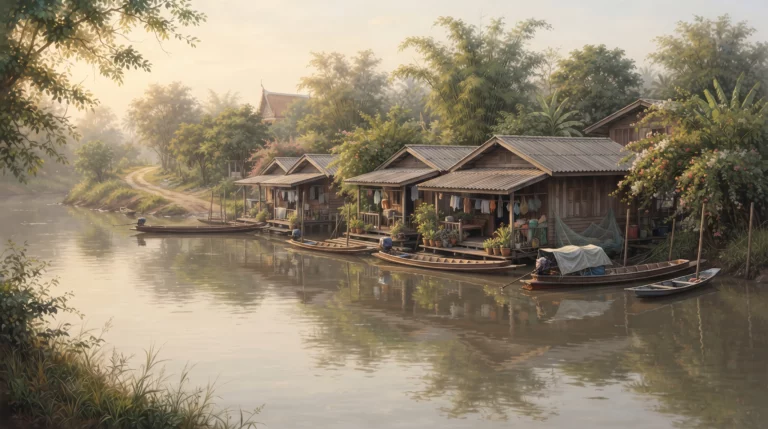
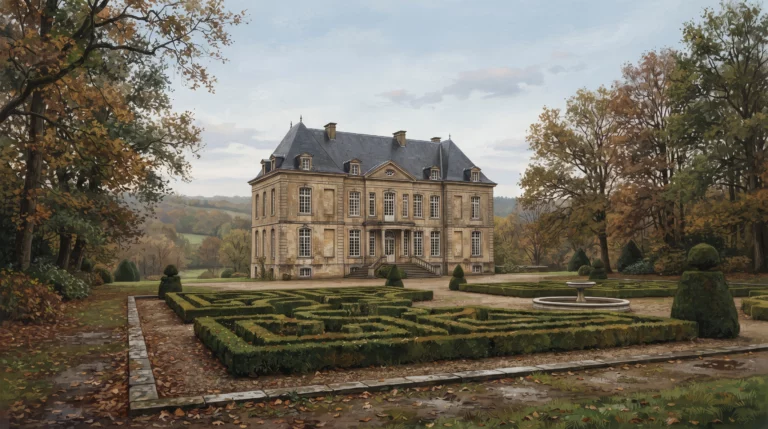
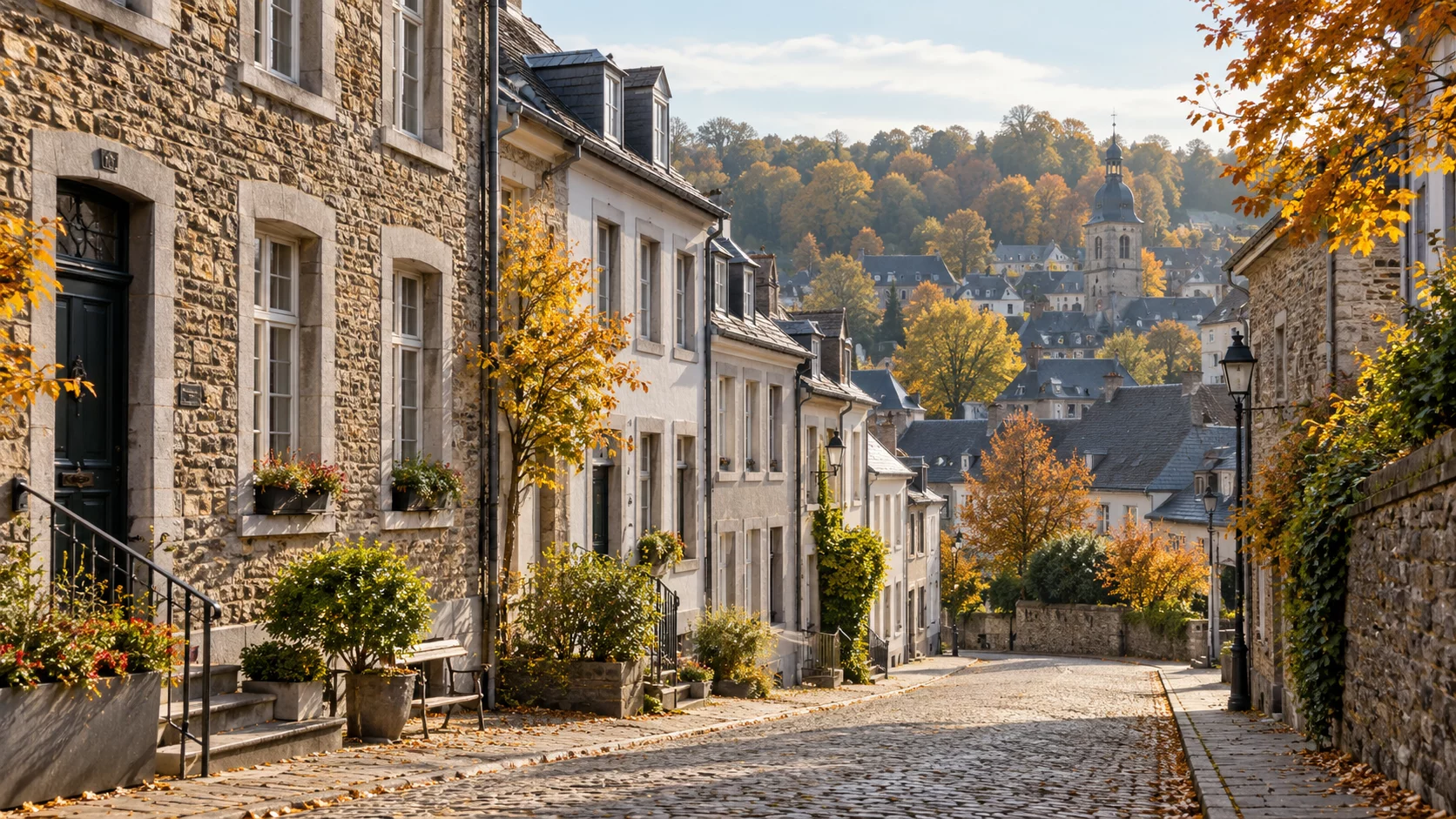
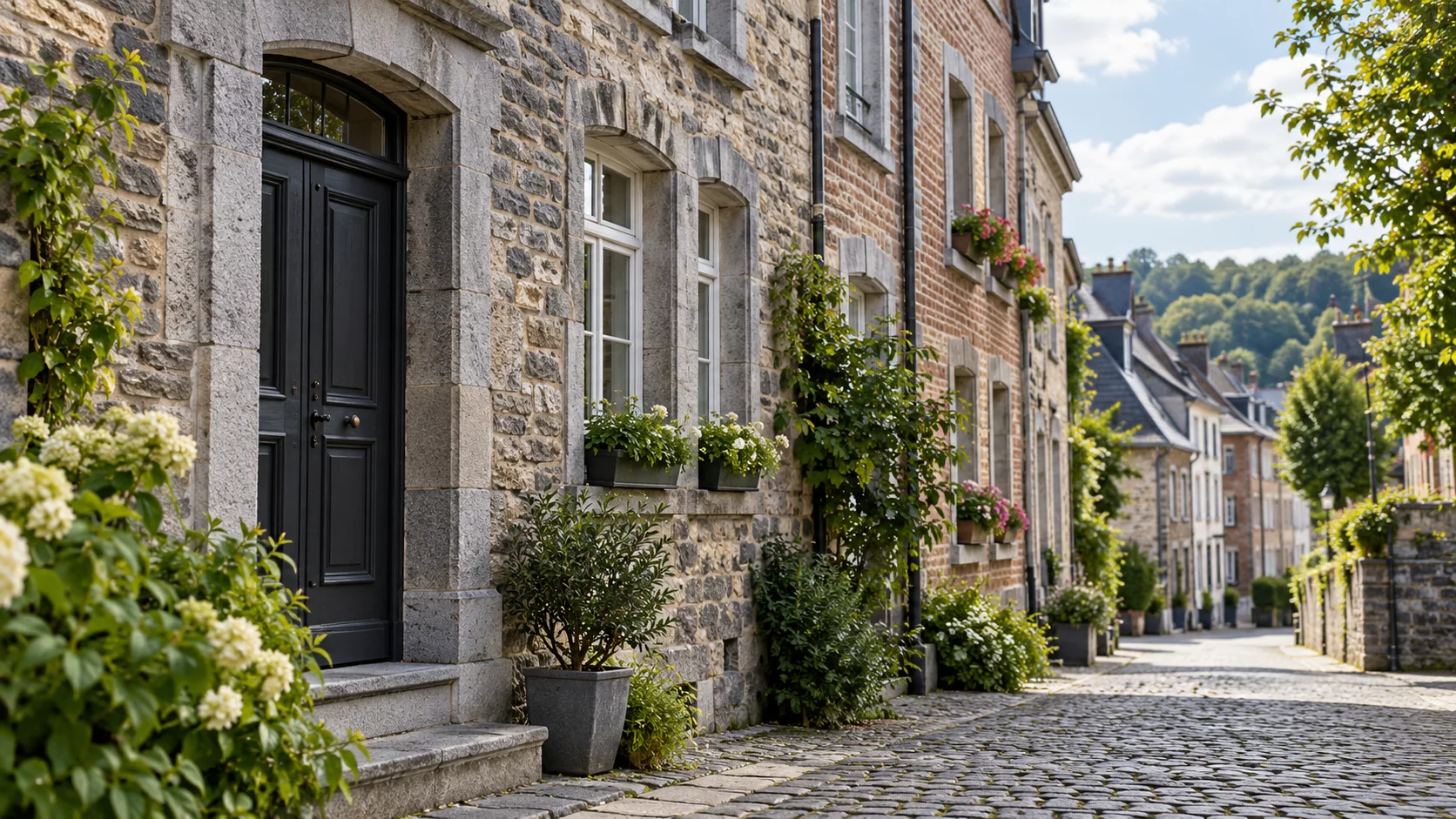
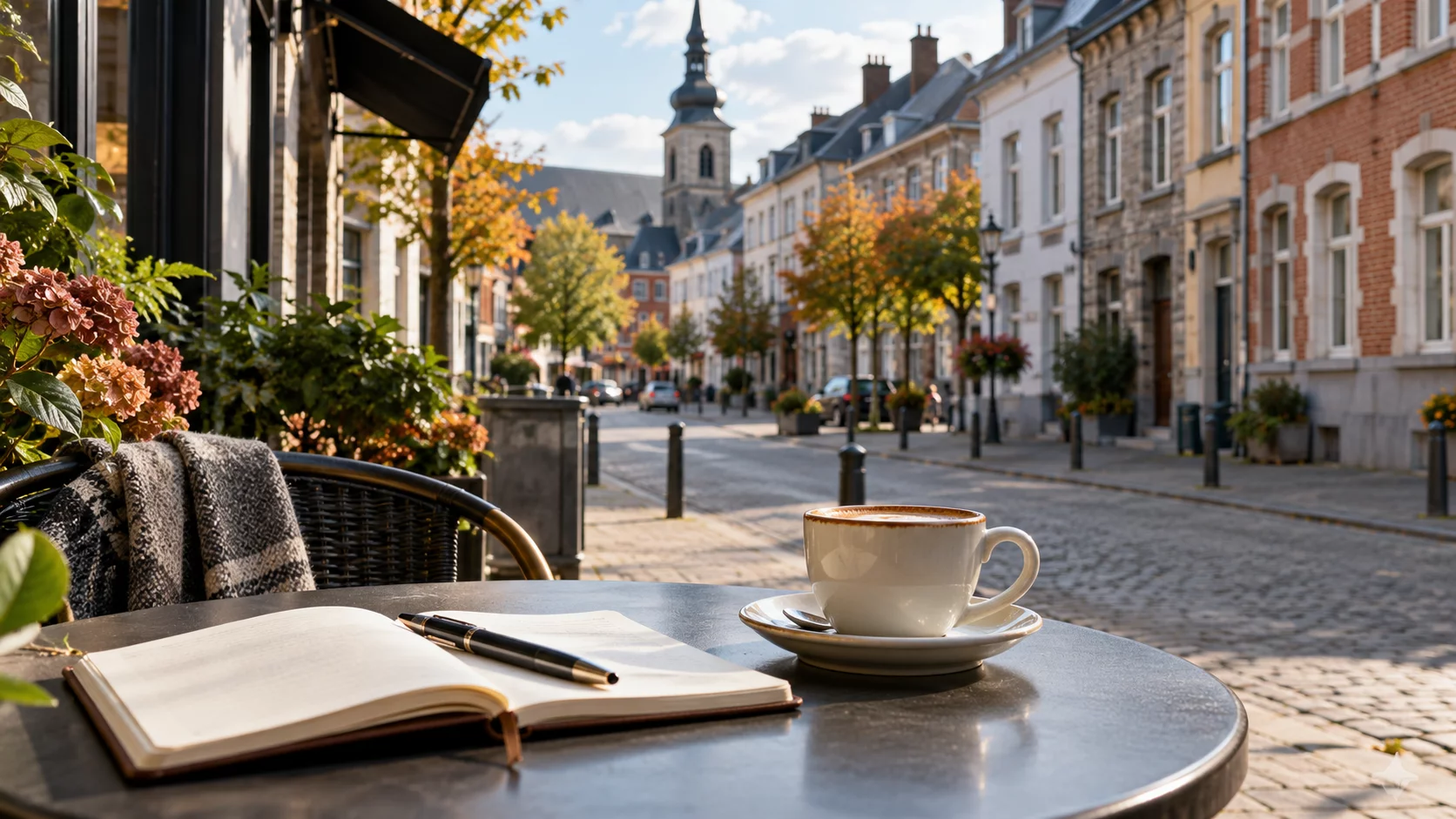
For a concentrated first route, retain Marktplatz and Saint Nicholas, then Gospert and a break, with perhaps one museum selected after checking. For a fuller discovery, add real connecting time to a viewpoint or the Lower Town, protecting the return. These suggestions are neither an official route nor a guaranteed duration. Check surfaces and passages for a pushchair, wheelchair or person who tires easily. This article's images are AI-generated illustrations evoking an urban atmosphere, not documentary evidence of particular visiting conditions. Your own shared photographs should retain accurate captions and respect recognisable people. A plan can be specific enough to help while still leaving responsibility for checking the actual route and current arrangements with the visit's preparation.
Leave with one precise question
Eupen can leave a more fruitful question than a broad conclusion: how did cloth commerce shape a space, how does a building change function, or how does a town connect heritage with current creation? Choose a question genuinely arising from the visit and retain useful names for later research. Check your return and leave with the planned margin. Discovery does not require explaining every resident or reducing complex history to a linguistic symbol. A few connected places, an exact observation and correctly attributed information can be enough. That precision leaves room for another visit with a better-defined interest, rather than a feeling that everything not completed today must immediately be added to the itinerary.
Sources for preparing and checking your visit
- Ostbelgien — Eupen
- Ostbelgien — Église Saint-Nicolas
- Eupen Lives — Ancien hôtel de ville
- Ville d’Eupen — Histoire municipale
- Ostbelgien — Eupen Moorenhöhe
- Ostbelgien — IKOB
- Ostbelgien — Carte touristique 2026
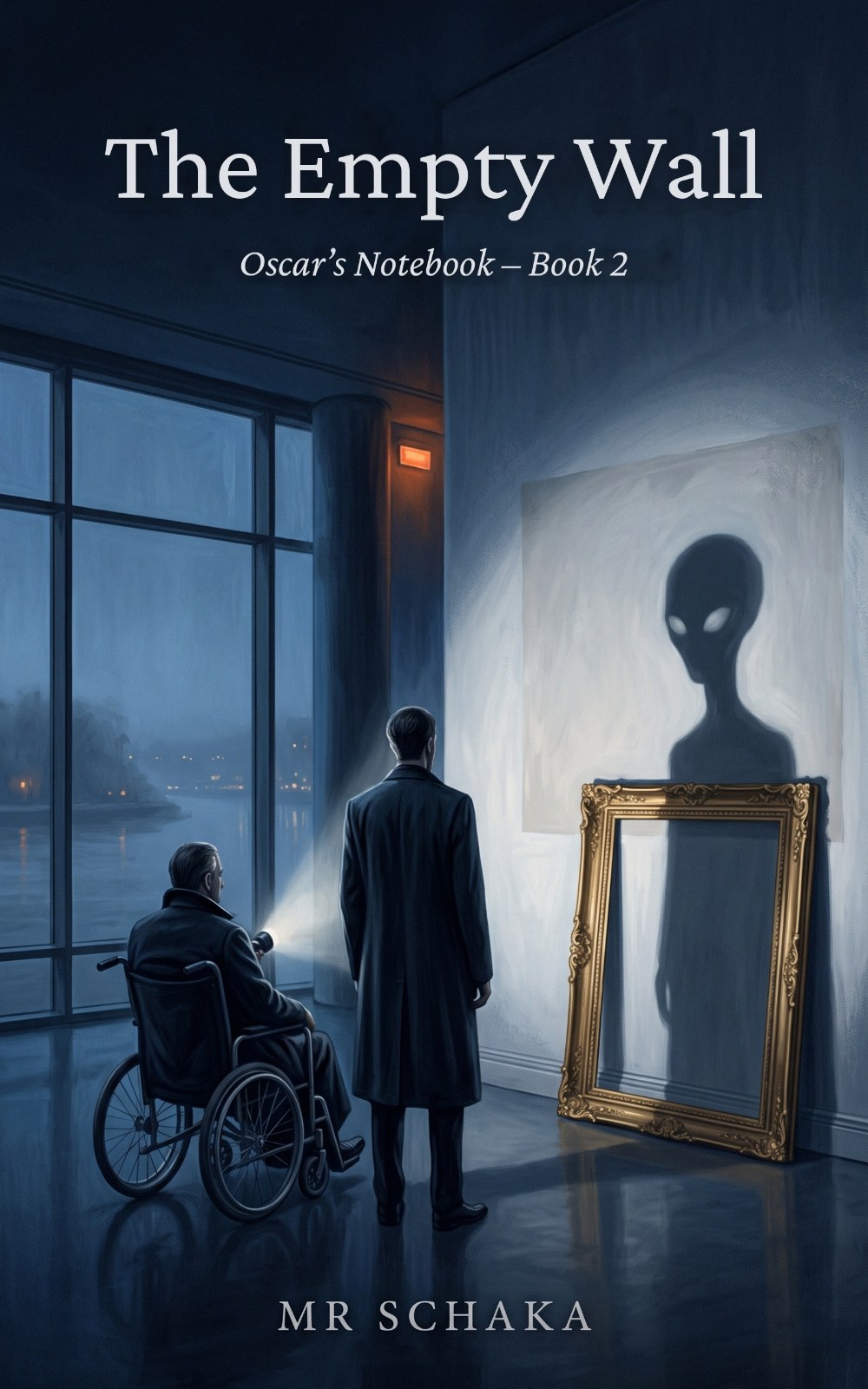
The book
The Empty Wall is the second book of Oscar’s Notebook, a series of crime novels set in Liège.