Between December and April, PM2.5 in Thailand can spoil part of a trip, especially in the north. With a little planning, though, you stay in control. Here is when, where and how to handle it, with the tools I use myself between Bangkok and the rest of the country.
The smoke season: mostly in the north
PM2.5 are very fine particles, less than 2.5 micrometres across. In Thailand, levels rise during the dry season, roughly from December to April, sometimes into May.
The north is hit hardest. Around Chiang Mai, Chiang Rai and Mae Hong Son, farm fires and forest fires multiply from February. According to NASA’s Earth Observatory, fire activity usually peaks in March, and April often stays very hazy. Biomass burning is estimated to cause about 70% of fine particles in Chiang Mai in April.
The landscape does not help: the mountains around the valleys block the air and trap the haze. Things usually improve in May, when the rains return. In the north, the tricky period therefore runs from February to April, often peaking in March.
Bangkok in the dry season
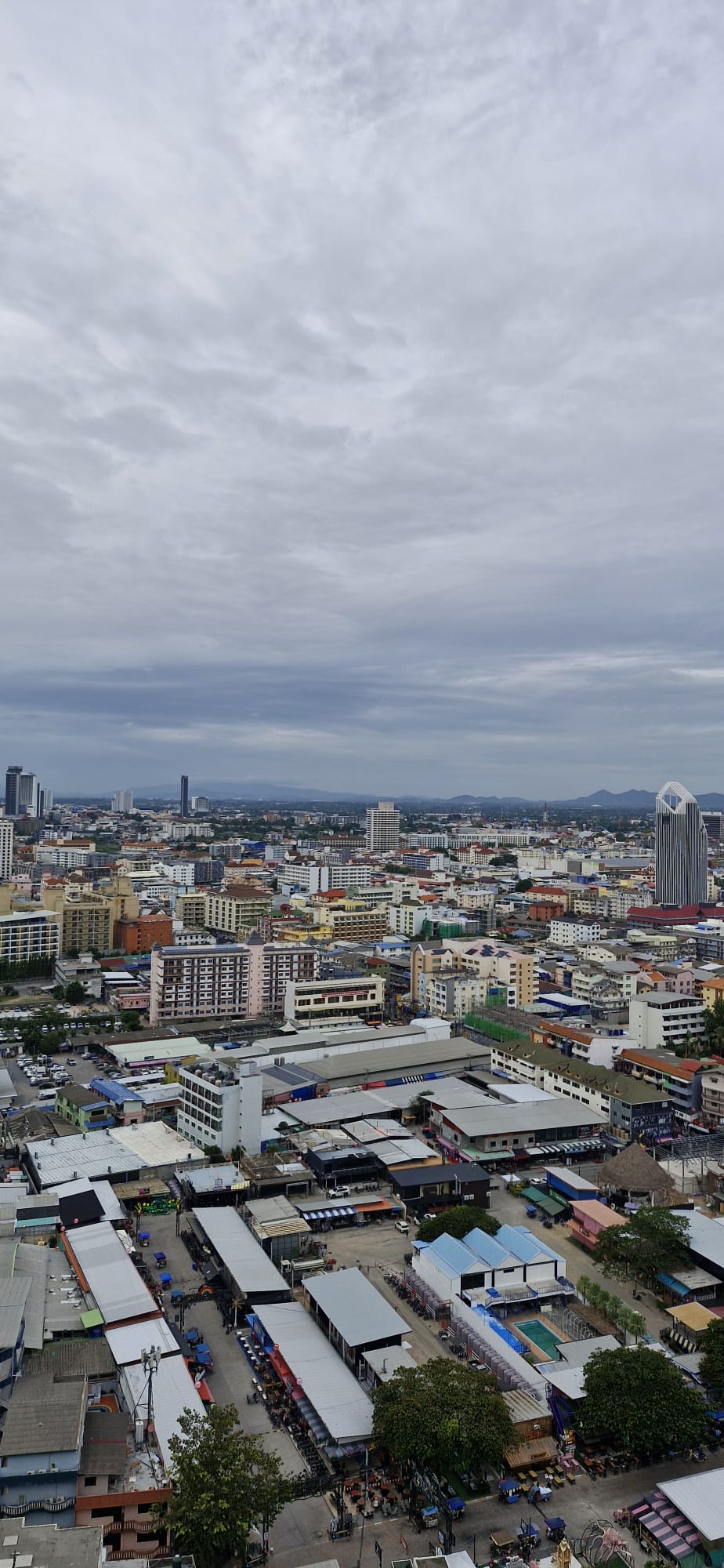
Bangkok has no forest fires, but the capital has its own problems. According to Thailand’s Ministry of Natural Resources and Environment, the worst period there runs from December to March. Traffic, industry and crop burning in nearby provinces all add up.
The weather plays a part too. In the dry season, a temperature inversion acts like a lid and keeps the dust close to the ground. January and February are often the months when the standard is exceeded most.
The irony is that this is also the most pleasant season for temperatures. I cover the seasons in my article on the best time to visit Bangkok.
Reading the AQI without getting it wrong
The AQI (Air Quality Index) is a unitless index calculated from several pollutants. Be careful: two scales are in use, and the same number does not mean the same thing on each.
The US scale (IQAir)
Most international apps show the US AQI: 0 to 50 “good”, 51 to 100 “moderate”, 101 to 150 “unhealthy for sensitive groups”, 151 to 200 “unhealthy”, 201 to 300 “very unhealthy”, above 300 “hazardous”.
The Thai scale (Air4Thai)
The Pollution Control Department (PCD) uses its own five-colour scale: blue, green, yellow, orange and red. Since 1 June 2023, warnings start at 37.5 µg/m³ of PM2.5 averaged over 24 hours, and red begins at 75.1 µg/m³. For reference, the WHO recommends not exceeding 15 µg/m³ over 24 hours. My habit: look straight at the PM2.5 figure in µg/m³, which tells you more than the index.
Apps to track air quality
Air4Thai is the PCD’s free official app, on iPhone and Android. The number shown inside the little face is the 24-hour PM2.5 average for the nearest station, updated every hour.
IQAir AirVisual is the other app I keep on my phone. It shows the US AQI, a map and forecasts for a few days ahead, handy for comparing cities before booking a bus or a domestic flight.
Do not compare figures from one app to another without checking which scale they use. Look at the trend over the day instead. In Bangkok, readings often rise in the evening and drop a little by early morning.
Where to breathe easier: the south and the islands
During the northern smoke season, the south is generally much less affected. There is less crop burning and the sea breeze helps disperse the particles. Phuket, Krabi, Koh Lanta, Koh Phangan and Koh Lipe are good options from February to April.
It is not an absolute guarantee. The south can receive smoke from fires in Indonesia, usually later in the year: in October 2015, several southern provinces had a severe haze episode blown in from Sumatra. A quick look at the apps before booking is still worthwhile.
Mr Schaka’s practical tips
- Pick your dates: for the north, aim for November to January, before most of the fires. For Bangkok, keep some flexibility in January and February.
- Flip your route: from February to April, give the southern islands pride of place and save the north for another season.
- Check the AQI every morning: two minutes on Air4Thai or IQAir before planning the day.
- Have an indoor plan B: museums, air-conditioned shopping centres, cooking classes, a massage. In Bangkok, the BTS and MRT spare you long walks along busy roads; see my guide to getting around Bangkok.
- N95 or FFP2 masks: you can find them everywhere, in 7-Eleven shops and pharmacies. A cloth mask does not filter fine particles. Choose one that fits your face snugly.
- Go out early: temples, markets and walks are better when the air is at its cleanest.
- Accommodation: keep windows shut and use the air conditioning; some hotels lend air purifiers, so ask when you book.
- Fragile breathing: ask your doctor for advice before you travel.
Frequently asked questions
When is pollution worst in Chiang Mai?
Usually from February to April, often peaking in March. The air generally improves in May, when the rains return.
Which official app should I use in Thailand?
Air4Thai, the free app from the Pollution Control Department. IQAir AirVisual complements it well for forecasts and the US scale.
Where can I buy an N95 or FFP2 mask?
In most 7-Eleven shops and pharmacies. Bring several: a mask is not meant to be worn several days in a row.

The book
Mr Schaka lives with pulmonary fibrosis and has been travelling in Thailand for years. In The Season of Breath he tells the story of that journey, one step at a time, with humour and no self-pity.